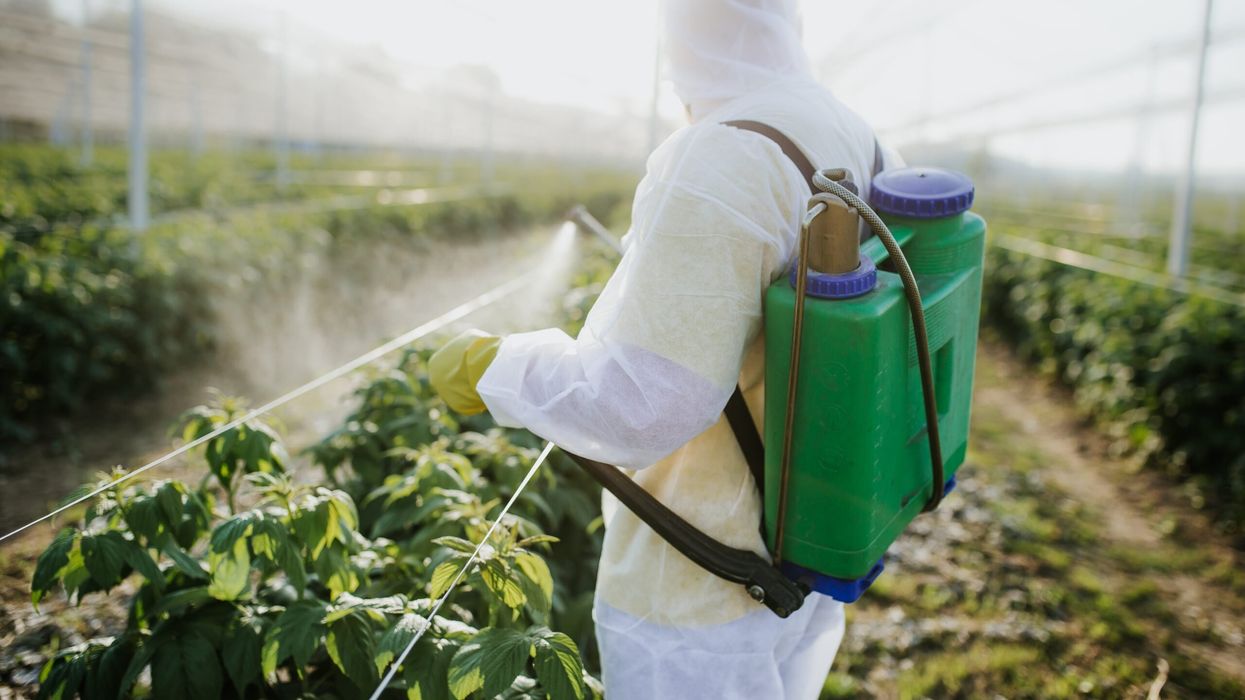

THE impact of certain pesticides on increasing cancer risk in farmers "rivalled" that of smoking, according to a US study that examined 69 chemicals, including four commonly used in India.
Researchers found that for non-Hodgkin's lymphoma, leukemia, and bladder cancer, the effects of pesticide exposure were "more pronounced" than those of smoking, which is widely acknowledged as a significant cancer risk factor.
"We present a list of major pesticide contributors for some specific cancers but we highlight strongly that it is the combination of all of them and not just a single one that matters," senior author Isain Zapata, an associate professor at the Rocky Vista University, US, said.
The list, compiled in the study published in the journal Frontiers in Cancer Control and Society, features 69 pesticides, including 2,4-D, Acephate, Metolachlor, Methomyl. These four are among many commonly used in India to combat various threats to crop yields, such as insects and weeds.
For their analysis, the researchers took cancer incidence rates in counties across the US from the National Institutes of Health (NIH) and Centers for Disease Control (CDC) over the period 2015-2019.
They found that specific cancer risk is likely to be associated with the types of crops grown in a region, suggesting that regional aspects must be considered when evaluating the big picture.
For example, certain areas of the western US states had increased cancer risk for all cancers, bladder cancer, leukemia and non-Hodgkin's lymphoma but with distinct agricultural use patterns. The western states are known to have a higher vegetable and fruit production compared to the midwestern, or the north-central, region of the country, the authors said in the study.
The population-based, nation-wide study is the first comprehensive analysis to "put pesticide use in context with a cancer risk factor that is no longer questioned (smoking)," the authors said.
While some pesticides are discussed more frequently than others, the researchers said it is unlikely that any single pesticide is solely to blame as they are not used individually.
"In the real world, it is not likely that people are exposed to a single pesticide, but more to a cocktail of pesticides within their region," Zapata said.
Details regarding use of the listed 69 pesticides are available via the United States Geological Survey (USGS). (PTI)