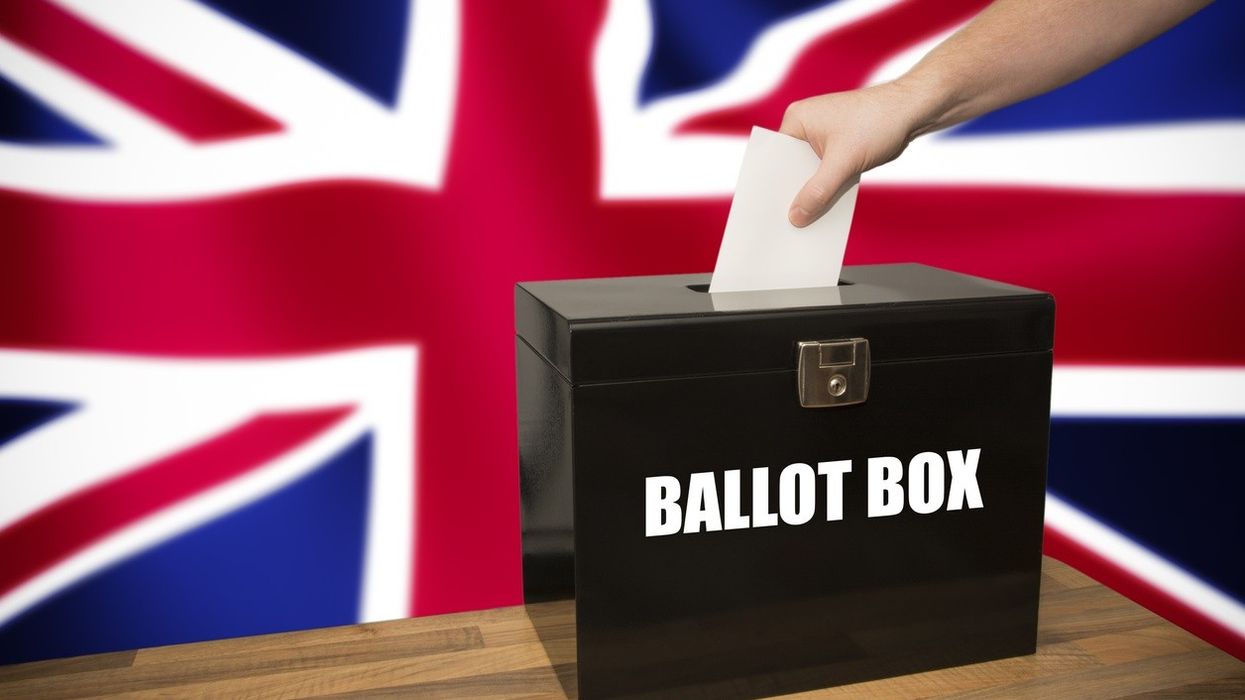

Over three million British citizens residing abroad for more than 15 years will gain the right to vote in the upcoming general election.
The proposed changes in enfranchisement for the long-term UK diaspora are expected to be enacted into law by mid-January through the parliamentary process, The Guardian reported.
This timeline allows sufficient opportunity for eligible Britons living abroad to register for the vote in the event of a general election in autumn 2024, certain Conservative sources suggested.
The recent decision marks the culmination of a nearly two-decade-long effort initiated by the late Harry Shindler.
In 2016, Shindler contested the former 15-year limit on voting rights in the high court.
Disappointed by the successive governments' failure to fulfill their manifesto commitments, he took the case to the European Court of Justice.
Until his passing in February at the age of 101, Shindler argued that the UK could only be considered a true democracy when all its citizens were granted full enfranchisement rights.
Jane Golding, co-chair of the campaign group British in Europe, expressed gratitude for Harry Shindler's relentless advocacy. She acknowledged the government's fulfillment of its promise, and said that the proposed legislation was the outcome of years of dedicated efforts by campaigners within the organisation.
Their work since 2017 aimed to provide a political voice for Britons residing overseas.
The draft legislation, a statutory instrument, is now set to undergo scrutiny in both the Commons and the Lords, a typical process lasting six to eight weeks without significant obstacles.
British in Europe, after surveying over 7,000 affected Britons residing in more than 60 countries, raised queries with the government regarding the registration and voting procedures.
Under the proposed rules, British citizens overseas for over 15 years can vote in their last registered constituency or furnish evidence of past residency.
For younger voters who emigrated before becoming eligible to vote, acceptable documentation might include school records, P45s, or P60s.
The provided list is not exhaustive, but it has been well-received by those surveyed.
The specific constituencies where the 3 million voters resided or were registered remain unknown. However, British in Europe's survey indicated their diverse origins, spanning from Land's End down to the Orkneys.
According to the British in Europe survey it was found that there was significant interest in the political process among expatriates, with 84% expressing a high likelihood of voting in the next general election and 10% considering it quite likely.
Approximately 18% expressed concerns about proving their identity due to the previously restricted documentation.
Prospective voters will still be required to undergo identity verification and demonstrate past registration or residency in the UK if they were not previously on the electoral roll.
Those people registering for the first time will be required to provide proof of past residency, with a non-exhaustive list of documents likely to be accepted.
This list may include a British driving licence (including an expired licence), a letter from HMRC, a rent book from a local authority, a statement of benefits such as child benefit, a letter from the Department for Work and Pensions confirming state pension eligibility, a utility or mobile telephone bill, a letter from an insurance provider, a communication from a student loans company, or a bank statement, payslip, P45, or P60.
The Elections Act 2022 repealed the 15-year rule, but numerous British citizens residing abroad remained doubtful that the government would effectively implement this change.