

Highlights
- Met Office says 2026 could see the biggest El Niño in living memory.
- Equatorial Pacific sea-surface temperatures could rise by more than 3°C later this year.
- El Niño can intensify drought, rainfall, wildfires and pressure on crops.
BRITAIN has been warned to brace for the far-reaching consequences of what could become the strongest El Niño in living memory, with the Met Office predicting a huge rise in Pacific Ocean temperatures and a new global heat record next year.
The UK’s national weather forecaster said on Friday (21) that the developing El Niño could be the largest such event since the 19th century. It warned that 2027 was very likely to replace 2024 as the warmest year ever recorded.
The warning comes as forecasts show sea-surface temperatures in the equatorial Pacific could rise by more than 3°C later this year. A typical El Niño produces a rise of about 1°C to 2°C, with 2°C already considered a major event.
Adam Scaife, head of long-range forecasting at the Met Office, said the forecast, if accurate, would mean 2026 “will far exceed our recent experience of El Niño and its worldwide climate influences”.
El Niño is a natural climate pattern that occurs when trade winds across the tropical Pacific weaken, allowing warm water to move eastwards. The resulting changes in the atmosphere can affect weather across the world, bringing hotter and drier conditions to some regions and wetter and cooler conditions to others.
For Britain, the concern is the wider impact of an extreme global weather event rather than a guaranteed change in the country’s weather. El Niño can disrupt rainfall, agriculture and food production in different parts of the world, potentially adding pressure to global supplies and prices.
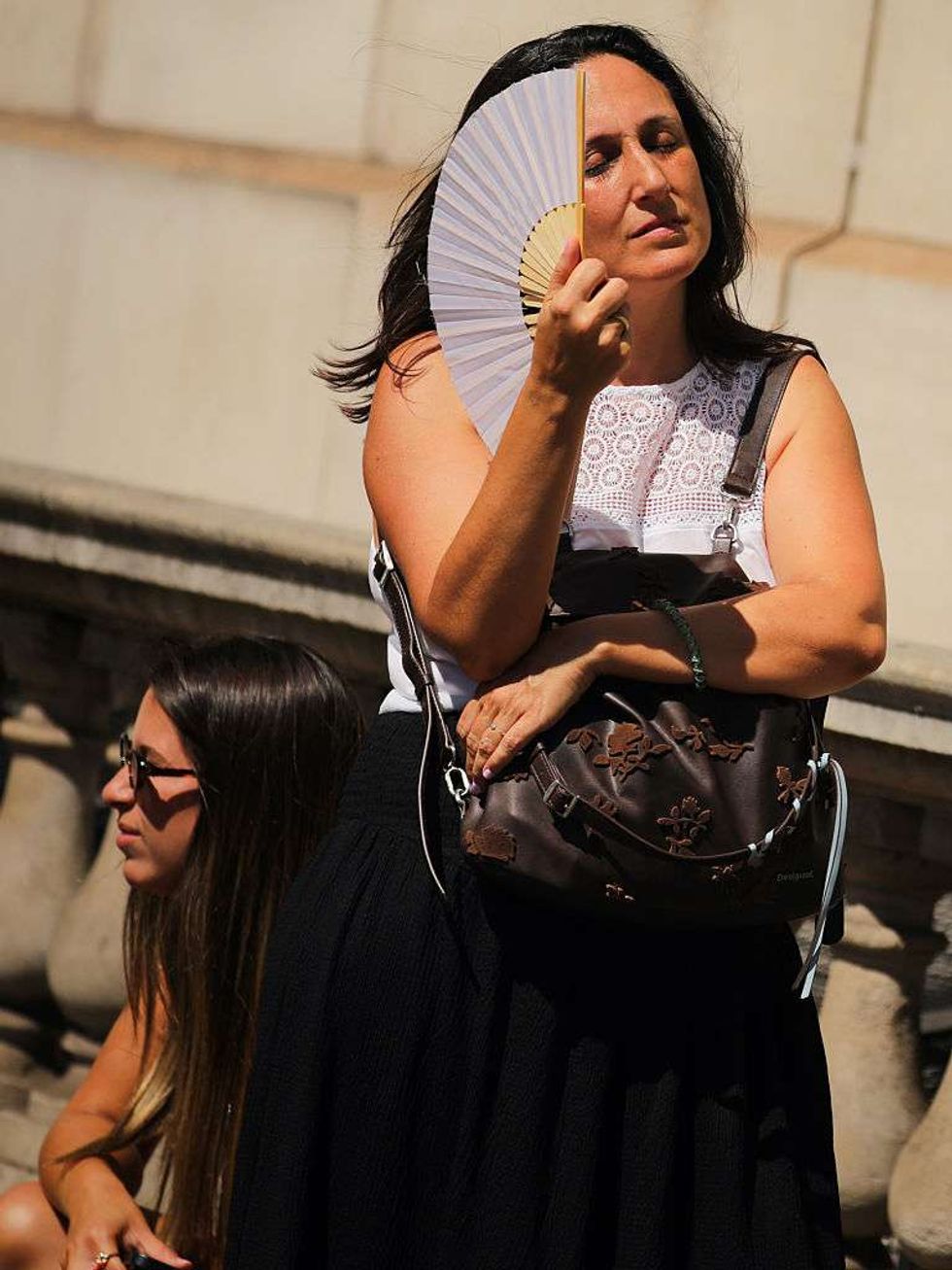 Tourist in Westminster fans themself during the fifth heatwave of the season on August 12, 2026 in London, England. (Photo by Alishia Abodunde/Getty Images)
The developing event is already being linked to severe conditions elsewhere. Indonesia, for example, has experienced a long and intense dry season that has contributed to wildfires which have burned hundreds of thousands of hectares.
El Niño effects could become more severe
Scientists say the effects of a stronger El Niño could become more severe because they are occurring on top of long-term human-caused global warming.
A warmer atmosphere can hold more moisture, meaning El Niño-linked rainfall can become more intense, while soils can dry out further in areas affected by drought.
Climate scientist Michelle L'Hureux of the US National Oceanic and Atmospheric Administration said stronger El Niño events meant that “we can expect to see more of these expected El Niño impacts”, while stressing that individual effects were not guaranteed.
The Met Office forecast comes as estimates suggest the event could push global temperatures sharply higher.
Climate scientists Zeke Hausfather and Andrew Dessler calculate that El Niño could temporarily add around 0.3°C to the long-term warming trend, potentially taking 2027 to about 1.76°C above pre-industrial levels.
That would compress into a single year roughly the amount of warming otherwise expected over more than a decade.
“It’s kind of a preview of the future,” Dessler, a professor at Texas A&M University, told AFP.
There is no single universally accepted measure of El Niño intensity. Using its Relative Oceanic Nino Index, the US weather agency NOAA has put the probability at 69 per cent that this event will be the strongest in its dataset, which goes back to 1950.
While scientists are still debating whether climate change itself is making El Niño events stronger, there is broad agreement that a warmer planet can amplify some of their effects.
NOAA scientist Mike McPhaden said evidence from climate records, coral skeletons, historical measurements and modelling suggested El Niño events may have increased in strength by about 10 per cent over the past century.