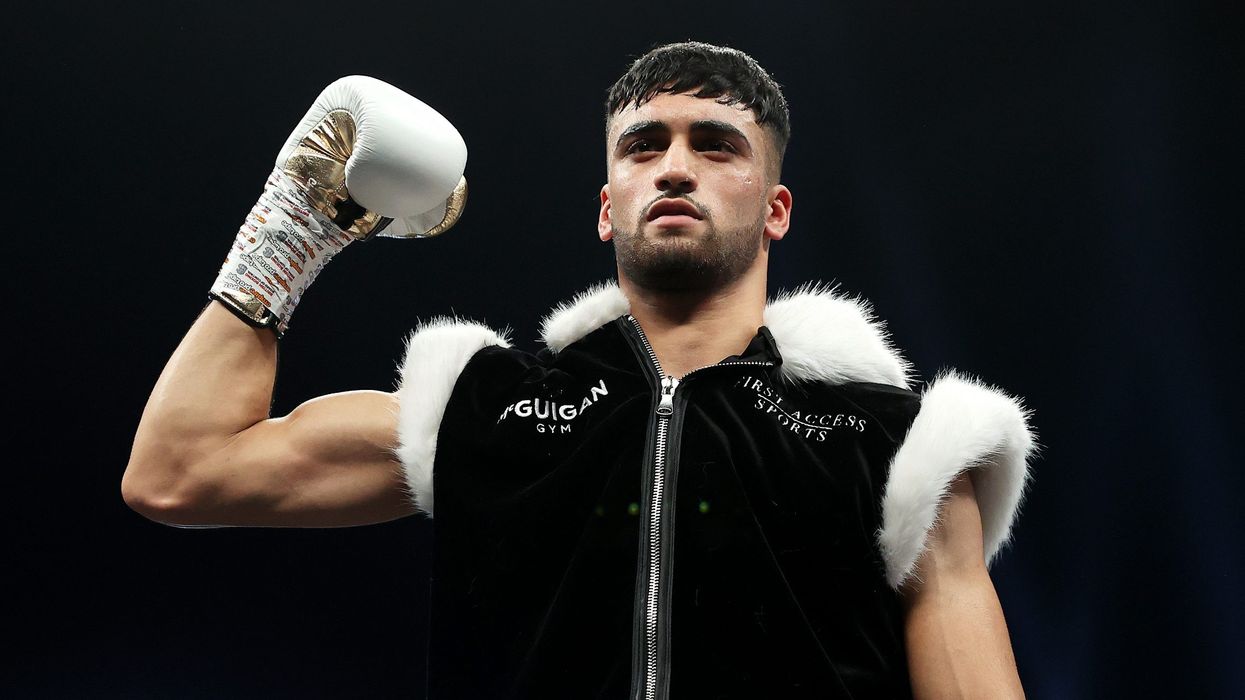

Adam and Hassan Azim push each other to reach the top
TALENTED boxing brothers Adam and Hassan Azim from Slough lived up to their reputations at the SSE Arena in Wembley on Saturday (20), with knockout wins.
Adam, 19, floored Stu Greener twice in a second round stoppage victory, while older brother Hassan, 21, made a sensational professional debut with a one-punch knockout of Ivan Njegac. The pair have trained together for almost a decade to reach this stage but in the professional circuit they have different
paths planned to reach the top.
Adam dreams of becoming the youngest British world champion while the older sibling is in no hurry and wants to take his own time to become a champion.
“We’re both on this journey together and trying to push each other all the way,” Hassan was quoted as saying.
“But Adam’s got a different route to mine. I want to take my time in the pro game, whereas Adam wants to be the youngest world champion.”
Already a pro at 19, Adam is a decorated amateur boxer, having won 10 national titles as well as ranked world No. 1 youth amateur welterweight. His trainer, Shane McGuigan calls him an “unbelievable talent”.
“It was fantastic. He didn’t shine to his maximum capacity on his debut. It went under the radar. This is almost like his real debut,” said
McGuigan, who has trained former world champions David Haye and Carl Frampton.
“He’s come out, he’s entertained, he’s put on a knockout win, and I believe this kid is going to be a special, special star.
“I think he’s going to go right to the top. I think he’s going to win world titles and do huge things for British boxing. Everyone has to get behind him.”
Speaking after Adam’s second pro win, promoter Ben Shalom believes the teenager can go on to become a “superstar”. “We’ve been talking about Adam a long time,” Shalom told Sky Sports. “That just shows what this kid is made of.
“I think we’ve got a special star on our hands. I think this was the start of something.This will be a night that people look back on in years to come and say, ‘I was there.’ “Adam Azim is going to be a superstar and we’re here to witness that.”
How did the Azim brothers get into the sport? Boxing happened when their father took Adam to the gym after he was diagnosed with ADHD. “When I was four years old, I was hyperactive,” Adam says. “I had ADHD and my dad decided to put me in a sport that would drain my energy and give me something to do.
“Boxing was one of the sports that was getting my anger out, and that was how it all started.”
Hassan joined the gym a few years later, but had been accompanying Adam to the gym so knew what boxing was all about.
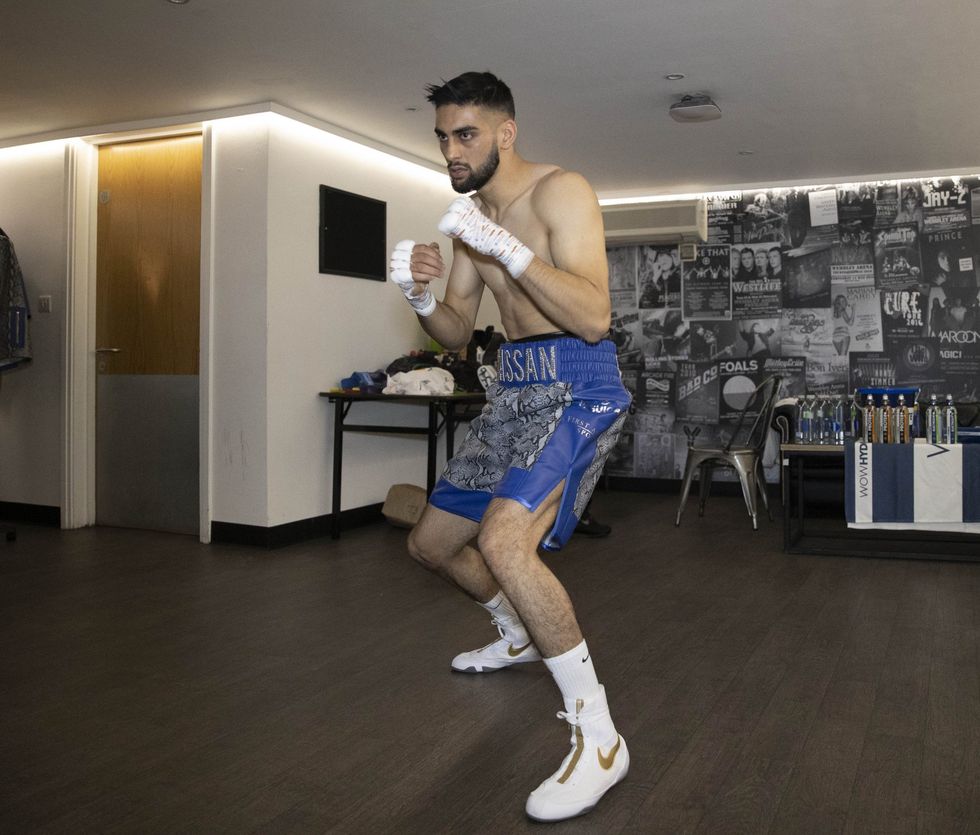 Hassan Azim warming up for his fight against Ivan Njegac.
“For years I was watching Adam train, watching him spar,” he says.
“When I was aged 12 I decided to get interested in it, did my first session, did really well and from there I’ve never stopped boxing.
“I’m the sort of person that if I watch something over and over again, I’ll learn from it.
“Nobody really taught me to throw a punch, but I’d just been watching Adam for so many years that when I gave it a try and did my first spar at 12, I’d picked up a lot. It all went from there.”
Once Hassan was in the ring the boxing journey of both the brothers started together.
In the gym and while training they became competitive, but when it came to bouts in the ring they were of different weight categories. “It was great when Hassan came and joined me,” Adam says.
“Now I had someone at the gym to talk to and having my brother there, it motivated me more. It made me push myself even harder.
“He’s always there pushing me, I’m pushing him and having a sibling there to train with is great. We want to build the stable with our names, and we want to make ourselves the best we can be.
“When it comes to competing in the ring, there’s never competition there because we’re different weight classes, so it works quite well.”