
Bonnie Greer left Chicago's South Side wanting to be a lawyer, until a professor told her outright that he didn't think women belonged in law. She switched to theatre instead, studied under David Mamet in Chicago and Elia Kazan at New York's Actors Studio, and by the late 1970s was living in Manhattan's West Village. Then AIDS started taking her friends, one after another, and by 1986 she'd had enough. A production brought her to the Edinburgh Festival that year. She stayed in Britain for good, telling the Sunday Times two decades later that the move had saved her life — she needed, in her words, to "escape the shadow of death."
That's the Bonnie Greer most obituaries will lead with: American, Black, an outsider who came to Britain running from something. What's stranger, and more interesting, is what she became once she got here.
From critic to trustee
Greer spent the next four decades doing two things that don't usually go together. She kept writing plays that made people uncomfortable — Munda Negra, staged in 1993, dealt directly with the mental health of Black women, at a time when British theatre mostly wasn't. And she kept getting invited onto the boards of the institutions she'd once have written plays criticising.
She joined the British Museum's board of trustees in 2005, serving two full terms before becoming deputy chairman in 2009. She sat on the boards of the Royal Opera House and the London Film School. In 2013 she was appointed Chancellor of Kingston University, a role she held for years afterward. None of it dulled her. She resigned as president of the Brontë Society in 2015 over a disagreement about the direction the organisation was taking — the kind of exit that tells you more about someone than the appointment did.
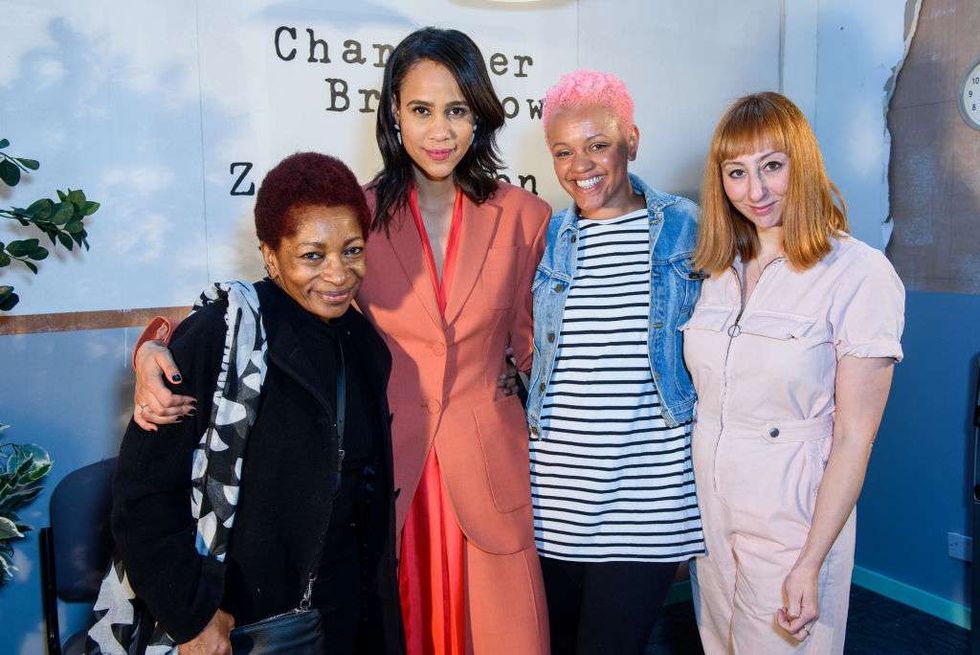 Bonnie Greer, Zawe Ashton, Gemma Cairney and guest at the "Character Breakdown" by Zawe Ashton book launch at Wild By Tart on April 03, 2019 in London, England. Photo by Joe Maher/Getty Images
The night that became an opera
If one evening defines how Britain remembers Greer, it's October 2009, when she sat on a BBC Question Time panel alongside Nick Griffin, then leader of the British National Party. She called it afterward "probably the weirdest and most creepy experience of my life." She didn't let it go, either — she turned the encounter into Yes, an opera with composer Errollyn Wallen that premiered at the Royal Opera House's Linbury Studio in 2011. Not many people get baited by a far-right leader on live television and respond, two years later, with a commissioned opera at Covent Garden.
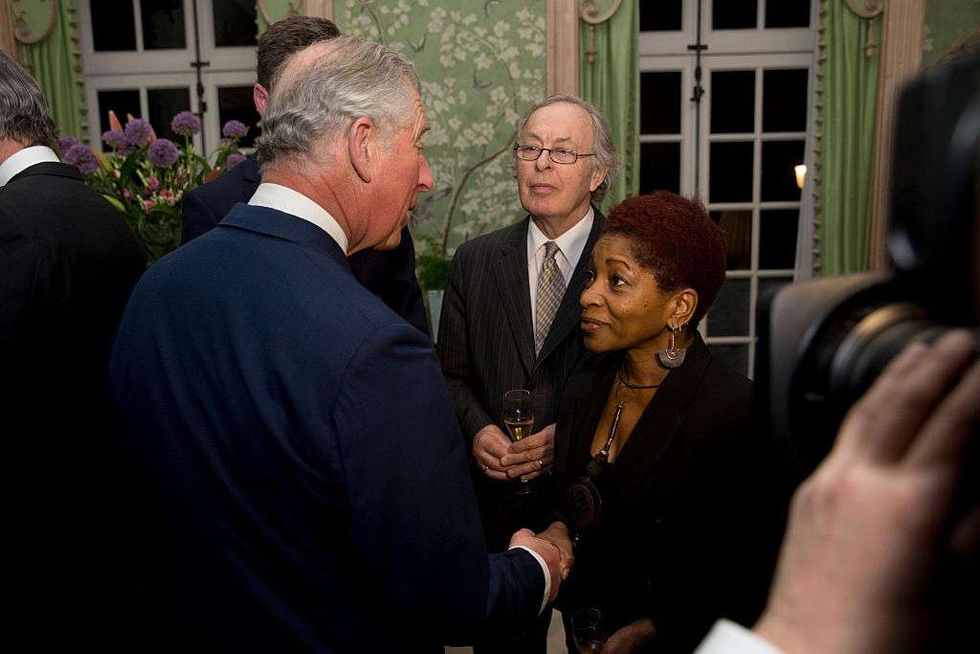 Prince Charles, Prince of Wales meets American-British playwright, novelist and critic Bonnie Greer, right, during a reception for Americans living and working in the UK, at the official residence of the U.S. Ambassador to Britain, Winfield House on March 9, 2015 in London, United Kingdom. The reception was held Monday evening ahead of Prince Charles and his wife Camilla visiting the U.S. next week. Photo by Matt Dunham - WPA Pool/Getty Images
Her writing life ran in parallel to all of it. She wrote the novels Hanging by Her Teeth and Entropy, a biography of Langston Hughes, and a memoir called A Parallel Life that The Independent's review described as the record of "a journey deliberately and bravely taken against all expectations." Her musical Marilyn and Ella — built around the true story of Marilyn Monroe helping Ella Fitzgerald get booked into a nightclub that wouldn't otherwise have hired a Black performer — went from a BBC radio play to Edinburgh to the Apollo Theatre in the West End.
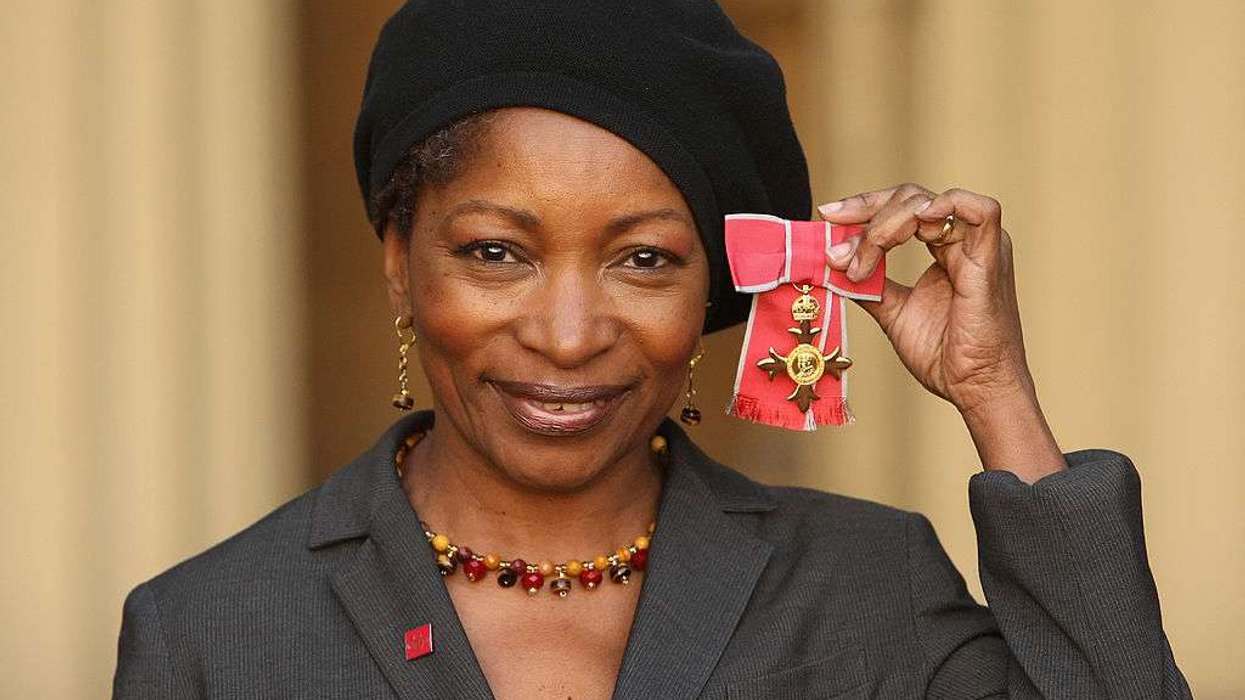
Greer was made an OBE in 2010 and became a Fellow of the Royal Society of Literature in 2022, an honour that put her in the company of the writers she'd spent a career being compared against. She never really stopped being provocative in the process. As recently as 2023, on TalkTV, she argued that Manchester United and Manchester City should remove the ships from their club badges, calling the imagery a glorification of slavery — undeterred when it was pointed out that both badges were adopted decades after abolition. That was Greer's whole method, really: state the uncomfortable position first, argue the history afterward.
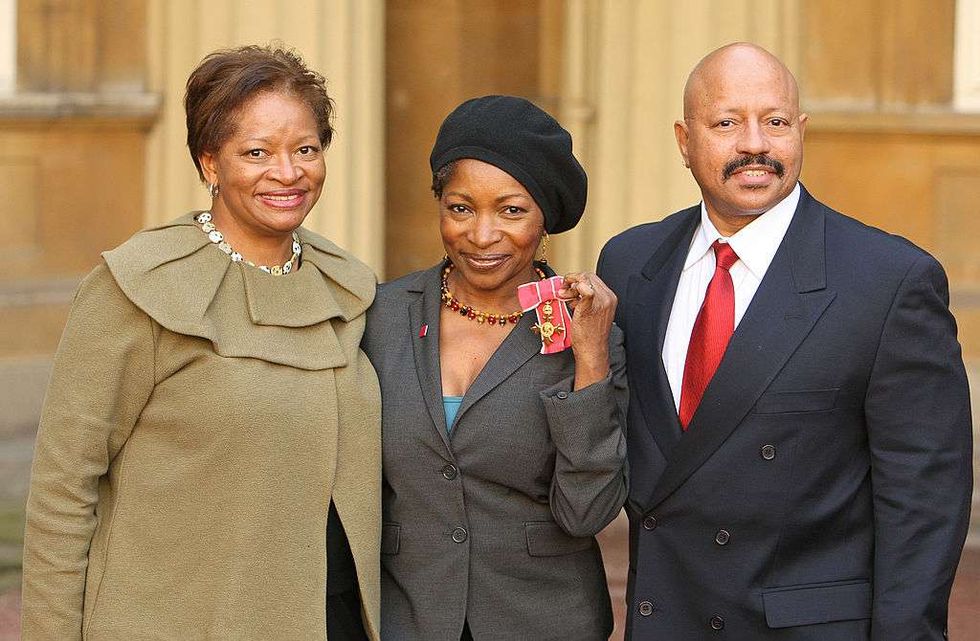 Playwright Bonnie Greer, (C) poses with her sister Regina Greer-Smith, and brother-in-law Theron Smith, after she was awarded her Officer of the British Empire (OBE) medal from the Prince of Wales, at an investiture ceremony at Buckingham Palace, November 19, 2010 in London. Dominic Lipinski - WPA Pool/Getty Images
David Hutchins, her husband since 1993, said in his statement that she was his "partner, confidante and inspiration," and asked that the family's privacy be respected. "Those closest to Bonnie will remember her warmth, humour, generosity and extraordinary ability to bring people together," he said. "She will be deeply missed."