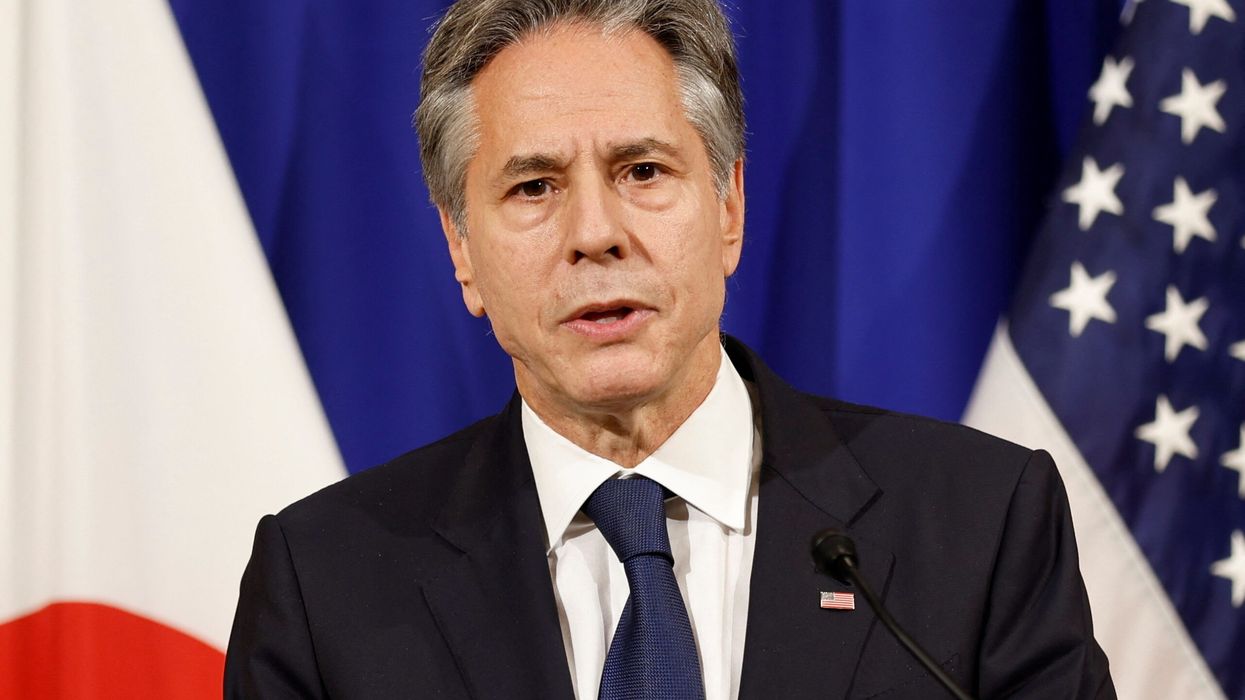
US SECRETARY of state Antony Blinken and defence secretary Lloyd Austin will hold talks with India this week that officials say will focus on security challenges in the Indo-Pacific and concerns over China, rather than the wars in Gaza and Ukraine.
The talks in New Delhi on Friday (10) with India's foreign minister Subrahmanyam Jaishankar and defence minister Rajnath Singh are part of the so-called "2+2 Dialogue", launched in 2018 to boost defence cooperation and align policy objectives in the Indo-Pacific region.
Officials said that India's diplomatic spat with Canada over the killing of the Canadian Sikh separatist leader Hardeep Singh Nijjar is not expected to affect the dialogue even though India has come under US pressure to cooperate with Ottawa in the murder investigation.
US officials were moving swiftly to deepen ties with India while pledging support for an investigation into the June killing on Canadian soil, an American official aware of the Indo-Pacific policy said.
China and the larger Indo-Pacific will be the "key focus points", said an Indian government official aware of the agenda, adding that defence collaboration, including joint development of defence equipment would also be discussed.
The two countries are working on deals for the US to supply and manufacture engines for Indian fighter jets, MQ-9 predator drones and semiconductor manufacturing.
The discussions would pick up the threads from Indian prime minister Narendra Modi's successful visit to Washington in June and president Joe Biden's trip to New Delhi for the G20 summit in September, officials said.
Both officials spoke on condition of anonymity as they were not authorised to speak to the media.
The dialogue comes ahead of Biden's expected meeting with China's president Xi Jinping at the end of this month on the sidelines of the Asia-Pacific Economic Cooperation summit in San Francisco and Biden's possible return to New Delhi for a visit in January.
Farwa Aamer, the Asia Society Policy Institute's Director of South Asia Initiatives, said that the dialogue has "seen remarkable progress, particularly in the realm of defence cooperation," where technology transfer and co-production were presently the focus.
India's ties with the US have grown steadily stronger on several fronts, and it has close strategic links with Israel. But New Delhi has also carefully preserved longstanding relations with Russia, and improved economic relationships with oil and gas producing countries in the Middle East.
Given these considerations, strategic discussions between Washington and New Delhi would not be shaped by the wars in Gaza and Ukraine or by India's fraught relations with Canada, said Rick Rossow, an India specialist at Washington’s Center for Strategic and International Studies.
(Reuters)
Blinken, Lloyd Austin to visit India for Indo-Pacific talks
India’s diplomatic spat with Canada over the killing of Nijjar is not expected to affect the dialogue