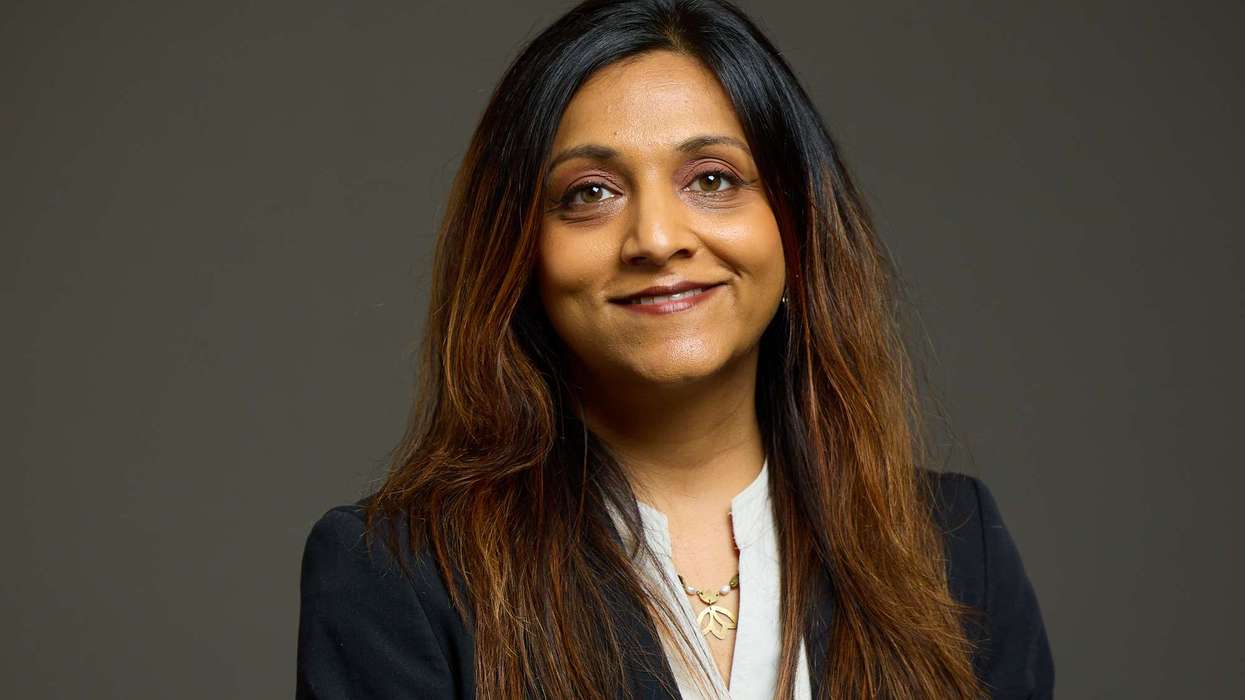

When I was appointed Baroness Shah of Wembley on January 9, 2026, I did not simply take a seat in the House of Lords; I carried a community with me.
Since becoming the first Jain parliamentarian, across both the Lords and the Commons, I have often wondered how best to describe the moment I was sworn and I realised, it was not really about me. As I took the oath in that ancient chamber, I was acutely aware of every Jain family who had built their lives in Britain, contributed to this country and who had never seen themselves reflected in its highest legislature.
I hope, in some small way, I reflected them.
One moment, above all others, will stay with me. I swore my oath on the Sanam Suttam, the sacred Jain scripture. To hold that text in the House of Lords - in one of the oldest democratic institutions in the world - and to affirm my commitment to public service through the words of my faith, was a profound and deeply moving honour. It felt like a bridge between two worlds I believed belong together: the spiritual and the civic, the personal and the political. I hope it sends a message to every young Jain in this country that their scripture, their tradition, their identity, has a place at the very heart of British public life.
I grew up understanding faith is not separate from how one lives. Jainism shaped me long before I had the language to say so. The principle of ahimsa - non-violence toward all living beings - taught me that how we treat people, especially the vulnerable, is the truest measure of our character. Satya, truthfulness, taught me that integrity in public life is not optional. And aparigraha, the spirit of non-possessiveness, reminded me that public office is not something one holds, but something one gives back. All central to my family from their journey from Gujarat, India and Kenya to the UK.
That is why I became a teacher first. Teaching is one of the most profound acts of service. To stand before young people and trust in their capacity to grow, to question, to become. There is no greater expression of ahimsa in daily life. It set the foundation for everything that followed.
When I moved into local government, representing the Kingsbury ward on Brent Council from 2014, the same instinct guided me. I held my monthly surgeries at Kingsbury Library, listening to constituents about housing, planning, and the quiet struggles that rarely make headlines. That work was never glamorous, but it mattered.
For years, the Jain community has been tirelessly working to show that we belong in public life, that our values - non-violence, tolerance, compassion - are not private matters, but gifts we can offer to democratic discourse. The Institute of Jainology and the Jain All-Party Parliamentary Group had long called for Jain representation in Parliament.
I felt the weight of that aspiration on the day I took my seat, and I feel it still.
What does my appointment mean to the community? I have heard from so many people since January, from temple leaders to young professionals and children who have written me letters. What strikes me most is how many said simply: we see ourselves now. That is the quiet power of representation. It does not change policy overnight. But it changes what feels possible, and that changes everything.
I am mindful, too, that this is a beginning, not an arrival. There is much to do, and I intend to do it. The Jain community has raised important, practical concerns for many years that deserve to be heard and acted upon in parliament. One of the most fundamental is recognition on the national census. Without a dedicated Jain category, our community is rendered statistically invisible - and invisibility has consequences. It affects how public services are planned, how our needs are understood, and how our contribution to British life is measured. I will be pushing for that recognition, because one cannot serve a community one cannot see.
This work also sits within a wider commitment to strengthening social cohesion across Britain.
As a Labour member, I am proud our tradition has long recognised the vital role faith communities play in public life as partners in building a fairer, more cohesive society. I welcomed the government’s recent Social Cohesion Action Plan, which reflects an important commitment to building confident, cohesive and resilient communities, and places clear emphasis on the role of faith and belief groups in helping to realise that goal.
Labour’s engagement with faith communities has always understood that they are often the first to serve, the first to organise, and the first to bring people together across lines of difference. Whether through interfaith dialogue, community service, or moral leadership, they help to build the trust that underpins strong communities. As the first Jain parliamentarian, I want to help contribute to that vision: one of a Britain where every community is seen, valued, and able to play its full part in shaping our nation’s future.
Beyond the census, the Jain community has enormous wisdom to contribute to questions of environmental stewardship, interfaith dialogue, and the ethics of public life. I intend to be a voice for those values in the Lords not as a narrow communal interest, but as a universal one. These are not Jain concerns alone; they are human ones.
In our tradition, seva - selfless service - is not separate from spiritual life. It is an expression of it. I did not enter politics for prestige or recognition. I entered it because I believe that showing up for people, in a classroom or a library or a parliamentary chamber, is the most honest way I know to live out my faith.
Britain has given my community so much. This is my way of giving something back.
(Baroness Shah is head of the Labour Group Office at the Local Government Association. She was a Labour Councillor of Brent London Borough Council for Kingsbury ward from 2014 until 2026. During her time as Councillor, she held the Cabinet Portfolio of Regeneration and Planning for eight years. Under her leadership, Brent became one of the biggest housebuilders in London and she oversaw some of the country’s largest regeneration schemes in Wembley and South Kilburn. She was given a life peerage as a part of the 2025 Political Peerages and was created Baroness Shah, of Wembley in the London Borough of Brent, on 13 January 2026. Her appointment made her the first Jain appointed to Parliament. Shama is also a widowed single mum of a 17 year old daughter.)




 Dr Kalpana Lakhani Garavi Gujarat