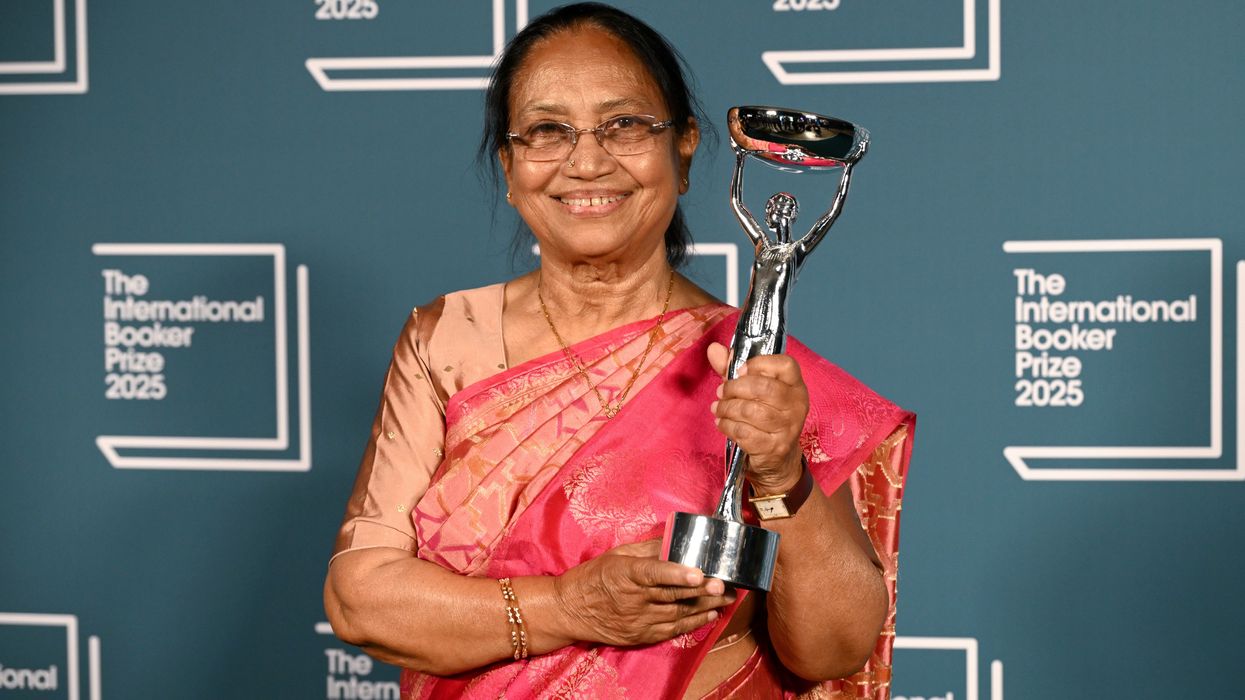

Banu Mushtaq has made literary history by becoming the first Kannada writer to win the International Booker Prize. The 2025 award was given for her short story collection Heart Lamp, a collaboration with translator Deepa Bhasthi, who rendered the work into English. The pair will share the £50,000 prize, which was presented at a ceremony at London’s Tate Modern on 20 May.
Published by Penguin Random House India, Heart Lamp is a collection of twelve short stories written between 1990 and 2023. It explores the lives of women in southern India, particularly in Karnataka, portraying their struggles and strength within patriarchal communities. The stories are grounded in regional oral storytelling traditions and have been praised for their wit, vividness and emotional depth.
Chair of the judging panel, Max Porter, called the book “a radical translation which ruffles language, to create new textures in a plurality of Englishes,” adding that the result is “genuinely new for English readers.”
Mushtaq, who is also known for her work as a lawyer and activist, reflected on the significance of the award during her acceptance speech. “This book was born from the belief that no story is ever small,” she said. “In a world that often tries to divide us, literature remains one of the lost sacred spaces where we can live inside each other's minds, if only for a few pages.”
Bhasthi’s translation has been praised for preserving the multilingual and musical essence of the original Kannada text. She chose to retain Kannada, Urdu and Arabic words in the English version, aiming to reflect the region’s everyday speech patterns. Speaking at a recent event at Champaca Bookstore in Bengaluru, she said, “None of us speaks ‘proper English’ in Karnataka… I wanted Indian readers to hear the deliberate Kannada hum behind it.”
In an earlier interview with The New Indian Express, Mushtaq addressed the personal dimensions of her writing. “I was asked to write about my contexts, and so I did. But at the same time, I didn’t want to be confined within the identity of the ‘Muslim woman’,” she said.
Heart Lamp is the first short story collection to win the International Booker Prize and only the second Indian title overall, following Geetanjali Shree’s Tomb of Sand, which won in 2022.
Fiammetta Rocco, Administrator of the prize, described the book as “a testament to the enduring fight for women's rights, translated with sympathy and ingenuity,” encouraging readers of all backgrounds to engage with its themes.
The 2025 shortlist featured works translated from Danish, French, Japanese and Italian. Each shortlisted book received £5,000, divided between the author and translator.





 Everyman Book coverMita Mistry