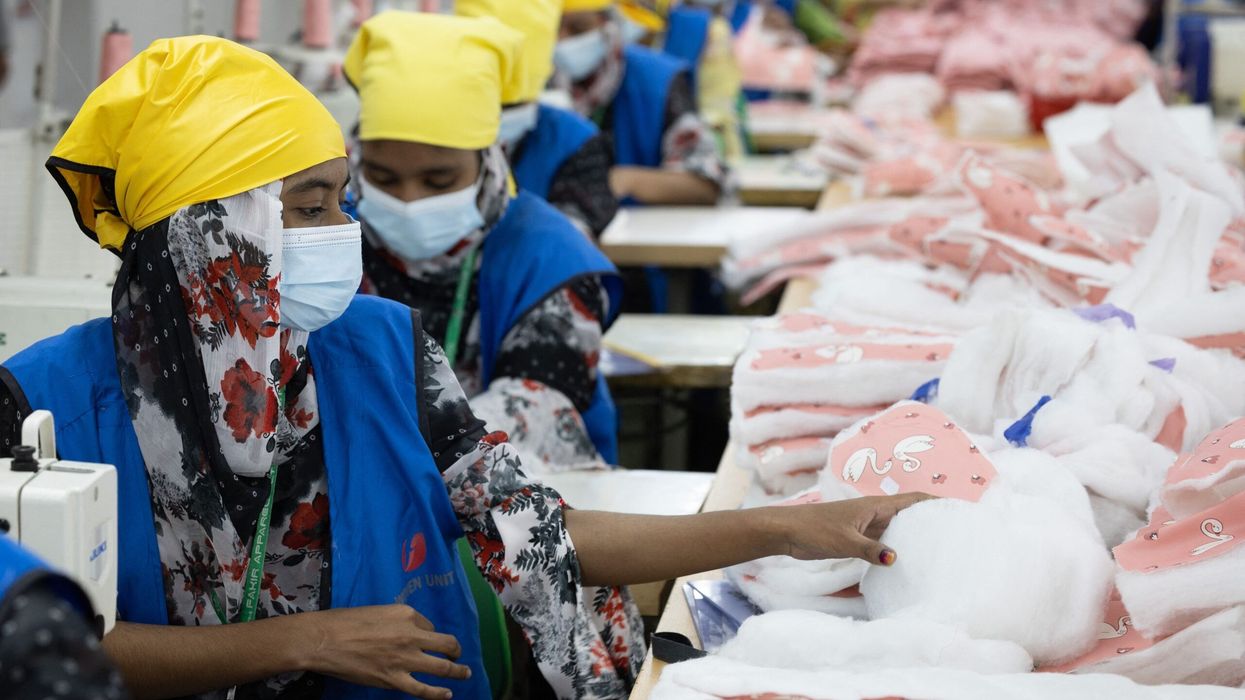

GARMENT factories in Bangladesh, one of the world’s biggest clothing production hubs, are struggling to complete orders on time as flooding disrupts their cotton supplies – exacerbating a backlog caused by recent political turmoil.
Bangladesh is a leading global cotton importer due to the size of its textile and garment industry. However, the devastating floods mean few trucks and trains have been able to bring supplies to factories from Chittagong port over the past month, industry officials and analysts said.
The disruption, on top of the unrest and protests that led to factory closures earlier in August, have caused garment production to fall by 50 per cent, said Mohammad Hatem, president of the Bangladesh Knitwear Manufacturers and Exporters Association.
“The industry is now under immense pressure to meet deadlines, and without a swift resolution, the supply chain could deteriorate even further,” Hatem said.
Bangladesh was the third-largest exporter of clothing in the world last year after China and the European Union, according to the World Trade Organization, exporting $38.4 billion (£29.3bn) worth of clothes in 2023.
At the clothing factory she runs in the capital Dhaka, Rubana Huq is counting the cost of lost production. “Even for a moderate-sized company like ours, which makes 50,000 shirts a day and if the price of one single shirt is $5 [£3.8], there was $250,000 [£190,921] of production loss,” said Huq, a former president of the Bangladesh Garment Manufacturers and Exporters Association (BGMEA).
She said some garment plants were slowing resuming production, but estimated that complete recovery “would be at least six months away”. She warned that Bangladeshi manufacturers could lose 10-15 per cent of business to other countries.
Bangladesh’s readymade garments industry, which supplies many of the world’s best-known fashion brands, accounts for more than 80 per cent of the country’s total export earnings.
Buyers are adopting a cautious approach and could potentially delay new orders, said Shahidullah Azim, a BGMEA director.
“The longer this uncertainty persists, the more challenging it becomes for us to maintain the momentum we have built,” he said.
The Bangladesh Meteorological Department said flood conditions could persist if the monsoon rains continued, as water levels were receding very slowly.
Some cotton shipments could get diverted to India, Pakistan and Vietnam, commodity analysts said. “We are already hearing and seeing some cotton for prompt delivery wanted by Pakistan and Vietnam,” said Louis Barbera, partner and analyst at VLM Commodities based in New Jersey.
New orders shifted from Bangladesh could also be accommodated in southern India, said Atul Ganatra, president of the Cotton Association of India.
Even before the floods and political unrest, the Bangladeshi garment industry was grappling with power shortages that remain a problem, said Fazlee Shamim Ehsan, vice-president at the country’s knitwear manufacturers and exporters association.
“Energy shortages continue to hamper our operations,” Ehsan said.