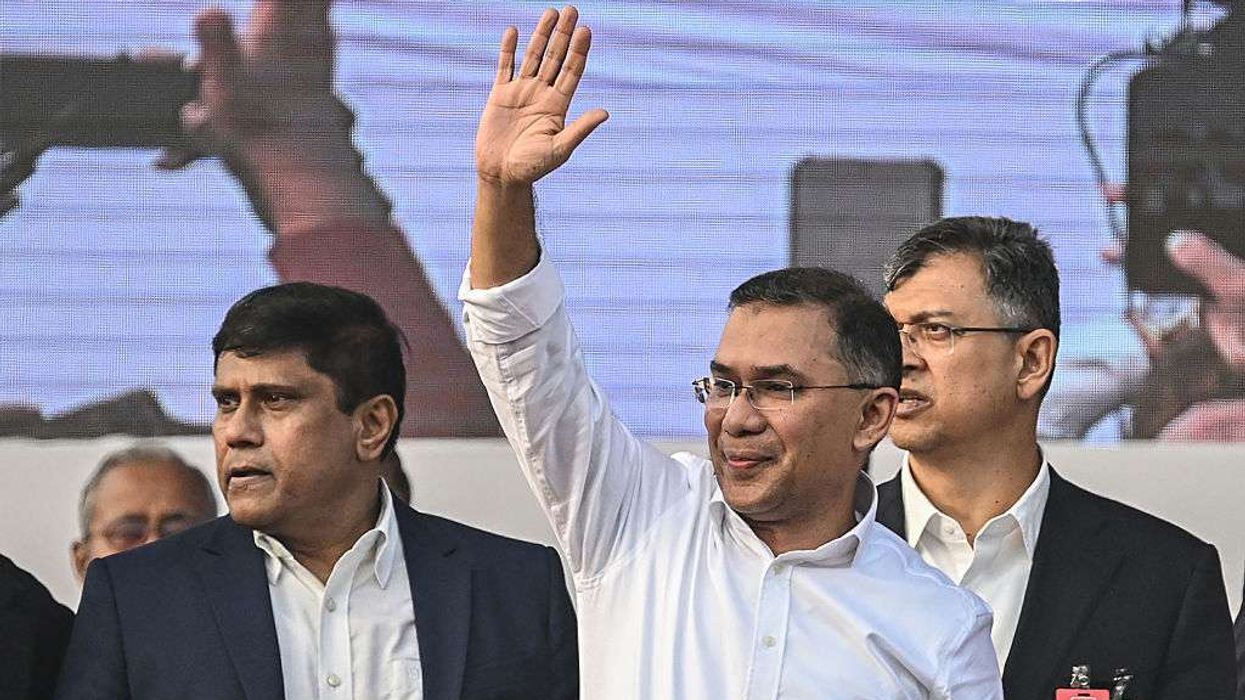

BNP acting chairman Tarique Rahman on Saturday (27) completed the process to register as a voter in Bangladesh and apply for a national identity (NID) card, two days after returning from more than 17 years of self-exile in London.
The 60-year-old leader of the Bangladesh Nationalist Party (BNP) visited the Election Commission (EC) office in Dhaka under tight security, where he provided fingerprints and iris scans as part of the biometric process, news portal tbsnews.net reported.
Officials said Rahman had earlier submitted his voter registration application online.
“Tarique Rahman has already filled out the online form and has come to complete the registration by providing his fingerprints and iris scan,” ASM Humayun Kabir, director general of the National Identity Registration Wing of the Election Commission, told reporters.
He is expected to receive his NID card within 24 hours, the official added.
Rahman’s daughter Zaima also completed the registration process for her NID card.
Security was tightened around the EC office, with members of the Bangladesh Army, Rapid Action Battalion (RAB), Ansar and police deployed in and around the area.
According to Bengali daily Prothom Alo, Bangladesh first introduced a voter list with photographs and biometric data in 2008 during the military-backed caretaker government led by Fakhruddin Ahmed, following the 2007–2008 political crisis.
Rahman, the son of former prime minister Khaleda Zia, was in prison at the time. After his release, he left for London on September 11, 2008.
As he was abroad, Rahman was not included in the voter list and did not return during the later Awami League governments led by Sheikh Hasina to register as a voter.
After the photo-based voter list was introduced, the Election Commission cancelled the earlier voter list.
Former Election Commission official SM Asaduzzaman, who was director of public relations when the photo voter list and NID system were introduced, said Rahman did not register at that time, news portal bdnews24 reported. He added that the law allows any eligible citizen to register as a voter at any time.
Bangladesh will go to the polls on February 12. Rahman is set to contest the election from his ancestral Bogura Sadar (Bogura-6) constituency. BNP leaders had already collected his nomination papers earlier this month.
Meanwhile, the Awami League, which has been barred by the interim government from contesting the elections, questioned the legality of Rahman’s inclusion in the voter list after the final list was prepared.
In a statement on its website, the party said Rahman was “receiving one privilege after another, with repeated violations of the law”.
It claimed that becoming a new voter after the election schedule is announced is not allowed, and questioned how the registration took place on a Saturday, a weekly government holiday, and under whose authority.
(PTI)