
Highlights
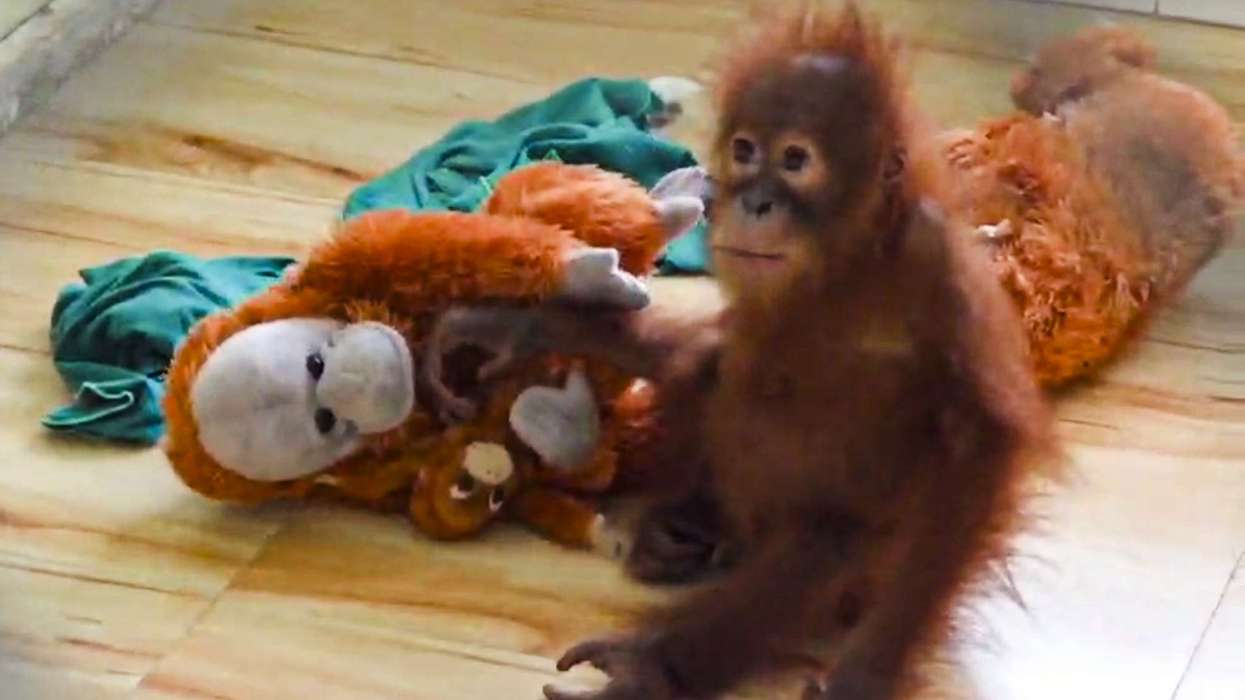
- Five orangutans, around 18 months old, found abandoned by rangers in Odisha — thousands of miles from their native Sumatra and Borneo
- Experts call India's exotic wildlife trade "massive," estimated at $42.6 million in 2024
- A Wildlife Crime Control Bureau official says "thousands of social media influencers" are driving demand among the wealthy
FIVE baby orangutans abandoned in an Indian forest have exposed what experts call a "massive" and largely hidden exotic wildlife trade — one they warn is being fuelled by wealthy Indians chasing exotic status symbols for social media, and by traffickers exploiting a porous border with war-torn Myanmar.
Critically endangered orangutans exist naturally only on Indonesia's Sumatra island and on Borneo. Yet the five infants, aged around 18 months, were found by rangers in Balasore, in India's eastern Odisha state — more than 2,000 kilometres away by sea and 7,000 kilometres by land.
They are now being cared for at a zoo, and Indonesia has requested their return. Police have launched a criminal investigation, but exactly how the animals were smuggled into India has not been established.
Sumanth Bindumadhav of Humane World for Animals India said there had been repeated instances of exotic wild animals being found or seized across the country.
His organisation's June 2026 report pointed to a "steep increase in seizures", pointing to a rising illegal trade, and put the value of India's exotic-pet market at $42.6 million in 2024. Orangutans and gibbons, the report found, were increasingly being trafficked into India from southeast Asia's rainforests.
Influencers accused of fuelling demand
A senior official at India's Wildlife Crime Control Bureau, speaking anonymously as they were not authorised to talk to media, said thousands of social media influencers were promoting exotic animals as pets online, feeding demand among their followers. "It is a huge market," the official said. "Rich people keep them in their homes."
Government figures show more than 40,000 people had registered exotic animals under a voluntary disclosure scheme by February 2021 — but analysts say this captures only those who came forward.
"The true volume of it is potentially much larger and remains unknown," Bindumadhav said. "The true scale of it is actually quite frightening."
Shekhar Kumar Niraj, former India head of TRAFFIC, linked the surge to a rising number of animals held privately, noting that primates are especially prized by private zoos for being intelligent and interactive — and that many such facilities have flouted the law. "Private zoos have violated laws at a very alarming scale across the country," he said.
Indian federal authorities did not respond to requests for comment.
The scale of past seizures underlines the problem: WWF-India documented 56 seizures involving roughly 4,000 exotic animals in 2022 alone.
In October 2025, Mumbai customs officers arrested a passenger carrying two endangered gibbons stuffed inside a checked bag, alongside other seizures of lizards, possums and venomous vipers.
In 2024, forest officials recovered a trafficked orangutan from a flat in Maharashtra. Experts insist these cases are only a fraction of the real trade. "The scale of it is much, much bigger than what we see actually based on the seizure data," said Jimmy Borah of Aaranyak.
Experts point to the land border between Myanmar and India's northeast as a key smuggling corridor, alongside airports and formal cargo routes.
"The northeast is important for seizures of live exotic animals, linked to cross-border movement from Southeast Asia," said Dipankar Ghose of WWF-India.
Borah put it more bluntly: "We are talking about miles and miles of a very porous border."