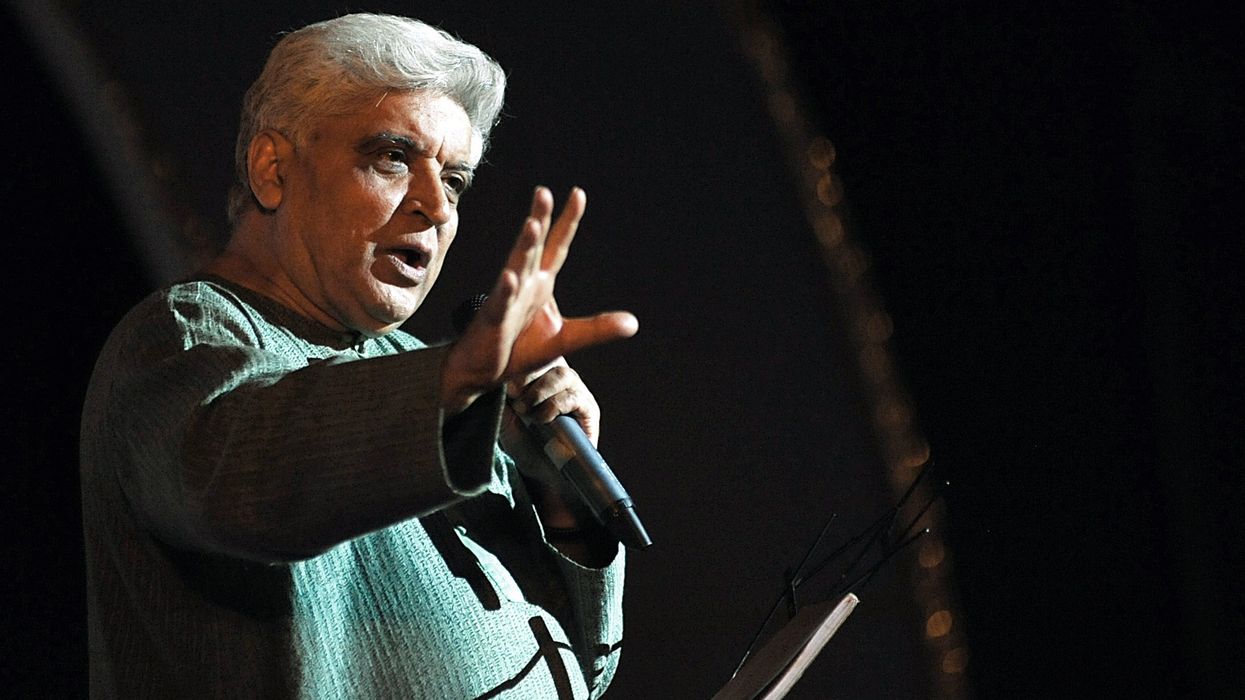

Amidst concerns by artists and other creatives that artificial technology would rapidly replace them, veteran lyricist Javed Akhtar believes that the technology of artificial intelligence in its current form is unlikely to hurt or become a threat to the artistry of content creators.
According to the prolific writer and poet, who has notched up an extensive repertoire as a screenwriter penning verses for films says creativity stems from instinct and the writer needs a leap of faith to turn it into something tangible.
“Nobody can stop technology. It is fait accompli. Innovation will never stop and will only continue…Yes, with the help of Artificial Intelligence, you can write a letter to a deputy collector or write a job application,” he said adding that the technology cannot substitute for the creative instinct.
Akhtar, who has to his credit five National Film Awards for best lyricist during an event in the national capital to mark the launch of his latest book- ‘Talking Life in Conversation with Nasreen Munni Kabir’ said “Ultimately, writing cannot be done only through data. There is a kind of leap of faith in creative writing or creative work and an instinct (of the creator) attached to the process.”
Akthar was speaking at the event organised by The Anant Raj Corporation (TARC).
While the emerging technology is increasingly being used by creators to pen books, poems, essays, and news articles among others, essentially to reduce the cost of production, it is increasingly being used by creators to make videos which combines images, voice, and effects with the potential to disrupt.
On the potential misuse of such emerging technology, the lyricist writer said, “Technology gives birth to new possibilities. In new possibilities, there is always a possibility of misuse. So to stop that misuse you will have to bring laws.”
On Wednesday, the Delhi High Court issued an interim order protecting the “personality rights” of Anil Kapoor and restraining various entities from misusing his image, name voice or other elements of his persona- including his signature catchphrase ‘Jhakaas’ for financial gain without his consent.
Meanwhile, during the course of the book launch event on Thursday, Akthar asked about what he thought about current productions in the Indian film industry said that “content is a part of the larger society.”
“Indian film industry or Indian films and their content is a part of the larger society. It is not that movies are portraying something that is not happening in our society. Indian films have always reflected what is happening in the society. Even commercial films are realistic,” said Akhtar.
The veteran poet, however, painted a gloomy picture of how language itself had shrunk in society.
“You do not have that level of vocabulary that your grandparents had,” he told the gathering. “For the pursuit of creating wealth, we have left behind our culture, tradition, mythology, language, and literature.”