
Highlights:
- Amrit Ramnath says the word “Sakhiye” just happened and became the heart of the song.
- Sitara’s voice added a new layer, making the duet feel alive and unexpected.
- He mixes Malayalam roots with modern sounds, keeping the classical influence but making it fresh.
- Ramnath opens up about taking risks in independent music and film work without overthinking it.
- The song is all about love and celebration, already appearing in wedding videos and personal posts online.
In an exclusive interview with Eastern Eye, Amrit Ramnath talks about the making of Sakhiye, taking musical risks, and teaming up with Sitara. He doesn’t just walk into music; you can feel it’s stitched into him. Every word he says about melody, risk, and the urge to experiment carries that energy.
 Amrit Ramnath on Sakhiye, the melody that found its own words and the duet that changed everything Instagram/amritramnath
Music stitched into him
And then, of course, there’s the part you can’t ignore: his mother is Bombay Jayashri. The Bombay Jayashri. A legend. So when that Carnatic depth surfaces in his work, it isn’t a carefully researched influence, but inheritance.
But his sound is also a mash-up of everywhere else he’s from. A little Marathi, some Hindi, a touch of Urdu. For a long time, however, Kerala was the place he knew of, but didn't truly know.
Coming home to Kerala
That changed with his first film score for the Malayalam movie Varshangalku Shesham, a total knockout. The film was a super hit, and its songs were celebrated everywhere. For Amrit, something clicked. "The film really took me back to, obviously, the place, the language, the culture, all of it," he says.
Sakhiye is a product of that reconnection, an act of reminiscing. He also admits, “I do have a significant audience there, and I really enjoy the language.” Even though he’s not super fluent, he understands a fair bit.
The birth of Sakhiye
This brings us to the song’s unexpected nucleus. Amrit built the melody first. He sent a scratch track, a tune hummed without words to lyricist Vinayak, and the word was already there, nestled in the gibberish. He explains: “the word sakhiye kind of came automatically in my sort of gibberish melody singing, so to speak, and it stayed that way.” Vinayak chose to keep it. That accidental utterance became the song’s emotional pivot. “From Sakhi, it takes a turn, in my opinion,” he says.
So what is a ‘Sakhi’? A person? A memory? Just love?
“I think you can tick all three,” he says. It’s the overarching idea of love, but the word itself is fluid. “Sakhi also could refer to a friend if I'm not wrong.” Friend, lover, memory, the ambiguity is the point.
Singing with Sitara Krishnakumar
Then there’s Sitara. Bringing her on board was, to most listeners, a masterstroke. But what did she actually bring to Sakhiye? Amrit lights up. He wanted to play with their vocal ranges. Her sections are lower, reminiscent of the ‘Cherathukal’ vibe from Kumbalangi Nights. His, in parts, are higher than he’d normally go. “The moments I swear the two voices come together, especially the second Sakhi, and right after that… those were the moments of synergy.” You can hear the excitement in his voice just talking about it.
Bridging old and new
His sound is often described as a bridge, like classical roots meeting contemporary arrangements. Is that a deliberate tightrope walk?
“For me, a lot of the language also draws me into certain cultural aspects,” he explains. The melody is inspired by that rooted, Indian core. But the arrangement is where he contemporises. He points to the track itself: “the song starts with a very… plucked acoustic sort of guitar riff that moves into a slightly… Afro beat.” It’s not a calculated fusion. “It's something that's very like core to my identity. So I think it sort of just happens.”
Risk and reward
What about risk? Careers? The boring, inevitable question. Amrit didn’t offer a canned PR answer. He admitted it’s “a tricky question” and something he’s “learning along the way.” He nailed the honest bit: the music industry isn’t just about music anymore; it’s a whole ecosystem. But for him, the risk is innate. “It’s not a calculated career move. It’s curiosity.”
He’s currently juggling two lanes: independent music and film composing. “I have a fairly loyal audience when it comes to independent music. And I'm also growing my audience as a film composer; I just finished a Tamil film. Before that, I had a Malayalam film, and now I'm in the process of beginning a couple more projects.”
On sustainability, he is pragmatic: “The risk to reward ratio is never going to be great with any art form.” But he finds the reward in the act itself. “Taking risks in itself is so rewarding.”
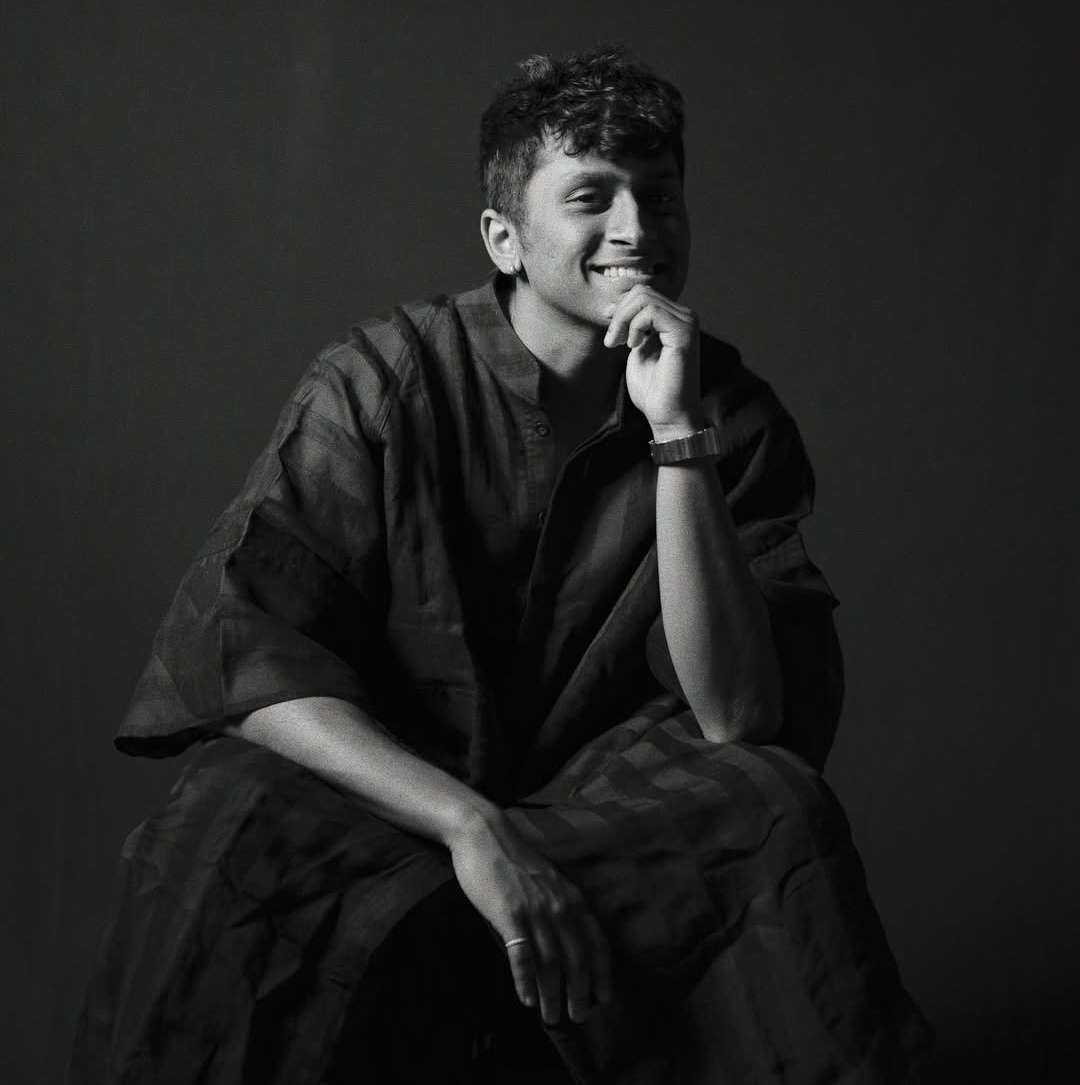 Amrit Ramnath opens up on his creative risks and the magic behind Sakhiye’s duet with Sitara Krishnakumar Instagram/amritramnath
Chasing emotion, not audience
On the rise of regional music, he is clear-eyed: “It’s mostly organic.” He hesitates at the word ‘responsibility’. “Responsibility is a heavy word,” he says. But within that organic movement, “there is a responsibility for me to do as much as I can… it's only fair that if there is a voice that exists, then it's only fair that you express it.”
His process now is about stitching different fabrics and styles together, chasing a feeling, not an audience. “I'm trying to see if I can chase a certain emotion.” That’s the project now: chase the feeling, not the demographic.
So what’s the emotion he’s chasing with Sakhiye? What’s the one feeling he wants to leave people with?
“I just hope it gives them that, you know, that butterfly feeling.” Of love, yes, but also of celebration. He’s noticed it popping up in countless Instagram wedding reels. “So I thought, like, overall, it can be a song of celebration… if people are feeling that, then I feel like we've won.”
- YouTube youtu.be
So there you have it. A melody that held onto a word. A duet that plays with range. A composer in love with the next curiosity. Listen once and you’ll feel it. Listen twice and you’ll hear the place where Sakhiye finally lands.