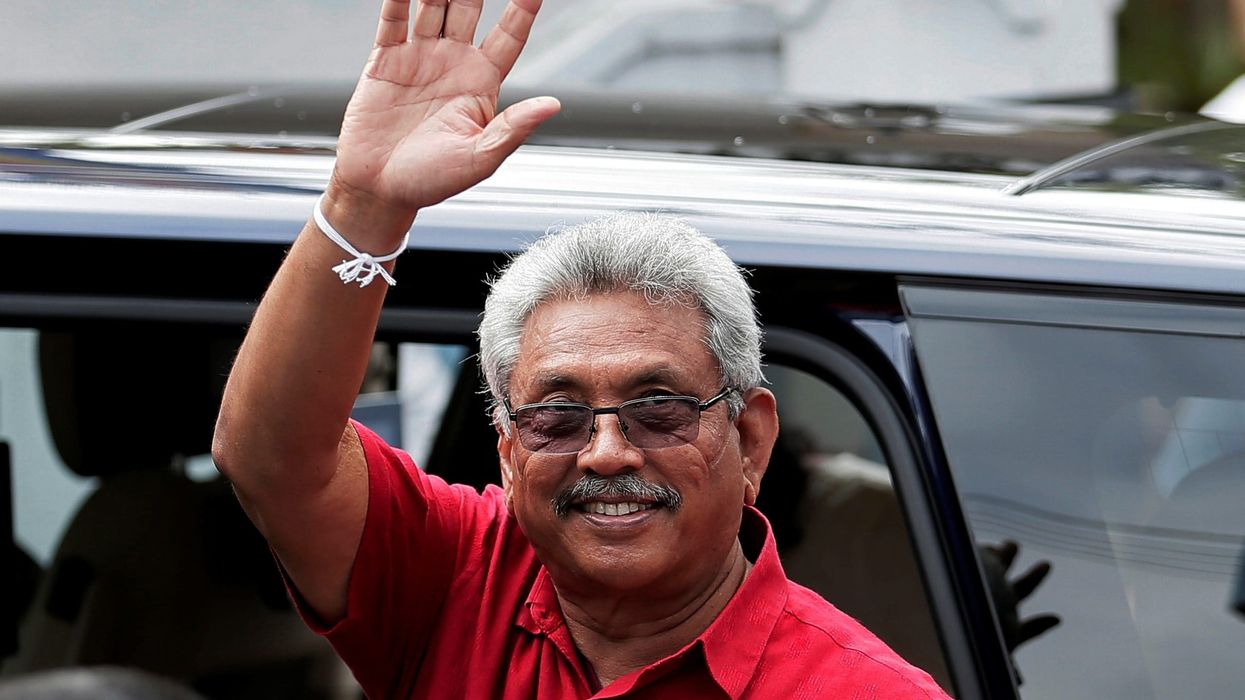

Sri Lanka's embattled president Gotabaya Rajapaksa pledged Wednesday to give up most of his executive powers but stopped short of yielding to demands for his resignation over the country's economic crisis.
The 72-year-old, in his first address to the nation since the start of a month-long protest campaign calling on him to quit, said he will announce a unity government in the coming days.
"I will name a prime minister who will command a majority in parliament and the confidence of the people," Rajapaksa said in a televised speech.
He did not name the successor of his elder brother Mahinda Rajapaksa, who stepped down as prime minister on Monday to clear the way for a new cabinet.
"I will work to give more powers to parliament and activate the key elements of the 19th amendment to the constitution," he said, referring to democratic reforms he overturned soon after his 2019 election.
Rajapaksa's pledge to reinstate the amendment would deprive him of the ability to control senior appointments to the public service, police, elections office and judiciary.
Sri Lanka has suffered through months of lengthy blackouts and shortages of food, fuel and other vital goods after running out of foreign exchange to pay for imports.
The island nation's central bank chief warned Wednesday that the economy will "collapse" unless a new government was urgently appointed.
Rajapaksa said he needed the public's support "to ensure that the country does not collapse and we are able to provide the essentials to all."
Protesters have camped outside the president's seafront office in the capital Colombo for more than a month to press him into standing down.
A nationwide curfew is in effect after government loyalists attacked anti-Rajapaksa protesters Monday, sparking reprisals by furious mobs.
At least nine people died in the ensuing violence while dozens of homes belonging to government lawmakers and supporters were set alight.
Security forces have largely curbed public disorder after a huge troop deployment, with soldiers ordered to shoot on sight anyone engaged in looting or violence.