
AIRBUS will build a helicopter assembly line in India with Indian conglomerate Tata, the European aircraft manufacturer said last Friday (26).
The deal was announced during a two-day visit to India by French president, Emmanuel Macron.
Airbus said the facility – which will take two years to set up – would be the first such operation to be run by a private group in India.
It will assemble and test the major components of the H125 Ecureuil helicopter and deliver it to customers in India and neighbouring countries.
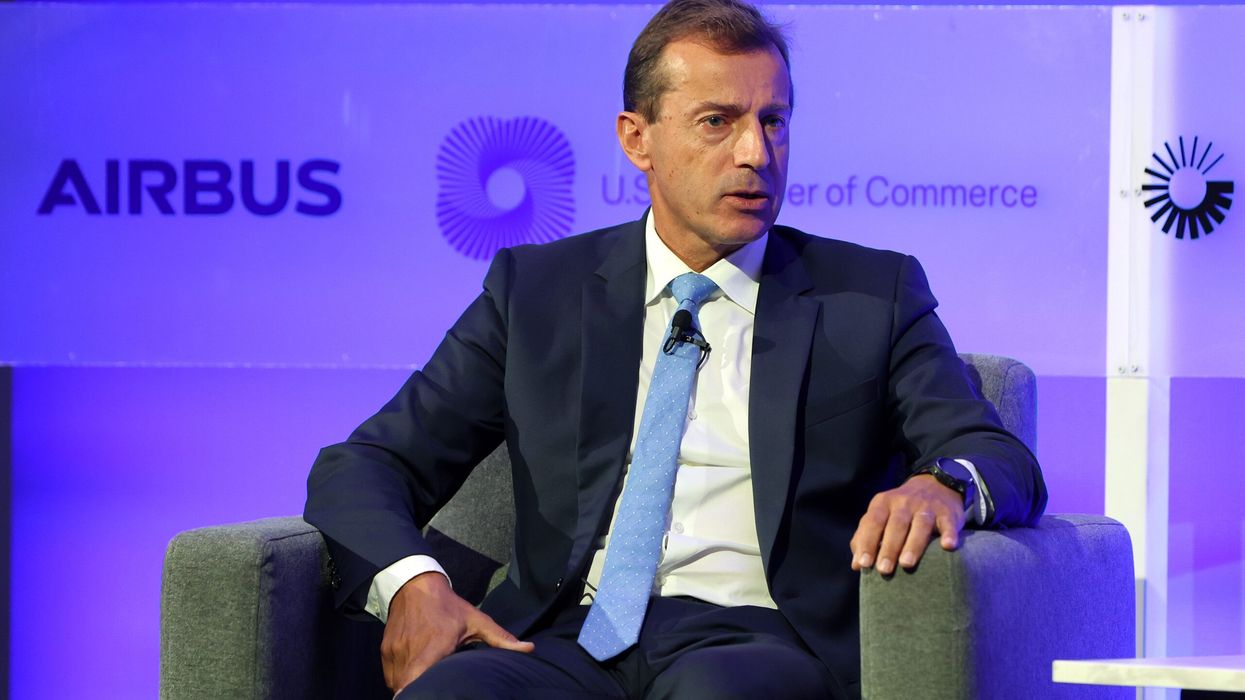
Airbus CEO Guillaume Faury said making the helicopter in India would “unlock the true potential of the helicopter market in the country”.
The H125 is a light civilian helicopter which can transport up to six people.
“Helicopters are crucial for nation-building. A ‘Made-in-India’ civil helicopter will not only be a symbol of the confident New India but will also unlock the true potential of the helicopter market in the country,” said Faury.
“This helicopter final assembly line, which we will build together with our trusted partner Tata, is a reaffirmation of Airbus’ commitment to developing the full spectrum of the aerospace ecosystem in India,” he added.
Tata and Airbus are already cooperating to make C-295 transport aircraft in India, in prime minister Narendra Modi’s home state of Gujarat.
“This will be the second final assembly line Airbus is building in India after the ‘Make in India’ C295 military aircraft manufacturing facility in Vadodara, Gujarat,” Faury said.
“The FAL will take 24 months to be set up and deliveries ... are expected to commence in 2026,” Airbus said, adding that the companies will jointly decide on where the facility should be located.
N Chandrasekaran, chairman, Tata Sons, said, “The Tata Group is delighted to set up India’s first helicopter assembly facility in the private sector.
“This facility will have the final assembly line in partnership with Airbus for the world’s bestselling Airbus H125 single-engine helicopter for the Indian as well as export markets,” he added.
Further cooperation in the defence sector was also discussed during Macron’s visit, officials said, including the possibility that French engine maker Safran would assist in manufacturing fighter jet engines in India.
After Russia, France is the largest arms supplier to India, which has relied on its fighter jets for four decades.
“Safran is fully willing to do it with a 100% transfer of technology in design, development, certification, production and so on,” India ambassador to France, Jawed Ashraf, said.
Coinciding with Macron’s visit, jet engine maker CFM International last Friday (26) also announced an agreement with India’s Akasa Air to purchase more than 300 of its LEAP1B engines to power 150 Boeing 737 MAX airplanes. (Agencies)