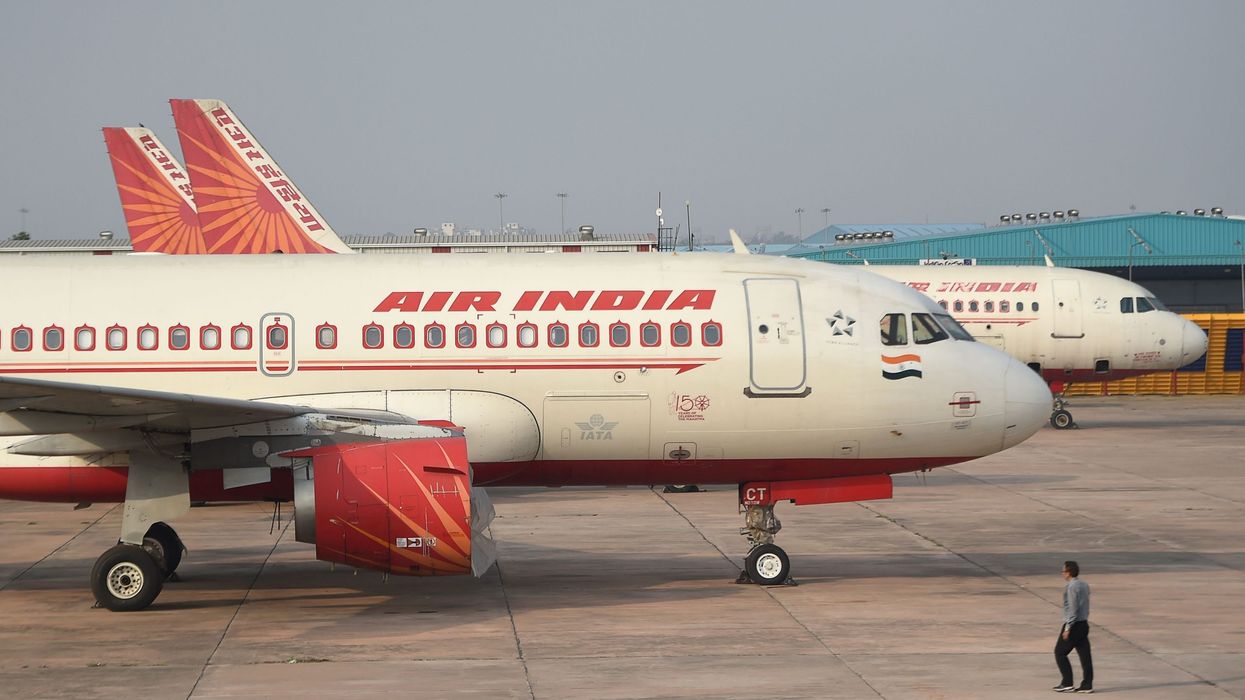

- Air India’s board discussed furloughs, bonus delays and further flight cuts during a key strategy meeting.
- The airline group is expected to post losses of more than £2bn for FY26.
- CEO Campbell Wilson is set to step down later this year as succession planning gathers pace.
Air India’s board has reviewed a fresh round of cost-cutting measures, including possible employee furloughs and delayed bonus payouts, as the airline struggles with rising fuel costs, disrupted international routes and mounting financial losses.
The meeting, chaired by N Chandrasekaran, was held at the airline’s headquarters in Gurugram and reportedly lasted more than three hours. According to multiple reports, board members discussed the airline’s worsening financial outlook, operational pressures linked to the West Asia conflict and plans for leadership transition ahead of chief executive Campbell Wilson stepping down later this year.
Air India Group, which includes Air India and Air India Express, is projected to post losses exceeding ₹22,000 crore (£1.95bn) for the financial year ending March 2026. That would mark a steep jump from the consolidated loss of ₹10,859 crore (£960m) reported for FY25.
The financial strain comes as Indian airlines continue to deal with higher aviation turbine fuel prices and longer international flight paths caused by airspace restrictions and the continuing closure of Pakistan’s airspace for Indian carriers.
Turbulence beyond the cockpit
Sources reportedly told news agencies that the board examined several ways to reduce costs as many long-haul international routes have become less profitable to operate.
The airline is said to be considering temporary furloughs, a move typically used during periods of financial stress where employees are placed on unpaid leave for a limited period. Discussions also reportedly covered annual salary increments and delays to performance-linked bonus payouts.
At the same time, Air India may further trim flight schedules and rethink ancillary revenue strategies in an attempt to stabilise earnings.
The wider impact on the aviation sector is already becoming visible. Data from aviation analytics company Cirium showed Indian carriers reduced 1,034 weekly international flights in May compared with the same period a year earlier — a drop of nearly 25 per cent.
The sharpest pullback has come from the Air India Group. Air India Express reportedly cut its weekly international services from 959 flights to 451, a decline of 53 per cent. Meanwhile, Air India reduced weekly international departures by 288 flights to 881.
Wilson had earlier warned employees about the worsening operational environment in an internal communication sent on May 1.
“We have reduced some flying for April and May... massive rise in jet fuel prices which, together with airspace closures and longer flying routes, have caused many of our international flights to become unprofitable to operate,” he reportedly said in the message, as quoted in a news report.
He also reportedly told employees that the situation “remains extremely challenging”, leaving the airline with “no choice” but to extend schedule cuts into June and July.
Leadership transition in focus
Beyond the airline’s finances, the board also discussed succession planning ahead of Wilson’s expected departure later this year.
Sources suggested the discussions were not limited to identifying the next chief executive, but also focused on ensuring a smooth leadership transition during a sensitive period for the carrier.
The issue carries added weight because Air India remains in the middle of a large-scale transformation programme under Tata Group ownership. Since returning to Tata control after privatisation, the airline has been working on fleet modernisation, expanding international routes and integrating businesses across the wider aviation group.
The board is understood to include senior industry figures such as Goh Choon Phong, Sanjiv Mehta, Alice Vaidyan, PR Ramesh and PB Balaji.
Chandrasekaran is also expected to address Air India employees at a town hall meeting on May 8, according to reports.