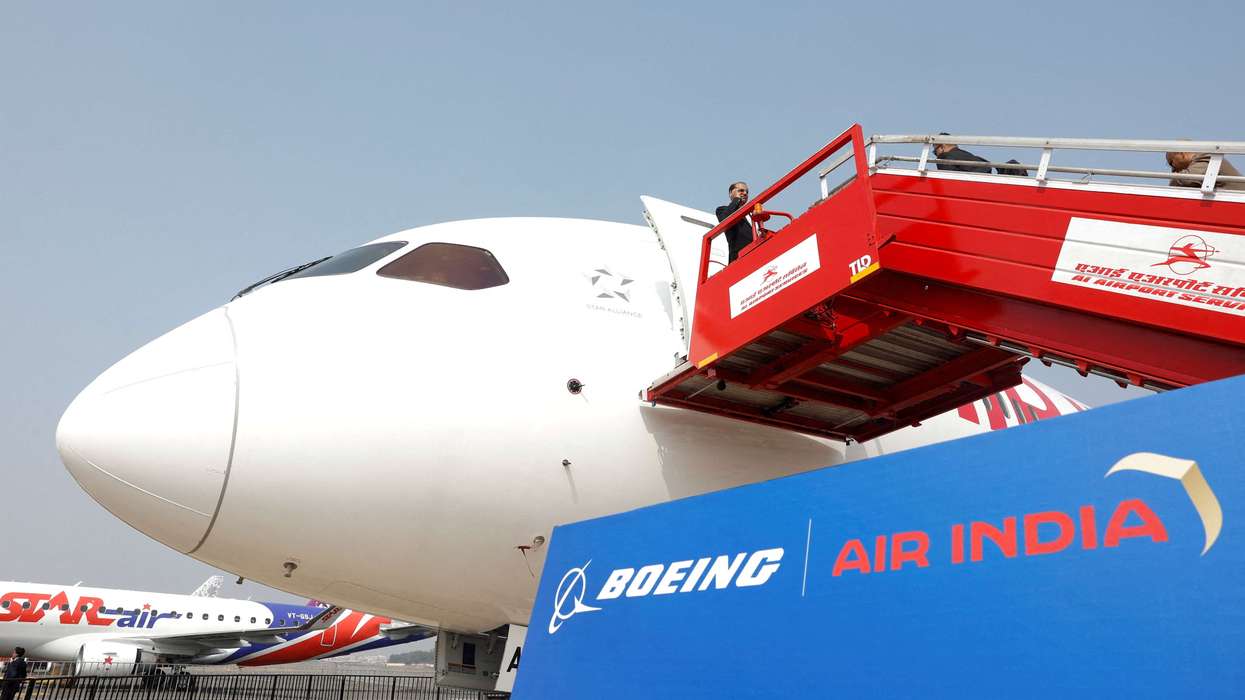

INDIAN air safety officials plan to travel to Seattle to observe Boeing’s testing of a fuel-control switch panel removed from an Air India 787 after pilots reported a possible defect on a London-Bengaluru flight in February, according to documents seen by Reuters.
The testing has renewed attention on fuel-control switches on Boeing Dreamliners as investigators prepare the final report into the Air India 787 crash in Gujarat last June that killed 260 people.
The switches regulate the flow of jet fuel into the aircraft’s engines and are designed so they cannot be moved without specific pilot actions. They came under scrutiny after a preliminary report into the crash found the switches had been shut off almost simultaneously, cutting fuel supply to the engines.
During the February incident in London, pilots observed during engine start that the fuel switches did not stay fixed in the “run” position on the first two attempts when light vertical pressure was applied, but remained stable on a third attempt before take-off, India’s Directorate General of Civil Aviation (DGCA) had said earlier.
UK authorities investigated the incident, but Boeing told Air India in February that the module containing the fuel switches was “serviceable”, according to an email seen by Reuters. The DGCA had also said the switches passed checks.
The module was later sent to a Boeing facility in Seattle for further testing, according to confidential emails seen by Reuters.
“As the matter is sensitive in nature, Air India is hereby directed to ensure that the strip/test examination at OEM’s (Boeing) premises is carried out in the presence of a DGCA officer,” Manish Kumar, a DGCA deputy director of airworthiness, wrote in a March 9 email.
The email did not explain why the regulator considered the matter sensitive or why it wanted officials present during the testing.
In a statement, Air India said the module had been confirmed as “fully functional” by Boeing and the DGCA, but added that the additional testing was “understood to be intended to ensure a thorough and conclusive evaluation ... as a measure of abundant caution.”
The airline said the testing “involves examination in a controlled laboratory environment to definitively confirm its performance and integrity.”
Air India, owned by the Tata Group and Singapore Airlines, said Boeing and the DGCA had both found the module serviceable.
The DGCA and Kumar did not respond to Reuters’ queries.
“We are in contact with our customer and will continue to support them,” a Boeing spokesperson said in a statement.
The US Federal Aviation Administration has said last year’s Air India crash, the world’s deadliest in a decade, does not appear to have been caused by a mechanical issue.
Reuters reported last year that recorded dialogue between the two pilots suggested the captain cut fuel flow to the engines while the first officer was flying the aircraft, citing a source briefed on early US officials’ assessments.
That possibility was rejected by a pilots’ union in India and by the captain’s father, who called for an independent investigation into other possible causes.
Under international rules, India’s Aircraft Accident Investigation Bureau must issue its final report next month or provide an interim update if more time is needed. The AAIB did not respond to a request for comment.
The emails showed testing of the switch module linked to the February London incident is expected to take place in June, around the anniversary of last year’s crash.
According to an Indian government official, the DGCA wants to examine the switch’s locking mechanism, including whether pressure applied at a particular angle could move it while locked.
The official, speaking on condition of anonymity because the matter is sensitive, said the Indian government “wants to be thorough”.
Another source familiar with the matter said Air India is paying for the trip, which will involve two DGCA officials travelling to Boeing’s facility.
Although the DGCA said publicly in February that the switches “were checked and found satisfactory”, the UK Civil Aviation Authority questioned why pilots proceeded with the flight and reported the issue only after landing.
One email showed Air India informed the CAA that the unit had been found serviceable. In a statement to Reuters, the CAA said its review remains ongoing and that it “is closely monitoring Air India’s adherence to its processes.”
Boeing has said it did not change fuel-switch procedures on the 787 after the June 2025 crash.
(With inputs from Reuters)