

Highlights:
- AI can make thousands of podcast episodes every week with very few people.
- Making an AI podcast episode costs almost nothing and can make money fast.
- Small podcasters cannot get noticed. It is hard for them to earn.
- Advertisements go to AI shows. Human shows get ignored.
- Listeners do not mind AI. Some like it.
A company can now publish thousands of podcasts a week with almost no people. That fact alone should wake up anyone who makes money from talking into a mic.
The company now turns out roughly 3,000 episodes a week with a team of eight. Each episode costs about £0.75 (₹88.64) to make. With as few as 20 listens, an episode can cover its cost. That single line explains why the rest of this story is happening.
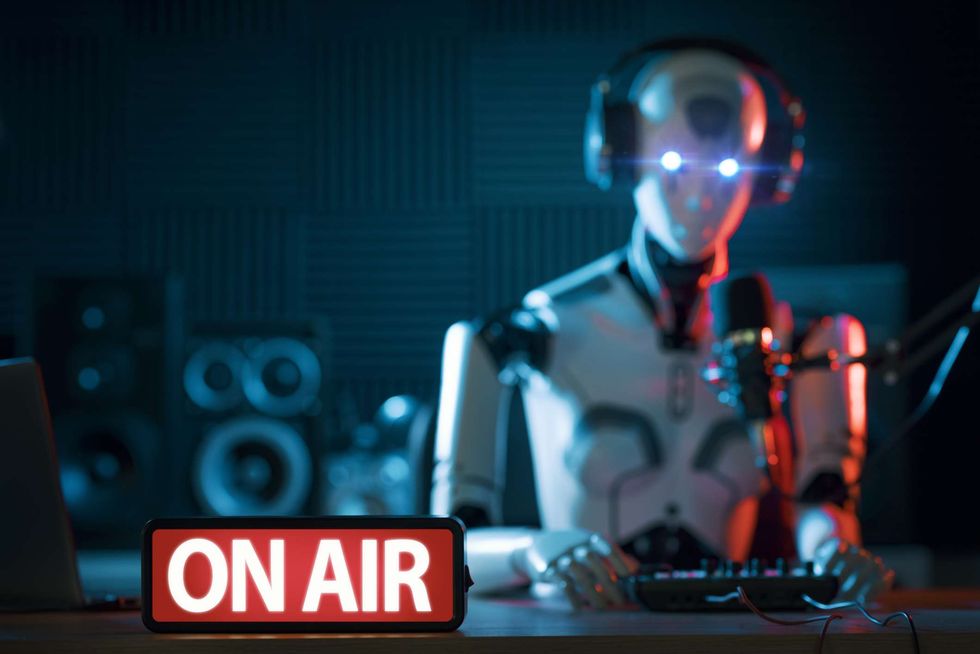 When AI takes over podcasts human creators are struggling to keep up iStock
The math that changes the game
Podcasting used to be slow and hands-on. Hosts booked guests, edited interviews, and hunted sponsors. Now, the fixed costs, including writing, voice, and editing, can be automated. Once that system is running, adding another episode barely costs anything; it is just another file pushed through the same machine.
To see how that changes the landscape, look at the scale we are talking about. By September 2025, there were already well over 4.52 million podcasts worldwide. In just three months, close to half a million new shows joined the pile. It has become a crowded marketplace worth roughly £32 billion (₹3.74 trillion), most of it fuelled by advertising money.
That combination of a huge market plus near-zero marginal costs creates a simple incentive: flood the directories with niche shows. Even tiny audiences become profitable.
What mass production looks like
These AI shows are not replacements for every human program. They are different products. Producers use generative models to write scripts, synthesise voice tracks, add music, and publish automatically. Topics are hyper-niche: pollen counts in a mid-sized city, daily stock micro-summaries, or a five-minute briefing on a single plant species. The episodes are short, frequent, and tailored to narrow advertiser categories.
That model works because advertisers can target tiny audiences. If an antihistamine maker can reach fifty people looking up pollen data in one town, that can still be worth paying for. Multiply that by thousands of micro-topics, and the revenue math stacks up.
 How mass-produced AI podcasts are drowning out real human voicesiStock
Where human creators lose
Podcasting has always been fragile for independent creators. Most shows never break even. Discoverability is hard. Promotion costs money. Now, add AI fleets pushing volume, and the problem worsens.
Platforms surface content through algorithms. If those algorithms reward frequency, freshness, or sheer inventory, AI producers gain an advantage. Human shows that take weeks to produce with high-quality narrative, interviews, or even investigative pieces get buried.
Advertisers chasing cheap reach will be tempted by mass AI networks. That will push down the effective CPMs (cost per thousand listens) for many categories. Small hosts who relied on a few branded reads or listener donations will see the pool shrink.
What listeners get and what they lose
Not every listener cares if a host is synthetic. Some care only about the utility: a quick sports update, a commute briefing, or a how-to snippet. For those use cases, AI can be fine, or even better, because it is faster, cheaper, and always on.
But the thing is, a lot of podcast value comes from human quirks. The long-form interview, the offbeat joke, the voice that makes you feel known—those are hard to fake. Studies and industry voices already show 52% of consumers feel less engaged with content. The result is a split audience: one side tolerates or prefers automated, functional audio; the other side pays to keep human voices alive.
 When cheap AI shows flood the market small creators lose their edgeiStock
Legal and ethical damage control
Mass AI podcasting raises immediate legal and ethical questions.
- Copyright — Models trained on protected audio and text can reproduce or riff on copyrighted works.
- Impersonation — Synthetic voices can mirror public figures, which risks deception.
- Misinformation — Automated scripts without fact-checking can spread errors at scale.
- Transparency — Few platforms force disclosure that an episode is AI-generated.
If regulators force tighter rules, the tiny profit margin on each episode could disappear. That would make the mass-production model unprofitable overnight. Alternatively, platforms could impose labelling and remove low-quality feeds. Either outcome would reshape the calculus.
How the industry can respond through practical moves
The ecosystem will not collapse overnight.
- Label AI episodes clearly.
- Use discovery algorithms that reward engagement, not volume.
- Create paywalls, memberships, or time-listened metrics.
- Use AI tools to help humans, not replace them.
Industry standards on IP and voice consent are needed to reduce legal exposure. Platforms and advertisers hold most of the cards here. They can choose to favour volume or to protect quality. Their choice will decide many creators’ fates.
Three short scenarios, then the point
- Flooded and cheap — Platforms favour volume. Ads chase cheap reach. Many independent shows vanish, and audio becomes a sea of similar, useful, but forgettable feeds.
- Regulated and curated — Disclosure rules and smarter discovery reward listener engagement. Human shows survive, and AI fills utility roles.
- Hybrid balance — Creators use AI tools to speed up workflows while keeping control over voice and facts. New business models emerge that pay for depth.
All three are plausible. The industry will move towards the one that matches where platforms and advertisers put their money.
 Can human podcasters survive the flood of robot-made showsiStock
New rules, old craft
Machines can mass-produce audio faster and cheaper than people. That does not make them better storytellers. It makes them efficient at delivering information. If you are a creator, your defence is simple: make content machines cannot copy easily. Tell stories that require curiosity, risk, restraint, and relationships. Build listeners who will pay for that difference.
If you are a platform or advertiser, your choice is also simple: do you reward noise or signal? Reward signal, and you keep what made podcasting special. Reward noise, and you get scale and a thinner, cheaper industry in return. Either way, the next few years will decide whether podcasting stays a human medium with tools or becomes a tool-driven medium with a few human highlights. The soundscape is changing. If human creators want to survive, they need to focus on the one thing machines do not buy: trust.