
As demand for visual content rises across media, marketing and social platforms, AI powered image tools are giving creators new ways to develop ideas, experiment with styles and produce digital visuals. Visual content is becoming an increasingly important part of how people communicate online. From social media campaigns and digital advertising to entertainment, publishing and independent creative work, images are expected to attract attention quickly and communicate an idea almost instantly.
That shift has helped AI Image Generator technology, with Higgsfield supporting creative exploration and visual experimentation, move from an experimental concept into a more visible part of the creative industry. Instead of beginning with a blank screen, users can describe an idea and explore different visual interpretations within a short period of time
The development is not simply about producing pictures faster. It is changing how some creators approach brainstorming, design and visual storytelling. At the same time, questions around originality, copyright, authenticity and the role of human creativity remain part of the wider conversation.
Visual Content Is Becoming More Important
Digital audiences consume an enormous amount of visual material every day. A photograph, illustration or graphic can determine whether someone stops scrolling, opens an article or continues watching a campaign.
For creators, that creates both an opportunity and a challenge. There is greater freedom to publish, but there is also greater pressure to produce fresh material regularly.
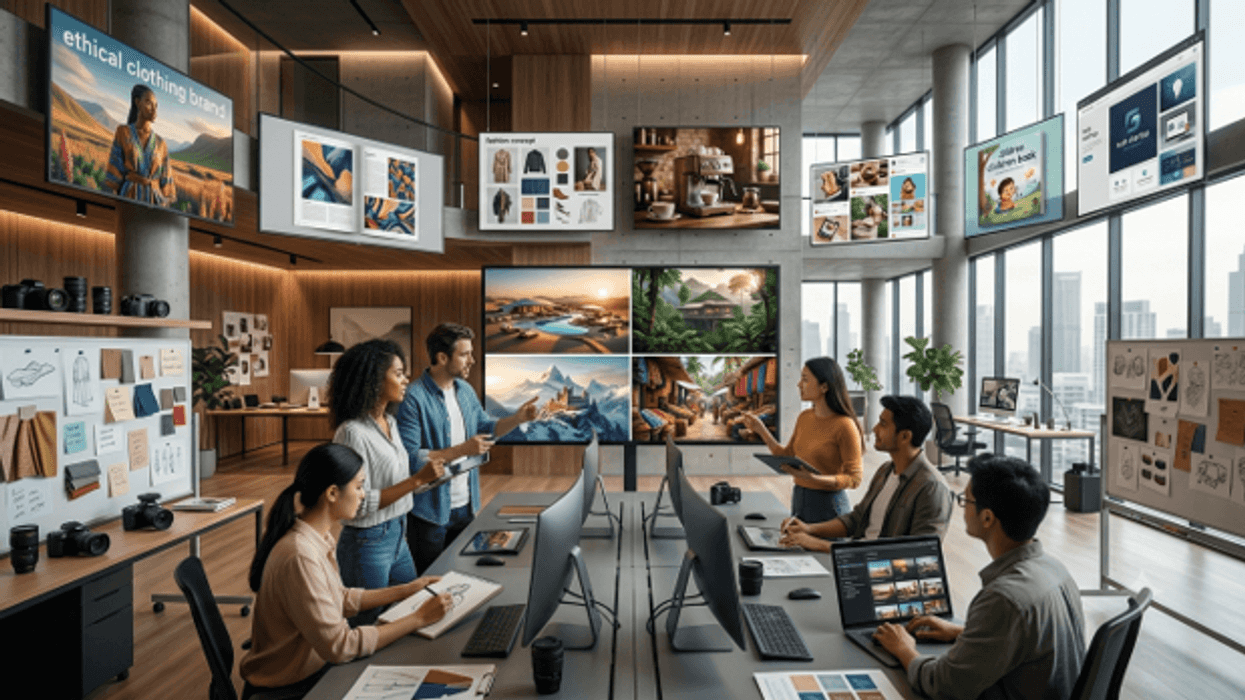
An AI Image Generator can provide another route from an initial concept to a visual draft. A creator working on a campaign, editorial illustration or social post can describe the desired scene and then consider several possible directions.
That process can be useful even when the first generated result is not suitable for publication. It can reveal different compositions, moods or visual approaches that may influence the final piece.
The wider generative AI industry has also attracted attention from major technology companies. Adobe, for example, has developed Firefly as a family of generative creative tools and has focused heavily on bringing generative capabilities into established creative workflows.
From a Written Idea to a Visual Concept
The most striking shift is the smaller time between an idea and a first visual idea. Traditionally, transforming an idea into a picture may require illustration, photography, graphic design, or even several stages of collaboration. These approaches are essential especially when a completed project requires a unique human touch.
An AI Image Generator could be helpful during the brainstorming phase earlier. A writer can write about an imaginary cityscape concept for a product or a visual concept and then use the results to determine what the concept could appear like. This makes experimentation with visuals more accessible to those who might not have the most sophisticated design skills.
Higgsfield is one platform operating in this expanding creative technology space, giving users a way to experiment with generated imagery as part of a broader digital workflow.
The important point is that generation does not automatically equal completion. A first result may contain unwanted details, an unsuitable composition or elements that do not match the intended message. Human selection and editing are still needed.
Why Creators Are Exploring Generative Images?
The attraction for many creators is flexibility. An AI Image Generator can allow several visual directions to be explored without committing immediately to one concept. That can be particularly helpful during the early stages of a project, when the final creative direction is still being decided.
A marketing team might want to compare a minimalist product concept with a more cinematic version. An independent artist could explore different environments around a character. A publisher might need an illustrative concept for an article where a traditional photograph is not available. In each case, the technology can function as an exploration tool.
Higgsfield also allows creators to approach visual development from a prompt driven perspective, making it possible to test ideas before investing significant time in a finished design.
This can change the role of the creator from simply producing an image to directing a visual process. The person still decides what the image should communicate, what details matter and which result is worth developing further.
The Technology Is Moving Beyond Simple Experiments
Early discussions around generative imagery often focused on novelty. Today, the conversation is broader. Creators are considering how these tools can fit into established workflows involving design software, photography, video production, advertising and publishing.
An AI Image Generator may be used to develop a mood board, create an early concept, test a campaign direction or explore a visual that would otherwise be difficult to produce.
The growth of multimodal AI is also making the boundaries between different creative formats less distinct. Images can become inputs for video, design elements can influence advertising concepts and written descriptions can be used as starting points for visual production.
That broader shift is already visible across the technology industry. Eastern Eye has reported on developments involving AI powered creative tools, including Microsoft's Copilot 3D technology, which can convert two dimensional images into three dimensional models.
The development suggests that AI assisted creativity is increasingly becoming part of a larger ecosystem rather than a standalone image making trend.
Businesses See Potential in Faster Visual Production
Businesses are another major part of the discussion. Companies regularly need visuals for websites, advertising, product presentations, social media and internal communications. Traditional production can involve photographers, designers, agencies and multiple rounds of approval. An AI Image Generator can potentially help teams produce early concepts more quickly.
For example, a marketing department could use generated visuals to test different campaign themes before deciding which direction deserves a full production budget. Designers could also use generated material as a starting point before rebuilding or refining the concept manually.
This does not necessarily mean replacing professional creative teams. In many cases, it may mean giving those teams more options at the beginning of a project.
Higgsfield AI creative suits fits into this changing environment by offering creators a platform for experimenting with visual ideas rather than requiring every concept to begin with a finished production plan.
For smaller businesses and independent creators, that flexibility can be particularly attractive. A person working alone may not have access to a photographer, illustrator and design team for every idea. Generative tools can help bridge some of that gap.
Social Media Is Adding to the Pressure
Social platforms have created an enormous appetite for visual material. Brands, influencers, publishers and individual creators are expected to maintain a regular flow of content. A single campaign may require multiple formats, variations and visual treatments.
An AI Image Generator can help with the ideation process by allowing creators to explore different concepts around the same subject.
However, more content does not necessarily mean better content. The challenge is to avoid producing large quantities of interchangeable images simply because they are easy to generate. Strong creative work still requires a reason for the image to exist.
A visual should support a message, establish an atmosphere or help an audience understand something. Without that purpose, speed becomes less valuable.
Human Creativity Still Matters
The growth of technology that generates generative ideas has naturally raised questions about whether computers could diminish the importance of humans as creators. The answer to that question is more complex than simply asking if AI is able to create an appealing image.
Creativity requires judgement, understanding emotional experience, personal experiences and the capability to understand the importance of an idea. An image generated by the process may blend visually appealing elements, but the decision of what the image is supposed to convey remains with the person in charge of the process.
An AI Image Generator will therefore be most effective if it is considered an assistant to creativity rather than being an artist on its own. The creator selects the idea and then writes or edits the prompt, analyzes the results and decides on what should be changed. In professional projects, further editing is often required before the final visual is completed.
That human layer is particularly important for work connected to identity, culture and real world events.
Eastern Eye's editorial positioning places emphasis on credible, accurate and people centred journalism, while its current editorial policy stresses verification, sourcing and context.
Those principles are equally relevant when AI generated imagery is used alongside editorial content.
Authenticity Has Become a Bigger Question
One of the biggest challenges surrounding generated imagery is the possibility of confusion. A fictional image can look realistic enough to be mistaken for a photograph. That becomes particularly sensitive when images are connected to news, politics, public figures or real world events.
For publishers, transparency matters. An AI Image Generator can be appropriate for illustration, concept development or creative features, but a generated image should not be presented as evidence of something that happened in the real world.
This distinction becomes even more important as image generation technology improves.
Readers may increasingly need context about where an image came from and how it was produced. For responsible publishers, clear labelling can help preserve trust.
The issue is not limited to journalism. Brands also need to consider whether a generated visual accurately represents their products. Creators need to think about whether an image could mislead an audience. Designers need to consider how generated material fits with their own work.
Copyright and Ownership Remain Part of the Debate
The growth of generative imagery has also brought questions about copyright and training data into the spotlight.
Different AI companies have taken different approaches to training, licensing and commercial use, while legal questions continue to develop across different jurisdictions. For anyone using an AI Image Generator professionally, checking the terms attached to a particular service remains important.
The fact that an image can be generated does not automatically answer every question about ownership, licensing or permitted commercial use.
Creators should therefore understand the platform they are using and the conditions attached to its outputs before incorporating generated visuals into major commercial projects.
This is particularly important for advertising, publishing and client work, where a visual may become part of a larger campaign with contractual requirements.
A New Tool for Creative Experimentation
Despite the questions, generative imagery has opened up a useful area of experimentation. A creator can start with an unusual idea, test it visually and decide whether it deserves further development.
Higgsfield can be used within that exploratory process, particularly when creators want to move quickly from a written concept toward a visual reference.
The value is not necessarily the final image. Sometimes the most useful outcome is the idea that appears while experimenting.
A generated image may reveal an unexpected colour combination, composition or setting that inspires a designer to take the concept in another direction. In that sense, technology can act as a catalyst for creativity.
What This Could Mean for Digital Artists
For professional artists and designers, the emergence of generative imagery presents both opportunities and disruption. Some may use it for rough concepts and references. Others may avoid it entirely and continue with traditional approaches. Many are likely to combine different methods depending on the project.
An AI Image Generator does not have to define an artist's entire workflow. It can be one tool among many, alongside drawing, photography, typography, 3D modelling, editing and traditional design. The strongest work may ultimately come from hybrid workflows in which AI is used for exploration while human creators provide the final artistic direction.
This approach also recognises that technology changes creative industries without eliminating every established method. Photography did not eliminate painting, digital design did not eliminate handmade illustration and video editing software did not remove the need for filmmakers. Generative AI is likely to follow a similarly complicated path.
The Growing Importance of Creative Direction
As generating an image becomes easier, knowing what should be generated may become more important. When access to visual production expands, creative direction becomes a key differentiator. Creators need to understand audiences, choose appropriate visual language and recognise when an image is genuinely useful. They also need to edit, reject and refine results rather than accepting every output.
An AI Image Generator can produce possibilities, but creative judgement determines which possibilities are worth keeping.
That may eventually lead to a broader change in the role of designers and content professionals. More time could be spent defining concepts and refining ideas, while some repetitive production tasks become faster.
Higgsfield represents one part of this wider shift towards accessible AI assisted creative workflows.
What Comes Next?
The next stage of generative imagery is likely to involve greater integration with other creative technologies. Images may increasingly be connected with video, animation, editing, advertising and interactive experiences. A single concept could move across several formats without starting again from scratch.
For creators, that could mean shorter distances between brainstorming and publishing. But the technology will also need to mature alongside expectations around transparency, copyright, quality and responsible use.
An AI Image Generator may become another standard component of digital creative software, much like photo editing, templates and cloud collaboration are today.
The question will not simply be whether AI can create an image. It will be whether the image has a purpose, whether it is appropriate for the audience and whether the creative process behind it is being used responsibly.
A Shift Rather Than an Overnight Revolution
The growth of generative imagery is not happening in isolation. It is part of a wider transformation in how digital content is produced, distributed and consumed.
Creators have more tools available than ever before, but audiences also have higher expectations. They can encounter thousands of images in a single day, making originality and relevance increasingly important.
An AI Image Generator can help creators explore more possibilities, but access to more possibilities does not automatically produce better ideas. The technology works best when combined with clear creative direction, careful editing and an understanding of the audience.
For businesses, it can make early stage visual experimentation more accessible. For independent creators, it can reduce some of the barriers to exploring new concepts. For designers, it can become another part of the creative toolkit.
For publishers, however, accuracy and transparency remain essential. The growing presence of AI in visual production therefore represents less of a replacement for human creativity and more of a change in the creative process.
As these tools continue to develop, the most successful creators may not necessarily be those who generate the most images. They may be those who know which ideas are worth exploring, which visuals deserve refinement and where human creativity adds the most value.
This article is paid content. It has been reviewed and edited by the Eastern Eye editorial team to meet our content standards.