Skip to content
Search

Latest Stories

5 lesser known facts about R Madhavan

1. His full name is Madhavan Balaji Ranganathan. He started his acting career on TV. He did many guest appearances on TV, including a role on the Zee TV prime-time soap opera Banegi Apni Baat in 1996. He, however, earned popularity as the captain of the ship on the show Sea Hawks and anchor on Tol Mol Ke Bol.
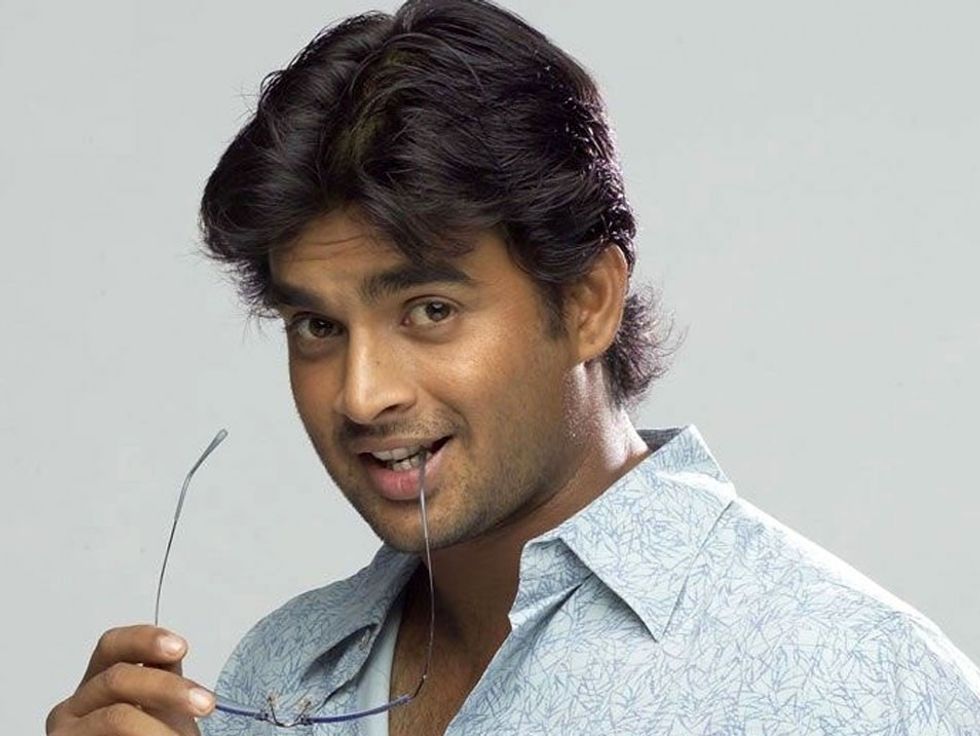

Madhavans MIG Madhavan

2. Madhavan has done his graduation in electronics and represented India as a cultural ambassador in Canada. Being a professional public speaker, he represented India at the Young Businessmen Conference in Tokyo, Japan, in 1992.

3. He is also a golf player. He has appeared in a celebrity charity event in 2007 and has played alongside actor Amitabh Bachchan and director Mani Ratnam. Paradox Studios Limited launched two games with Madhavan as the lead character - Madhavan's MIG & Madhavan.

4. Madhavan’s ambition was to join the army but his parents were totally against it. He has been awarded Best NCC Cadet (National Cadet Corps) Maharashtra and got a chance to go to England for it. He was even trained with the Royal Army, Navy and the Air Force.

5. In 1991, he met his wife Sarita Birje at the Maharashtra workshop. She was an air hostess, who attended his class. After completing the course, the pair began dating and married in 1999, much before his entry into films. They have a son, Vedaant who is an international swimmer.

More For You

Samir Zaidi

Two Sinners marks Samir Zaidi’s striking directorial debut

Samir Zaidi, director of 'Two Sinners', emerges as a powerful new voice in Indian film

Indian cinema has a long tradition of discovering new storytellers in unexpected places, and one recent voice that has attracted quiet, steady attention is Samir Zaidi. His debut short film Two Sinners has been travelling across international festivals, earning strong praise for its emotional depth and moral complexity. But what makes Zaidi’s trajectory especially compelling is how organically it has unfolded — grounded not in film school training, but in lived observation, patient apprenticeships and a deep belief in the poetry of everyday life.

Zaidi’s relationship with creativity began well before he ever stepped onto a set. “As a child, I was fascinated by small, fleeting things — the way people spoke, the silences between arguments, the patterns of light on the walls,” he reflects. He didn’t yet have the vocabulary for what he was absorbing, but the instinct was already in place. At 13, he turned to poetry, sensing that the act of shaping emotions into words offered a kind of clarity he couldn’t find elsewhere. “I realised creativity wasn’t something external I had to chase; it was a way of processing the world,” he says. “Whether it was writing or filmmaking, it came from the same impulse: to make sense of what I didn’t fully understand.”

Keep ReadingShow less