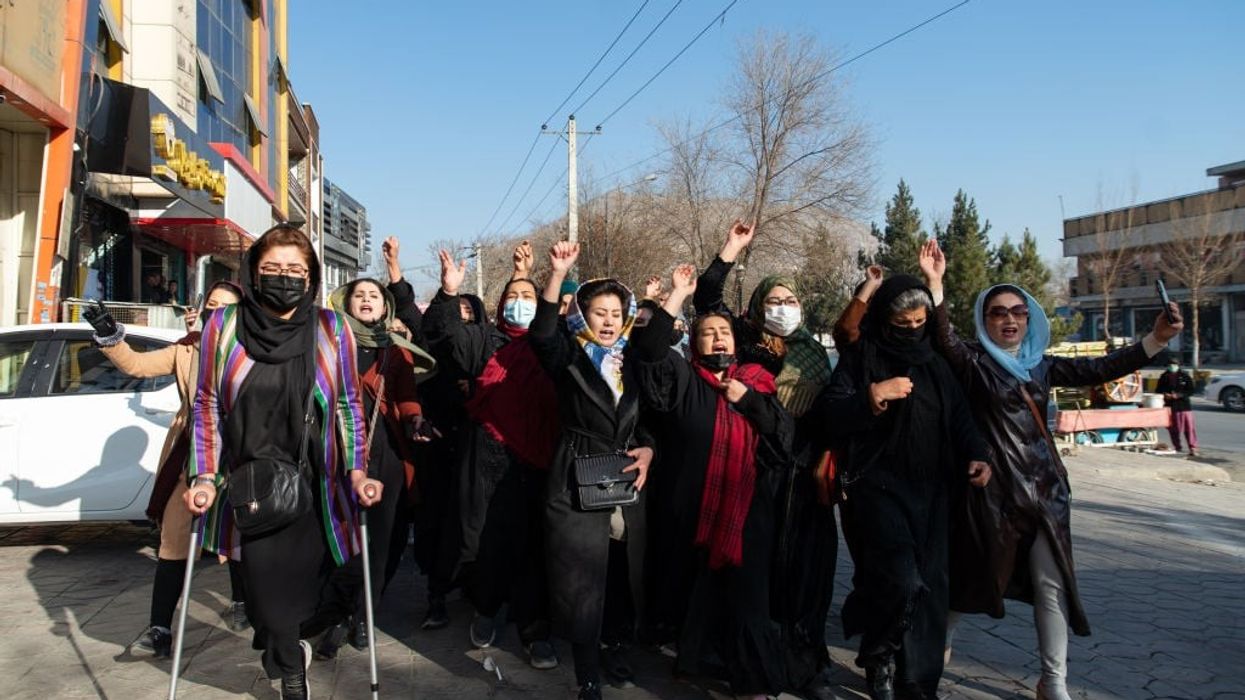

A domino effect due to the Taliban banning higher education for women in Afghanistan is being felt by the country's private universities, which according to an estimate are staring at imminent closure, Tolo News reported.
"The economic challenges have surged widely 30 to 35 universities are facing major economic problems," said Mohammad Karim Nasiri, media officer at the union of private universities.
Tolo News further reported that some university owners have warned that many educational institutions would shut down if female students are not allowed to attend university education.
The Tolo News report quoted, the founder of the Moraa educational centre for females Azizullah Amir saying "There is no man at this educational centre. If the implementation of this order continues, we will be obliged to close the doors of this centre".
The deputy head of Dawat University was cited in the report as saying that although universities are closed for women, he hopes this closure is only temporary. Soon universities will be reopened for female students to continue their education.
The Taliban-appointed spokesperson for the Ministry of Higher Education, Ziaullah Hashimi, said efforts are underway to resolve the issues in the sector. "We are trying to ease our principles and provide services for the universities and solve the problems that cause obstacles for universities," Tolo News reported.
Previously, in December this year, Taliban-appointed Acting Minister of Higher Education of Afghanistan Nida Mohammad Nadim said there is no opposition to barring women from university education in the country. This comes at a time when the Taliban is attracting criticism over the matter from around the world.
However, to express their frustration and anger on the issues of university education for female students banned by the Taliban, many male students from private and public universities have gone on strike chanting slogans like "education for all or none".
Contradicting Nadim's opinion on the education ban for female students in Afghanistan, the Grand Imam of Egypt's Al-Azhar University, Ahmed El-Tayeb called for the Taliban to reconsider their decision to ban Afghan women from accessing university education, saying the decision contradicts Sharia.
The Grand Imam said that he "deeply" regrets the decision issued by the authorities in Afghanistan, preventing Afghan women's access to university education.
Tayeb said he warns "Muslims and non-Muslims against believing or accepting that banning women's education is approved in Islam. Indeed, Islam firmly denounces such banning since it contradicts the legal rights Islam equally guarantees for women and men," he said.
A lecturer from Kabul Polytechnic University who is in Turkey for his master's degree Ihsanullah Rahmani said, "I have offered my resignation to the Ministry of Higher Education as a protest and in support of our sisters. There are some other lecturers who are trying to continue their process of resignation,".
(ANI)