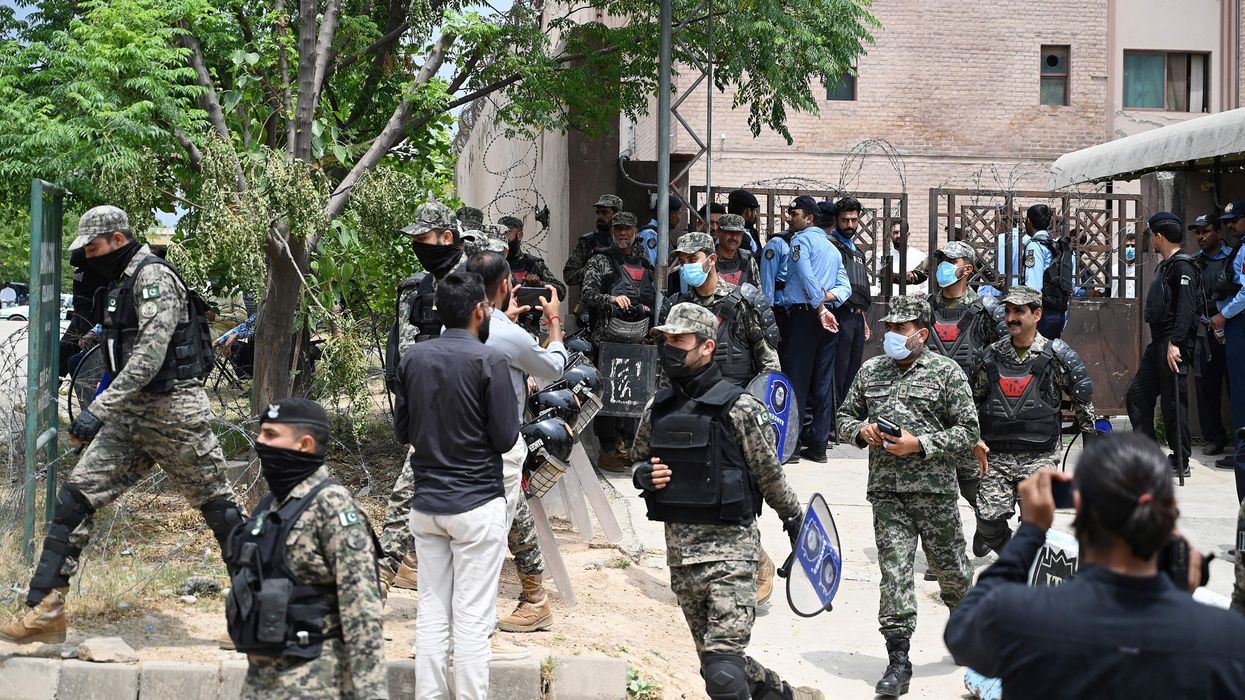

Over 100 individuals are currently undergoing trial in Pakistan military courts for their involvement in the violence that ensued after the arrest of former prime minister Imran Khan last month, army spokesperson Major General Ahmed Sharif Chaudhry said Monday (26).
Additionally, three senior officers have been relieved of their duties in connection with the incident.
The arrest of Khan, who faces corruption charges, took place at the Islamabad High Court on May 9, triggering widespread street clashes between thousands of his supporters and the police.
Some protestors even set fire to military structures, escalating the violence.
"102 miscreants are being tried in the already established military courts in connection with the cases," Chaudhry said.
He said the three officers, including a lieutenant general, were dismissed after they "failed to maintain the security and sanctity" of army properties during the unrest.
"Strict disciplinary action" has been taken against another 15 people, including three major generals and seven brigadiers, he said.
Pakistan's army holds undue influence over the nuclear-armed country's politics, having staged at least three successful coups leading to decades of martial law.
The military's publicity wing vowed this month to tighten "the noose of law" around those involved in violence.
Thousands of supporters of Khan's Pakistan Tehreek-e-Insaf (PTI) party have been arrested in the wake of his release.
Many of his top aides have also quit, some after repeated detentions.
Analysts say Khan's detention, which ended after three days when the Supreme Court declared it illegal, was likely retaliation by Pakistan's military for a campaign of defiance he has waged since being ousted in April last year.
Islamabad claims protesters were engaging in anti-state terrorism.
Chaudhry said those being tried in military courts "have the right of access to civil lawyers" as well as the right of appeal.
But international rights monitors have criticised the use of opaque army courts to try civilian defendants.
Amnesty International said last month it "has documented a catalogue of human rights violations stemming from trying civilians in military courts in Pakistan, including flagrant disregard for due process, lack of transparency, coerced confessions, and executions after grossly unfair trials".
"Therefore, any indication that the trial of civilians could be held in military courts is incompatible with Pakistan’s obligations under international human rights law," it said.
(AFP)