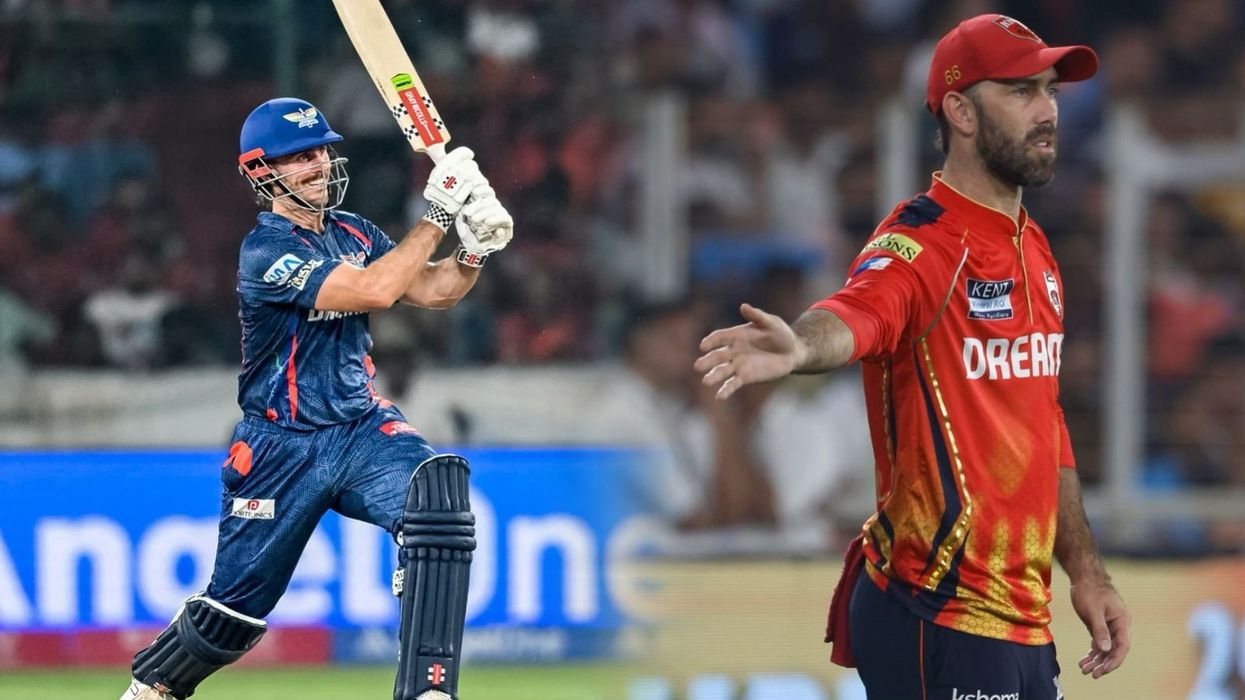
Australian spin legend Shane Warne has offered a unique answer to the question of how to swing the ball without using saliva or resorting to tampering in a post COVID-19 world—make one side of it heavier to ensure that it doesn't need any shining.
Warne feels it can help fast bowlers generate swing even on flat wickets and permanently eradicate ball-tampering.
"Why can't the ball be weighted on one side so it always swings? It would be like a taped tennis ball or like with the lawn bowls," Warne told the Sky Sports Cricket Podcast.
There is speculation that the use of saliva to shine the ball will be stopped to cut down the risk of the highly contagious.
Responding to the extraordinary situation, Australian manufacturer Kookaburra has started developing a wax applicator, which could be ready in a month, as an alternative to saliva and sweat to help bowlers shine cricket balls in the post COVID-19 world.
"I'm not sure you'd want it to hoop around corners like Wasim (Akram) and Waqar (Younis) but it could swing and give the seamer something on flat wickets when it's hot and the pitch is at its flattest on day two, day three," Warne said.
"It would actually be a really good way to move forward, as you know no one needs to do anything to the ball.
"You wouldn't have to worry about anyone tampering with it with bottle tops, sandpaper, or whatever. It would be a good competition between bat and ball," he added.
The iconic spinner said while bats have become bigger and lighter, the ball has not evolved over the years and his suggestion can bring about a balance.
"Have a look at how the bats have evolved. If you pick up one of the bats you started with in the 80s, and then one you used at the end of your career, it's like four of your old ones stuck together—but the thing is lighter!
"So why has the ball not evolved? If anything, it has got worse," added Warne.