
WALMART is importing more goods to the United States from India and reducing its reliance on China as it looks to cut costs and diversify its supply chain, data seen by Reuters shows.
The world’s largest retailer shipped one quarter of its US imports from India between January and August this year, according to bill of lading figures shared with Reuters by data firm Import Yeti. That compared with just two per cent in 2018.
The data shows that only 60 per cent of its shipments came from China during the same period, down from 80 per cent in 2018. To be sure, China is still Walmart’s biggest country for importing goods.
The shift illustrates how the rising cost of importing from China and escalating political tensions between Washington and Beijing are encouraging large US companies to import more from countries including India, Thailand and Vietnam.
Walmart said the bill of lading data painted a partial picture of what it sourced and that creating redundancy “does not necessarily mean” it was reducing reliance on any of its sourcing markets.
“We’re a growth business and are working to source more manufacturing capacity,” Walmart said in a statement.
“We want the best prices,” Andrea Albright, Walmart’s executive vice-president of sourcing said. “That means I need resiliency in our supply chains.
“I can’t be reliant on any one supplier or geography for my product because we’re constantly managing things from hurricanes and earthquakes to shortages in raw materials.”
India has emerged as a key component of Walmart’s efforts to build that manufacturing capacity, Albright added.
Walmart has been accelerating growth in India since 2018, when it bought a 77 per cent stake in Indian e-commerce firm Flipkart. Two years later, it committed to import $10 billion (£8bn) of goods from India each year by 2027. That is a target it remains on track to hit, Albright said. It is currently importing around $3bn (£2.3bn) worth of goods from India each year.
Walmart imports goods ranging from toys and electronics to bicycles and pharmaceuticals from India to the US, Albright said.
Packaged food, dry grains and pasta are also popular imports from India, she added.
India, whose stock market has risen to record highs this year, is viewed as the country best equipped to outperform China in low-cost, large-scale manufacturing. Its rapidly growing workforce and technological advancement were a draw for Walmart, Albright said.
China, on the other hand, reported its first decline in population in six decades last year.
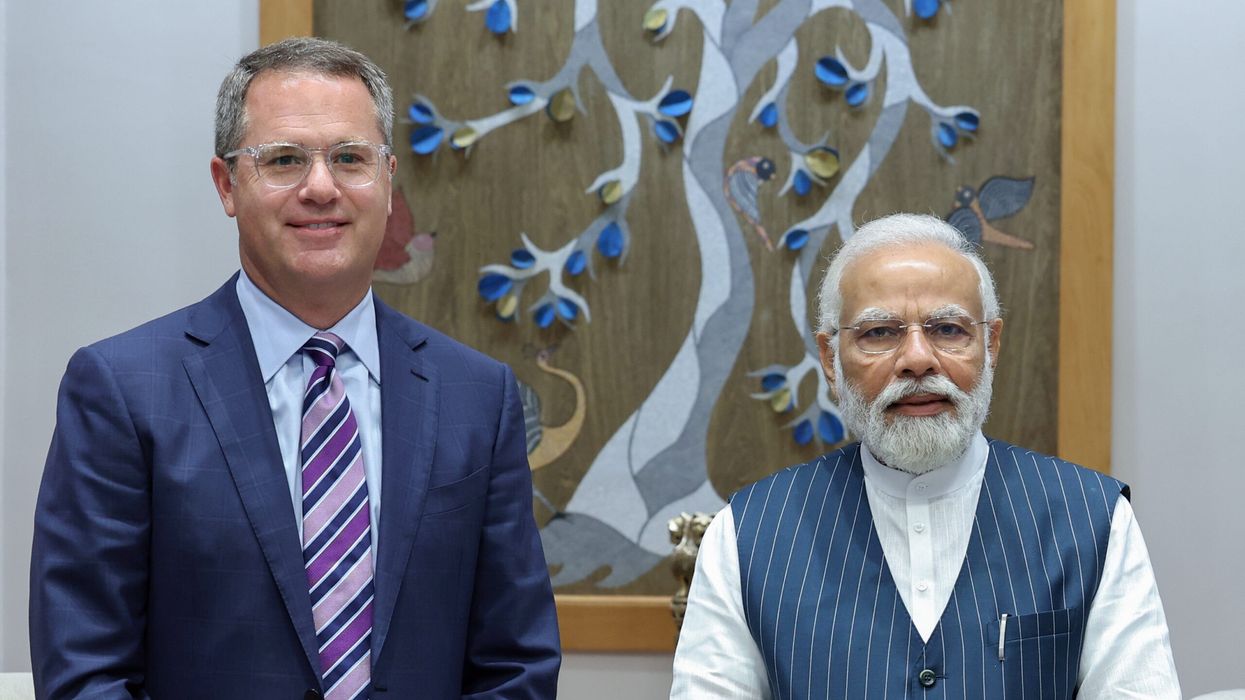
Doug McMillon, Walmart’s CEO, met Narendra Modi in May this year, a meeting that the Indian prime minister termed “a fruitful one”.
“Happy to see India emerge as an attractive destination for investment,” Modi wrote on X, formerly Twitter, on May 14.
Walmart started its sourcing operations in Bangalore in 2002.
Now, the company employs more than 100,000 people in the country spread across several offices under its Walmart Global Tech India unit, Flipkart Group, PhonePe and sourcing operations.
McMillon said Walmart would “continue to support the country’s manufacturing growth and create opportunity.”