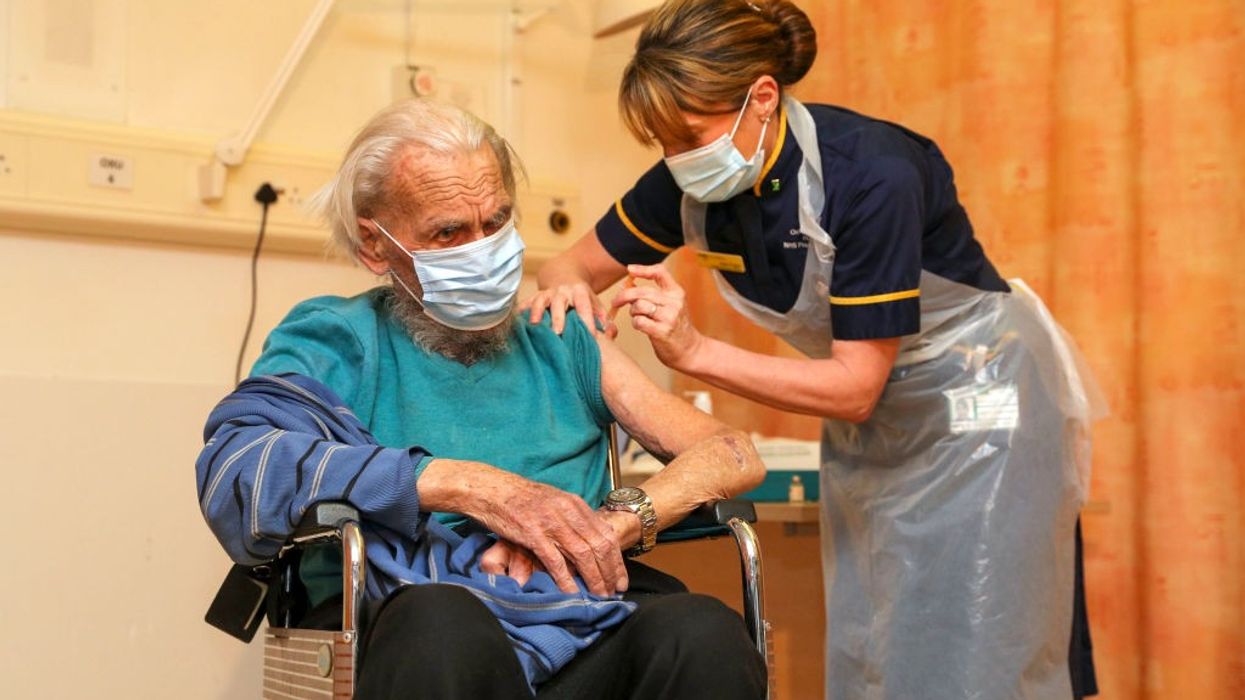

BRITAIN is racing to meet the target of vaccinating the whole of its adult population by the end of July before it can start exporting surplus Covid jabs to neighbour countries, business secretary Kwasi Kwarteng said on Tuesday (30).
In the fastest vaccine rollout in Europe, more than 30 million Britons have received their first dose of a vaccine. This has led to a public spat involving Britain and the European Union over the supply of doses, where the vaccine rollout has been much slower amid a third wave of the pandemic.
"I think our focus has to be to try and keep Britain safe, we want to work cooperatively as well with other countries but the main priority is to get the vaccine rollout," Kwarteng told Sky News.
Kwarteng said it is not "a competitive situation" and Britain is working with European nations to ensure vaccination of their populations.
When asked if Britain would be in a situation to help neighbour countries such as Ireland. "If there are surplus vaccine doses then we can share them but there are no surpluses at the moment, we have still got a huge number to vaccinate," Kwarteng said.
Britain has agreed deals to buy tens of millions of shots from a number of suppliers and on Monday GlaxoSmithKline announced details of plans for the final part of the manufacturing process for up to 60 million doses of Novavax's vaccine for use in Britain.
Prime minister Boris Johnson is one of the 23 leaders who on Tuesday (30) backed the idea to create an international treaty to help the world work together to deal with future health emergencies.
"Today we've got a crisis upon us, and it's absolutely right that we should be focused on trying to deal with that in our own country and keeping our people safe, so that we can get back to a normal way of life," Kwarteng also said.






 Curator Emma Slocombe with ikat robes and arabachi coats in the Peter the Great Room in Blickling Hall Amit Roy
 View of the entrance to Blickling Hall on a rainy autumn dayAmit Roy
 Kente cloth from Ghana in the Long Gallery in Blickling Hall
 Decoration in the Great Hall at Blickling Hall Amit Roy
 Palampore fragment made in coastal south-east India in the Brown Room in Blickling Hall Amit Roy
 Bed valance dating from early 1700s in the Italian Print Room at Blickling Hall Amit Roy
 Indian inspired fabric draped on sofas in the South Drawing Room in Blickling Hall Amit Roy
 Indian inspired fabric draped on sofas in the South Drawing Room with Indian carpet in Blickling Hall Amit Roy
 Karun Thakar has picked out the geometric patterns in the bookcase and the Kente cloth in the Long Gallery in Blickling Hall Amit Roy
 Large tapestry depicting Peter the Great defeating the Swedish army at the Battle of Poltava in 1709 Amit Roy
 ikat robes and arabachi coats in the Peter the Great Room in Blickling Hall Amit Roy
 Baghs and kanthas made by women provide contrast to the men only portraits in the Great Hall at Blickling Hall Amit Roy
 Baghs and kanthas in the entrance Great Hall at Blickling Hall Amit Roy
 Baghs and Kanthas in the Great Hall in harmony with stained glass window at Blickling Hall Amit Roy
 Kimonos reflect Japanese influence in Upper Ante Room in Blickling Hall Amit Roy
 Kimono in Upper Ante Room in Blickling Hall
 A view of the Palace and fort at Agra shows romantic side of India Amit Roy
 Blickling Hall Amit Roy
 Table carpet, European 1670-1680 Amit Roy
 Unfinished 17th century Italian embroidery in the Print Room at Blickling Hall Amit Roy
 Picture of Kashmir shows a romantic view of India Amit Roy
 A panel of Ashburnham bed hangings made in Gujarat for sale in Europe in the Brown Room in Blickling Hall Amit Roy
 Colcha made in the 1600s by women in Bengal for the Portuguese market in the Long Gallery at Blickling Hall Amit Roy




