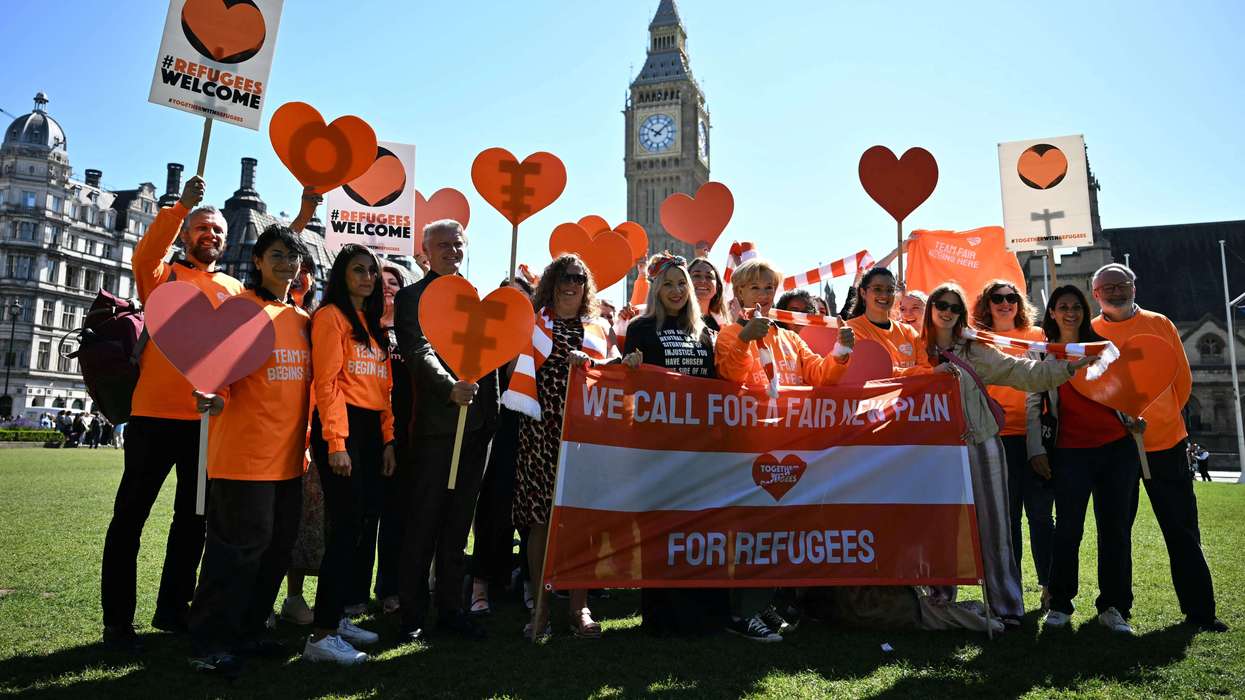

CHARITIES supporting refugees and marginalised communities face a climate of hostility that threatens not only their safety but also their ability to work.
Intimidation, misinformation and political attacks are forcing organisations to divert resources from supporting people to protecting themselves.
Research published by the Charity Commission in July 2026 found that 27 per cent of charities had been affected by community tensions. Among charities working in human rights, religious and racial harmony, and equality and diversity, 22 per cent reported having to change or stop activities.
At Reset Communities for Refugees, we have spent a decade working with communities across the UK to welcome refugees and help families rebuild their lives.
We have seen people from all walks of life open their homes, volunteer their time and come together to support those seeking safety. This generosity rarely dominates national headlines, but it reflects a reality too often missing from the immigration debate: communities are willing to welcome those in need.
Yet the organisations supporting this work increasingly operate under threat. In its 2026 assessment of risks facing the charity sector, the Charity Commission acknowledged that hostility and intimidation had forced some charities to spend significant resources on security, crisis management and even relocating offices. The consequences are not theoretical. During the summer 2024 riots, asylum accommodation, mosques and community buildings were targeted. A subsequent parliamentary investigation documented the violence and examined how misinformation spread during the unrest.
This hostility does not emerge in a vacuum. Far-right movements have exploited public anxieties about immigration, scapegoating refugees and people seeking asylum for wider failures in housing, public services and the economy. Reform UK’s political messaging has contributed to a debate in which migration is repeatedly portrayed as a threat rather than a complex issue requiring serious policy solutions.
 Amina KhanomEastern Eye
But the far right is not alone in fuelling this climate. Successive governments have pursued increasingly restrictive asylum policies, too often framing people seeking protection as a problem to be deterred or removed.
The current government must also take responsibility for its rhetoric. When ministers focus overwhelmingly on enforcement and reducing numbers, while saying far less about protection and dignity, they risk reinforcing the narratives they claim to oppose.
Political language matters. It shapes public attitudes, fuels division and has real consequences for people’s lives. Inflammatory rhetoric about immigration emboldens hostility towards refugees and people seeking asylum. It puts their safety at risk, exposes them to harassment and intimidation, and leaves families fearful in the very communities where they should find sanctuary.
This hostility also targets the charities and volunteers standing alongside them. Charities often provide evidence and perspectives missing from political debate. They see first-hand how government policies affect families, communities and people seeking protection.
When intimidation discourages charities from speaking out, those experiences risk being excluded from public debate. Harmful narratives face less challenge, political decisions face less scrutiny, and the voices of those most affected become easier to ignore.
Government cannot leave charities to face intimidation alone. Ministers must publicly challenge their targeting, including when those organisations criticise government policy, and work with the charity sector, the Charity Commission and law enforcement agencies to ensure they receive appropriate protection and support.
The government cannot claim to champion community cohesion while failing to challenge narratives that fuel resentment towards refugees. Nor can it expect charities to repair divisions without addressing the political environment. And it certainly cannot keep expecting civil society to fix what its own rhetoric and policies are helping to break.
Condemnation alone is not enough. Government must defend the independence of charities, protect those facing intimidation and ensure that standing up for people in need never comes at the cost of personal safety. Charities should not have to fear the consequences of doing what is right.




 Lord Karan Bilimoria CBE DLEastern Eye