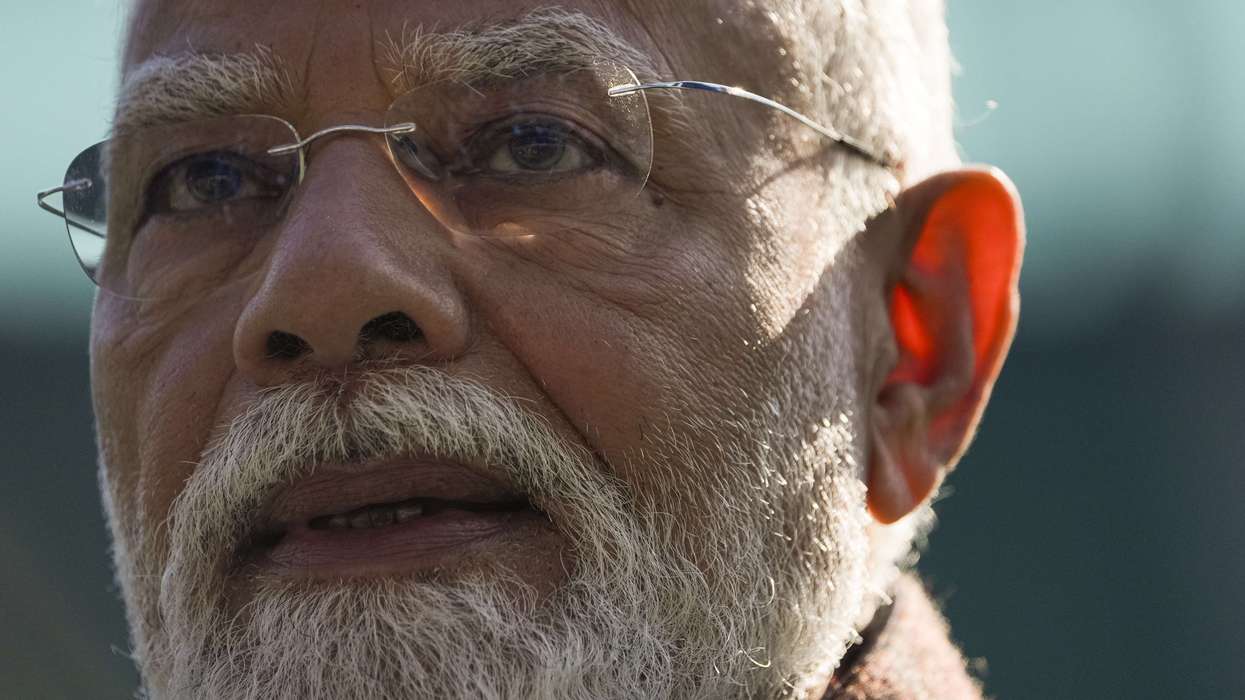

I first met Narendra Modi at the Pravasi Bharatiya events going back over two decades, when he was Chief Minister of Gujarat. With me being a Zoroastrian Parsi, he would speak to me in Gujarati. Having followed his journey over the years, I have been struck by the consistency of his ambition for India's development and his determination to translate that ambition into action. What began with an emphasis on development, investment and enterprise in Gujarat has, since 2014, been pursued on an altogether greater national scale.
Having been born and brought up in India, and having spent much of my life championing closer ties between India and the United Kingdom, I have witnessed first-hand just how far India has come. Today, India is the fastest growing economy in the world, with the last’s quarter’s growth rate standing at 7.8%. India has risen from the world's tenth-largest economy in 2014 to among its five largest today, with an economy exceeding US$4 trillion. It is projected to be the third largest economy in the world within the next few years. But the significance of this transformation extends beyond economic statistics. It is reflected in the achievements of its entrepreneurs and the growing conviction that Indian businesses and innovators can compete with the very best in the world.
I remember growing up in an India constrained by the licence raj, where protectionism and bureaucracy frequently stood in the way of enterprise. The landmark economic reforms of 1991, led by Prime Minister P. V. Narasimha Rao and Finance Minister Dr Manmohan Singh, set India on a new course. This economic liberalisation laid the foundations for the transformation that followed. Since taking office in 2014, Prime Minister Modi has built upon those foundations, bringing renewed ambition, scale and urgency to India's development.
India has risen from the world's tenth-largest economy in 2014 to among its five largest today, with an economy exceeding US$4 trillion. But the significance of this transformation extends beyond economic statistics. It is reflected in the achievements of its entrepreneurs and the growing conviction that Indian businesses and innovators can compete with the very best in the world.
As an entrepreneur, I have always believed passionately in the power of enterprise to transform lives. Businesses create employment, generate prosperity and give people the opportunity to realise their ambitions. Prime Minister Modi has consistently recognised the importance of entrepreneurship, innovation and investment.
Initiatives such as Make in India and Startup India have helped place enterprise at the heart of India's economic ambitions. India has developed one of the world's largest startup ecosystems. Indian entrepreneurs are increasingly building businesses of international significance, demonstrating the extraordinary ingenuity and ambition that have always been among India's greatest strengths. India has over 130 unicorns (billion dollar businesses), the third largest in the world.
The transformation of India's infrastructure has been equally striking. Public capital expenditure has increased substantially, supporting the expansion of highways, railways, airports and digital connectivity. Infrastructure is about far more than concrete and steel. It connects communities, opens markets, attracts investment and creates opportunities for millions.
Perhaps nowhere is India's capacity for innovation more apparent than in its digital revolution.
The combination of Jan Dhan bank accounts, Aadhaar and mobile connectivity has transformed financial inclusion and the delivery of public services. The Unified Payments Interface, UPI, is a remarkable example of innovation at scale, enabling billions of transactions every month. From major businesses to small traders and street vendors, digital payments have become part of everyday life. India has demonstrated that it is not simply adopting technologies developed elsewhere; it is pioneering solutions from which the world can learn.
The expansion of access to banking, housing, sanitation and healthcare has also been significant. Economic progress must ultimately be measured not only by the wealth a country creates, but by the opportunities it provides and the improvements it brings to people's lives. In a nation of India's extraordinary size and diversity, ensuring that prosperity reaches every community remains an immense undertaking.
India's growing international standing has been another defining feature of Prime Minister Modi's leadership.
The successful G20 presidency in 2023 demonstrated India's ability to bring nations together and champion the interests of the Global South. India staged the most effective and impressive G20 I have ever witnessed, including the admission of the African Union to the G20, India's historic Chandrayaan-3 mission showcased the capabilities of Indian scientists and engineers, while its expanding role in technology, diplomacy and international commerce reflects a country increasingly confident in its place in the world.
For me personally, one of the most gratifying developments has been the strengthening of relations between the United Kingdom and India.
For more than two decades, I have worked passionately to bring our countries closer together, starting with being appointed as the UK Co Chair of the Indo-British Partnership in 2003, to founding the UK India Business Council in 2007, being President of the CBI, and now Chair of the International Chamber of Commerce — UK, and my work in the House of Lords, which includes being Co-Chair of the All Party Parliamentary Group for India. I have always believed that Britain and India are natural partners, united by democratic traditions, shared institutions, the English language and, above all, the extraordinary connections between our people.
The historic UK–India Free Trade Agreement, signed in 2025 and entering into force on 15 July 2026, represents a landmark achievement in our bilateral relationship. Having championed closer economic ties for many years, including during my presidency of the CBI, it was a particularly proud moment to witness the agreement being signed at Chequers. With the agreement now operational, we have moved from ambition to implementation, opening an exciting new chapter in our economic partnership.
The agreement has the potential to double bilateral trade to over £100 within five years, creating opportunities for businesses and citizens in both countries. Beyond trade, our partnership encompasses technology, artificial intelligence, research, advanced manufacturing and education. Prime Minister Modi's commitment to strengthening this relationship has been an important part of this progress.
Education is particularly close to my heart. As Chancellor of the University of Birmingham from 2014-24, I have witnessed the remarkable talent of Indian students and researchers and the contribution they make to British universities, businesses and communities. Greater collaboration between our educational institutions will help equip future generations with the skills and knowledge needed to succeed in a rapidly changing world.
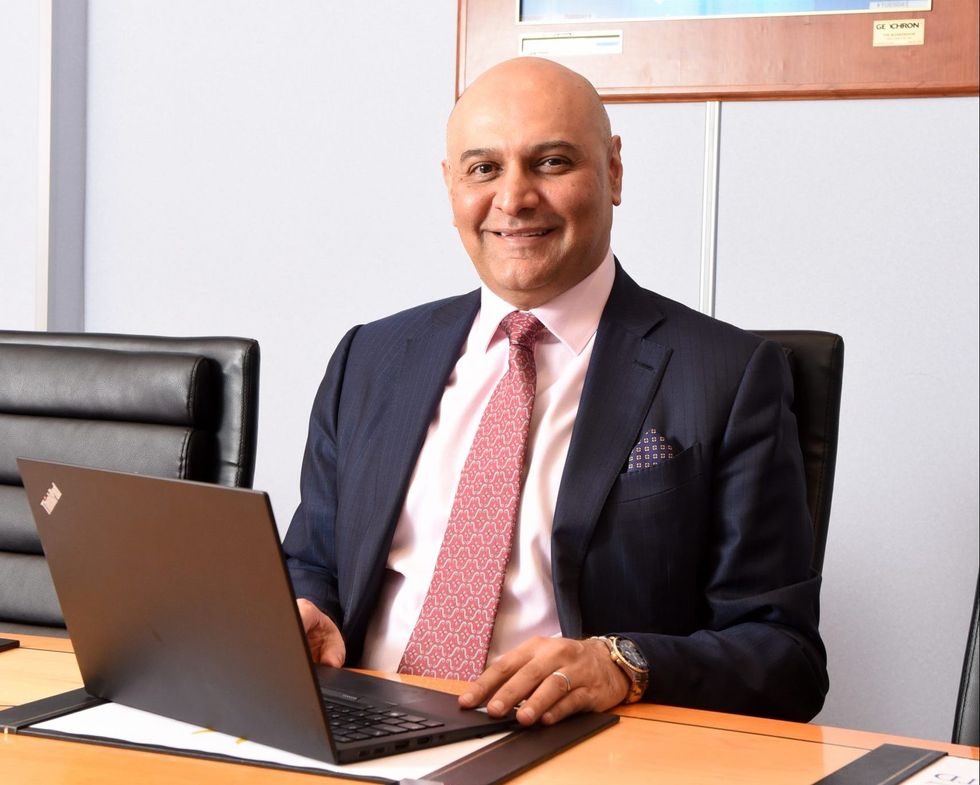
 Lord Karan Bilimoria CBE DLEastern Eye
The UK–India relationship is about much more than governments and agreements. It is a living partnership sustained by families, entrepreneurs, academics and professionals whose lives connect our two nations. The Indian diaspora, the largest diaspora in the UK at over 2 million strong, and I am proud to say the most successful, has made an immense contribution to British society, and its achievements demonstrate what is possible when talent, opportunity and ambition come together. They are the living bridge between UK and India.
I have never been more optimistic about India's future.
Throughout my life, I have believed that India's greatest strength lies in its people: their resilience, ingenuity, entrepreneurial spirit and extraordinary capacity for hard work. Given the opportunity to succeed, Indians have demonstrated time and again that they can compete with the very best in the world.
What has changed so significantly is the confidence with which India now approaches its future. There is a growing belief that ambitious goals can be achieved, that Indian businesses can become global champions and that India's voice can help shape international affairs.
Leadership has an important role in inspiring that confidence. Prime Minister Modi has consistently articulated a vision of a stronger, more prosperous, more self-reliant India. His energy, determination and ability to communicate a sense of national purpose have been defining features of his leadership.
Twenty-five years of continuous leadership in government is an extraordinary achievement. To have led Gujarat state, one of India’s most economically successful performing states, and subsequently India, the world's largest democracy and world’s largest country in population, for a quarter of a century reflects remarkable determination, resilience and an enduring commitment to public service. As Prime Minister Narendra Modi celebrates this milestone, it is an opportunity to reflect not only on his remarkable political journey, but on the transformation of India and the confidence with which the nation now looks to the future.
As Narendra Modi completes 25 years of continuous leadership in government, I congratulate him warmly on this exceptional milestone. His journey from Gujarat to New Delhi is a remarkable chapter in India's modern history.




 Dr Nik Kotecha Eastern Eye

