
Highlights
- Trump says China will buy 200 Boeing aircraft during Beijing summit
- Taiwan and Iran emerge as key issues in Trump-Xi talks
- Xi warns Taiwan tensions could damage US-China ties
- US seeks more Chinese purchases of American oil and farm goods
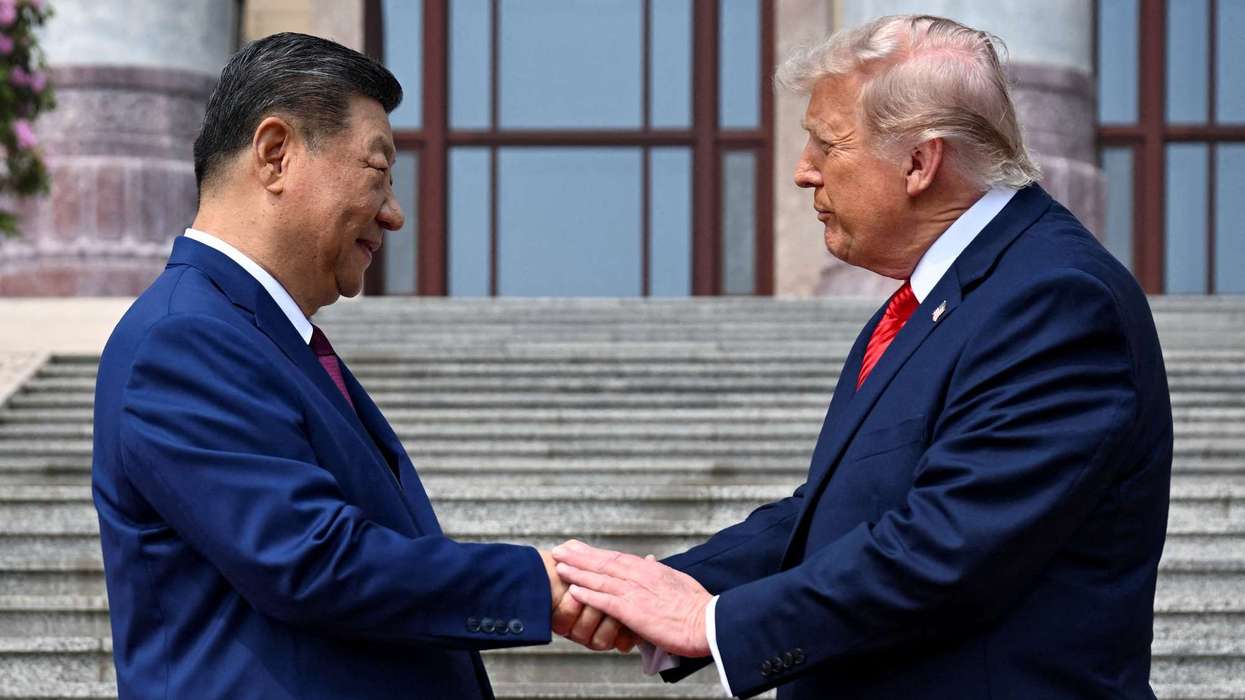
US PRESIDENT Donald Trump said on Thursday that China had agreed to buy 200 Boeing aircraft during his talks with Chinese president Xi Jinping in Beijing, as the two leaders also discussed Taiwan, Iran, trade and energy supplies.
Trump made the remarks in excerpts of an interview with Fox News host Sean Hannity released on Thursday.
"One thing he agreed to today, he's going to order 200 jets ... Boeing wanted 150, they got 200," Fox News cited Trump as saying.
US Treasury secretary Scott Bessent had earlier said he expected an announcement about a large Boeing order during Trump's visit to China.
Trump also said Xi had told him that China would not provide military equipment to Iran.
The talks between the leaders of the world's two largest economies took place during a two-day summit in Beijing. Xi told Trump that trade negotiations between officials from both countries held in South Korea on Wednesday had reached "balanced and positive outcomes", according to China's foreign ministry.
The discussions were aimed at maintaining a trade truce agreed during the leaders' previous meeting in October, when Trump suspended triple-digit tariffs on Chinese goods and Xi stepped back from restricting supplies of rare earths.
Bessent, who led the talks in South Korea, said progress was expected on mechanisms to support future trade and investment ties between the two countries.
Taiwan emerged as one of the main issues during the talks.
Xi warned Trump that mishandling the Taiwan issue could damage relations between the two countries and even lead to conflict, according to a Chinese summary of the closed-door meeting, which lasted more than two hours.
The Chinese leader said Taiwan was the most important issue facing the two countries and warned that poor handling of the matter could push ties into an "extremely dangerous situation" and cause the countries to "collide or even enter conflict".
The US summary of the meeting did not mention Taiwan.
US secretary of state Marco Rubio confirmed that the issue had been discussed.
"The Chinese always raise it on their side, we always make clear our position and we move on to the other topics," Rubio told NBC News.
The United States is legally required to provide Taiwan with the means to defend itself, despite not maintaining formal diplomatic relations with the island.
Trump had earlier said he expected Xi to raise concerns about US arms sales to Taiwan, including a proposed $14 billion package still awaiting approval.
Taiwan said there was "nothing surprising" in the summit discussions and said China's military pressure remained the real threat to peace.
The US summary of the talks instead focused on efforts to reopen the Strait of Hormuz, which has effectively been closed because of the Iran war.
Xi also showed interest in buying more American oil to reduce China's dependence on Middle East supplies, according to the US summary.
Trump, facing pressure at home because of the Iran conflict and concerns over inflation, described the summit as highly significant.
"There are those who say this may be the biggest summit ever," Trump told Xi during opening remarks at the Great Hall of the People.
The ceremony included an honour guard and children waving flowers and flags.
Trump later invited Xi to visit the White House on September 24, which would mark Xi's first visit to Washington since Trump began his second term last year.
Joining Trump in Beijing were several US business leaders, including Tesla chief executive Elon Musk and Nvidia chief executive Jensen Huang.
Reuters separately reported that the United States had cleared around 10 Chinese companies to buy Nvidia's H200 artificial intelligence chip, though no deliveries had yet been made.
At a state banquet attended by senior officials and business executives, Xi described the China-US relationship as the most important in the world.
"We must make it work and never mess it up," Xi said.
Guests at the banquet were served a 10-course dinner including lobster soup, Beijing roast duck and tiramisu.
The leaders are expected to have tea and lunch together on Friday before Trump leaves China.
Washington is also looking to increase exports of farm goods and energy products to China to reduce the trade deficit, while Beijing wants the United States to ease restrictions on exports of semiconductor technology and chip-making equipment.
Trump is also expected to encourage China to persuade Iran to reach an agreement with Washington to end the conflict.
Rubio told Fox News that China had an interest in helping resolve the crisis because many Chinese ships were stuck in the Gulf and any slowdown in the global economy would affect Chinese exports.
Iran's Fars news agency reported on Thursday that an agreement had been reached allowing some Chinese ships to pass through the area.