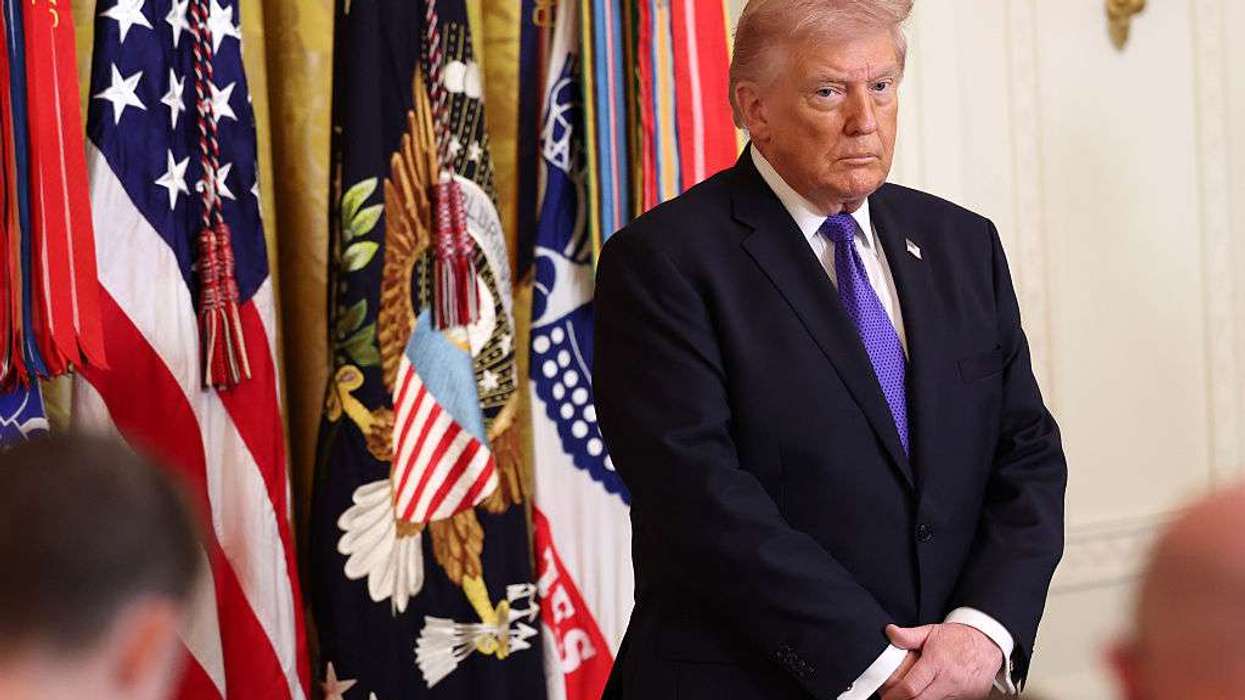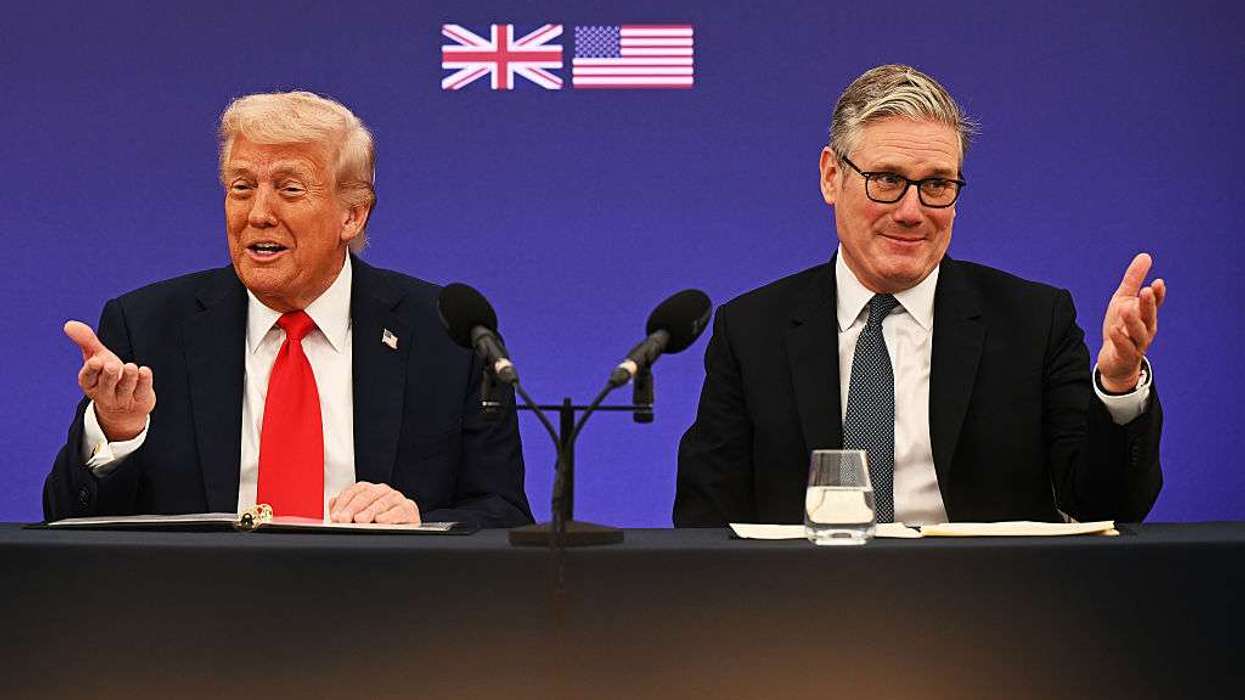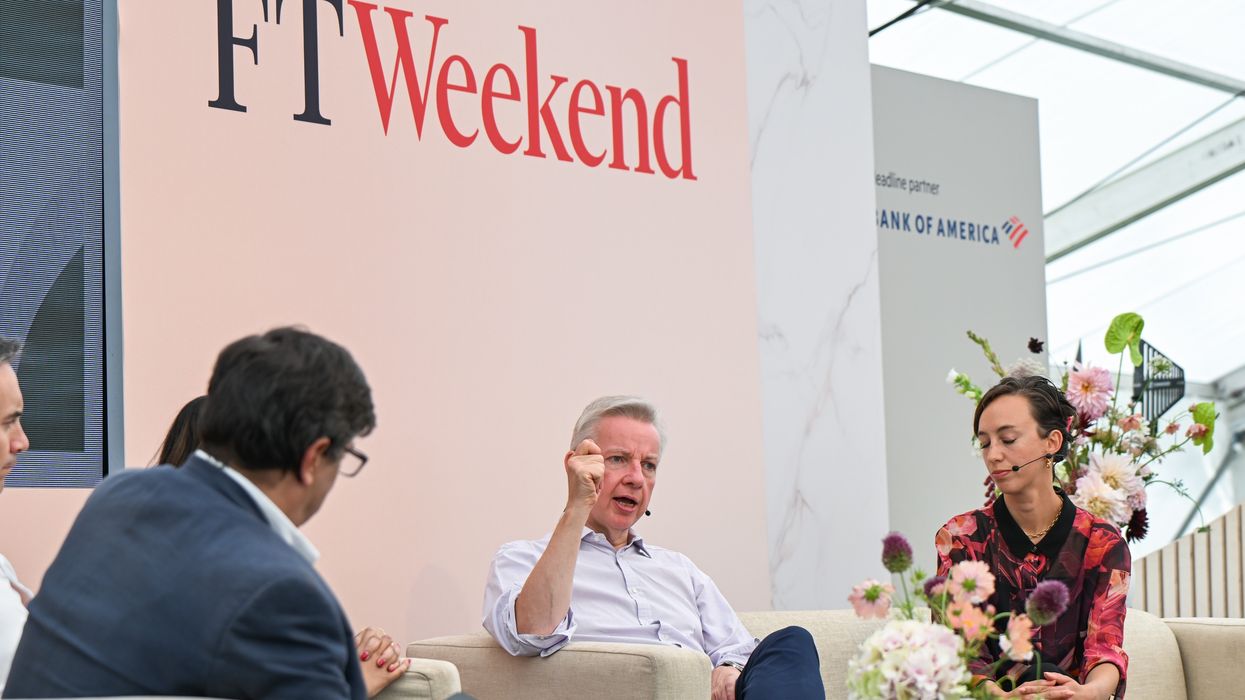

US PRESIDENT Donald Trump cast a dark shadow over the FT Weekend Festival last Saturday (6), held in the grounds of Kenwood House in north London, as did, to a lesser extent, Reform party leader Nigel Farage.
The way Trump set back relations with India by imposing a 50 per cent tariff on American imports was raised repeatedly at several sessions.
“This is nuts, no other way to put it, it’s just nuts,” was how Martin Wolf, chief economics commentator of the Financial Times and the paper’s éminence grise, summed up Trump’s India policy.
He stressed why this did not make sense: “India is (America’s) most important potential strategic partner.”
Meanwhile, the former cabinet minister Michael Gove – he is now Lord Gove after being given a peerage in Rishi Sunak’s resignation honours list – was wonderfully eloquent in his new incarnation as editor of The Spectator.
Asked whether Reform would replace the Conservatives as the main party of the right, he admitted: “I hope not, but I am worried.”
“I dislike the energy that infuses Reform,” said Gove. “I worry that it’s a dark energy, but it’s undeniably the case there is an energy which the Conservative party doesn’t have at the moment.”
He did, however, want to be fair to Farage who, in his opinion, wanted Reform to act “as a cordon sanitaire against the truly racist and destructive elements in our national psyche. And that’s why he’s been adamant that (anti Islam campaigner and far right activist) Tommy Robinson, for example, should never be in Reform. Nigel Farage is probably the most gifted, certainly the most powerful communicator in UK politics).”
For a Tory, Gove was surprisingly warm about the new home secretary, Shabana Mahmood: “I think there is no doubt that she is the sharpest intellect in the camp. And it is also the case that she is someone of profound integrity, both in her inner religious life and the way in which she operates to give very candid advice behind the scenes, but operates as a team player publicly.”
Asked whether Sir Keir Starmer would lead Labour into the next general election, Gove’s reply was devastating to the prime minister: “Keir Starmer is a very decent man. He’s an utterly useless politician. The Labour party, being the Labour party, I think he will. But if I were a Labour MP, I would say it is time for Shabana or (health secretary) Wes (Streeting).”
The FT Weekend Festival, probably the best thing of its kind, was an antidote to the Reform party conference which was taking place in Birmingham at the same time. The festival is peopled mainly by FT readers, who are educated, white, middle class liberal folk, who this year sought enlightenment – and reassurance – from such sessions as: A world in turmoil: nationalism, populism and migration, AI advances – can democracy survive?; Trump, tariffs and the future of the world economy; The radicalisation of UK politics; and World affairs in the age of Trump.
The former deputy prime minister, Nick Clegg, who is back after seven years in Silicon Valley as vice-president and then president of global affairs at Meta, suggested that “Europe and India will have to stand up against Trump”.
He went on: “My view is the Americans will, relatively soon over the next few years, learn two things. One that they’re just simply not going to beat China in this AI race. They’re not going to be able to deliver a knockout blow. And the second is they’ll then relearn that they need, particularly India and Europe, to come up with some new rules of the road if they actually want to safeguard the non-Chinese internet for the future.”
According to Wolf, always a sane voice, especially on economics, at the FT festival, Trump was wrong in believing protectionist policies with high tariffs would help the American economy to grow.
“I just happen to think that in the current circumstances for America, this is a completely wrong analysis of what will generate growth. It won’t. It will generate instability, monetary and fiscal problems, and this idea to solve their debt problem is just laughable.”
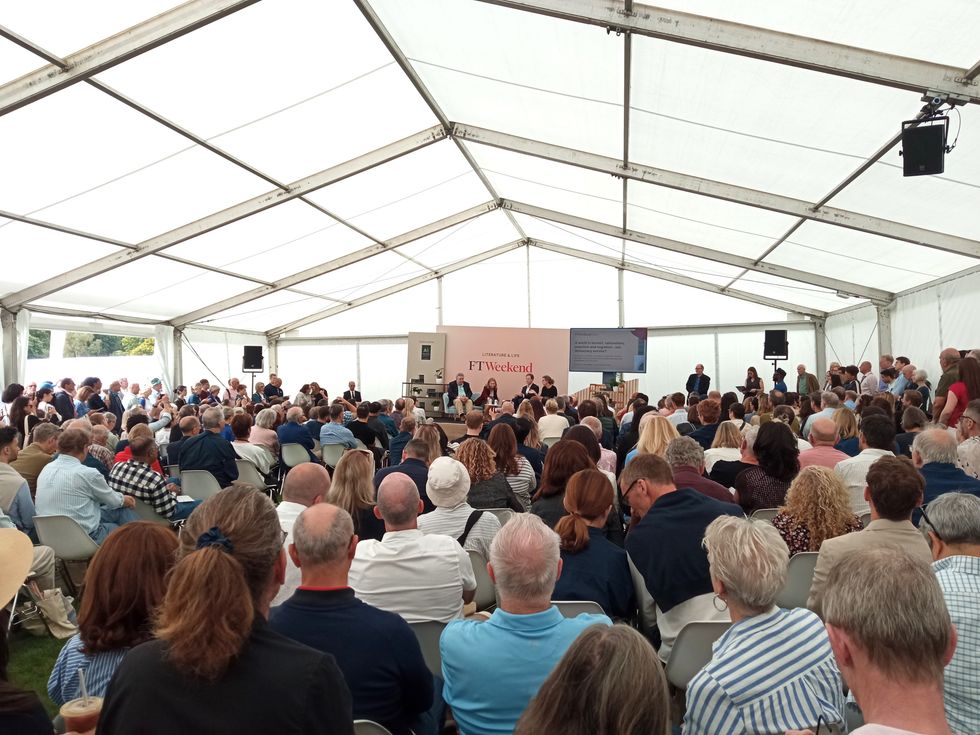 The audience in the grounds of Kenwood House
Concern was expressed that Trump’s 50 per cent tariffs had pushed India closer to China, the west’s main enemy.
The BBC’s chief international correspondent, Lyse Doucet, spoke about Modi’s meetings with Xi Jinping and Vladimir Putin, the Chinese and Russian presidents, respectively, at the gathering of the Shanghai Co-operation Organisation (SCO) at Tianjin in China.
Recalling the “stunning video” of Modi “sharing jokes with a smiling president Putin and Xi looking on so satisfied”, she said that “the message from prime minister Modi to Donald Trump, was, ‘Not only am I going to buy Russian oil at a discounted price, I’m also going to cosy up with president Putin.’”
Alex Younger, the former chief of MI6, agreed: “Modi’s presence in Beijing (sic) was testament to the inept nature of Trump’s foreign policy and nothing else.” Edward Luce, the FT’s US national editor and columnist, who has written critically about Modi in the past, said that apart from “one or two genuinely batshit crazy types like (trade adviser) Peter Navarro”, everyone around Trump found the president’s India policy and the images of Modi, Putin and Xi “disconcerting”.
“It’s not just Modi with Xi and Putin,” commented Luce. “It’s him (Modi) putting his arms around and bringing them together. This sort of bulwark, 30 years of American foreign policy, through Republicans, through Democrats, through Trump’s first term, as India is the counterbalance to China (is gone). To have a situation where India is now, in economic terms, with the 50 per cent tariffs, the chief target, the worst sort of loser of Trump’s ‘liberation day’ economic war on the world, along with Brazil, another democracy, and Canada and Mexico, the neighbouring democracies, and that China, contrary to everybody’s expectation, is getting off scot-free for the time being. So there is Modi thinking ‘Trump’s going to be good for me’, and Xi thinking ‘Trump’s going to be bad for me’, but both of them meeting on the stage and kind of getting along with each other. It’s like, who is this crazy guy who’s remaking the world in ways he doesn’t understand?
“And what’s happening, you know, with Trump’s children, but not just his children, but the children of lots of people who work in this administration, is they’re getting very rich through crypto schemes, through hotel licences and so on, and that that’s how foreign policy is really conducted.
“If you can be around when he’s (Trump) composing a Truth Social post, you might be able to influence it, but that’s how he’s conducting trade deals. His key trade negotiators wait to see what the policy is from his Truth Social posts. He doesn’t have a meeting with them to discuss it, so it’s no surprise when they negotiate with their Chinese, Indian or European counterparts, their counterparts don’t take them particularly seriously because they’re as clueless as they are.”
Luce said: “Flattery plays a role. We were mentioning Modi, (and) the fallout with India. A huge piece of that is the fact that Pakistan said, ‘Mr President, we’re proposing you for the Nobel Peace Prize.’ And Narendra Modi didn’t match that. It has worked for Israel so far, and it has worked for Pakistan like an absolute champ. And Trump was absolutely clear with Modi that he wanted Modi to do it. And, of course, if you’ve got the Pakistanis and the Indians (agreeing), well, I mean it’s a slam dunk. You’ve got the Nobel Peace Prize.