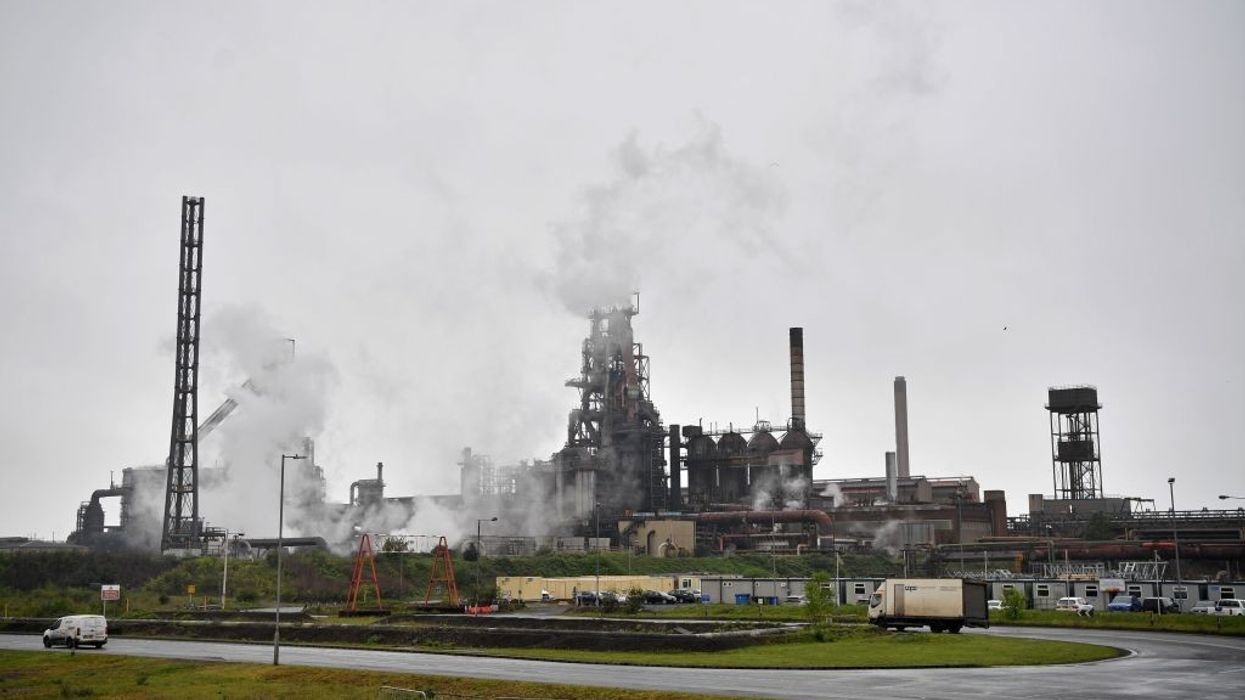
TATA STEEL'S blast furnaces in the UK are using bacteria to convert its emissions into stock materials for other industries to make recycled products, the Indian steel major has said.
A pilot project, led by the University of South Wales, has been set up at Tata Steel UK’s two ironmaking furnaces in Port Talbot, Wales.
The project, while still in its infancy, has already shown promising results, the experts involved said last week.
"As the world is coming to terms with the challenges of net-zero CO2 steelmaking, there are lots of options to consider. Not only in terms of different steelmaking technologies but also around any opportunities to capture and use the carbon-based process gases," said Dr Rhiannon Chalmers-Brown from the university.
"The process we are testing here bubbles off-gases from the blast furnaces through sewage sludge, which contains a certain type of bacteria able to consume both carbon monoxide (CO) and carbon dioxide (CO2)," she said.
Dr Chalmers-Brown said the team is getting quite high levels of carbon utilisation, which they feel can increase up to about 98 per cent.
"The waste products from those bacteria include acetic acid and volatile fatty acids which can be used for a huge range of commercially viable end-uses such as paints, bioplastic-polymers or even animal feeds," she noted.
The project is a collaboration between Tata Steel and the university exploring how waste gasses from the steelmaking processes at Port Talbot can be harnessed and used to support other industries while reducing the amount of CO2 released.
Dr Chalmers-Brown added: “While this pilot is looking at gases from blast furnaces, pretty much every iron and steelmaking technology emits some carbon-based gases, so this technology has potential to reduce those emissions whichever technology route is eventually chosen.
“There's still quite a lot of work to do with the pilot reactor, collecting data and understanding what we can about the biological reactions."
Tata Steel said it is developing detailed plans for this transition to future steelmaking based on low CO2 technologies.
"This is a great project, which could be a real game-changer and is yet another example of the benefits of working closely with some of our top universities,” said Gareth Lloyd, process engineering manager of Tata Steel and industry sponsor.
Tata Steel in the UK said it has the ambition to produce net-zero steel by 2050 and reduce CO2 emissions by 30 per cent by 2030.
The vast majority of that work will need to happen in South Wales, where the company's largest operational site in the UK is located.
Tata Steel is the largest steelmaker in the UK with primary steelmaking at Port Talbot, supporting manufacturing and distribution operations at sites across Wales, England and Northern Ireland as well as Norway and Sweden.
Tata Steel UK employs more than 8,000 people and has an annual crude steel capacity of 5 million tons.
The Indian steel giant said it works on supplying high-quality steel products to demanding markets, including construction and infrastructure, automotive, packaging and engineering.
(PTI)
Tata Steel UK uses bacteria technology to recycle emissions