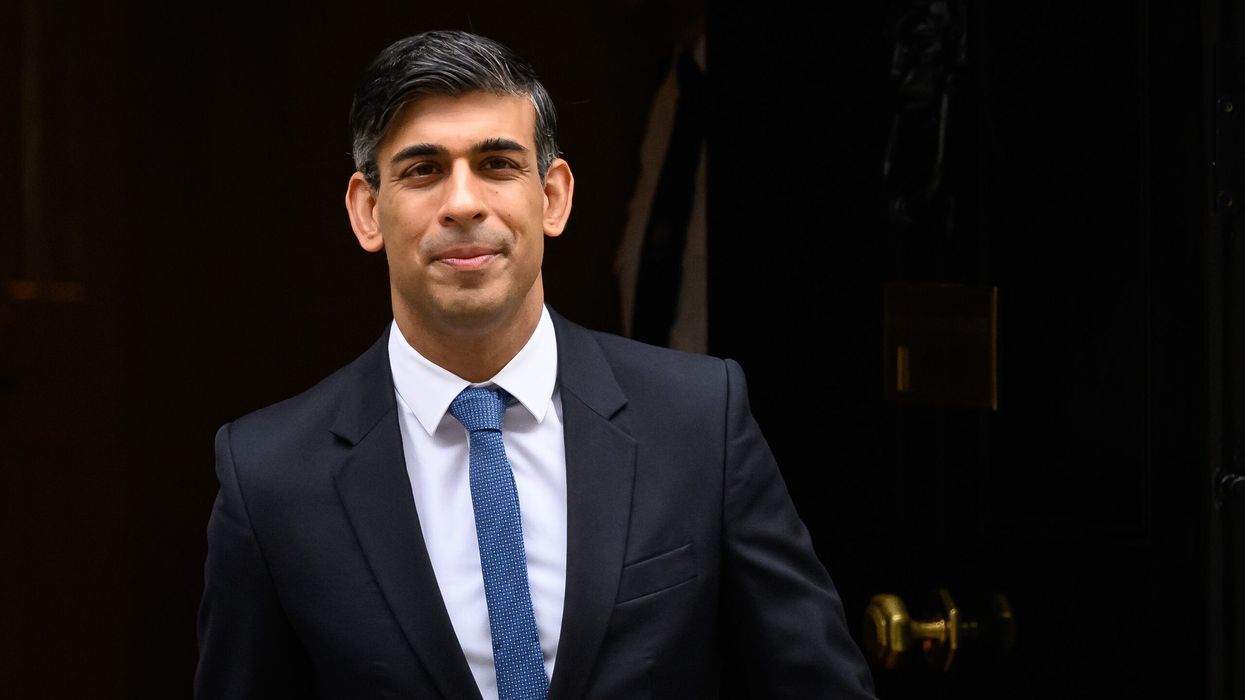

In a crucial test of his leadership, prime minister Rishi Sunak successfully navigated a key parliamentary vote on Wednesday (17), overcoming opposition from right-wing rebels for his controversial plan to send migrants to Rwanda.
Sunak, in power since October 2022, has staked his political future on the scheme, as Britain gears up for its next general election later this year.
Right-wing Conservatives had threatened to kill the Safety of Rwanda (Asylum and Immigration) Bill, but they ultimately backed down and the government won comfortably by 320 votes to 276.
The result means Sunak avoids a serious weakening of his authority, as his faction-ridden party desperately needs to claw back support from the main opposition Labour party before the nationwide vote.
The bill is the leader's answer to a Supreme Court ruling late last year that deporting asylum seekers to Kigali is illegal under international law.
The latest legislation, if passed, would compel judges to treat Rwanda as a safe third country.
It would also give ministers powers to disregard sections of international and British human rights legislation.
While the bill cleared its third and final hurdle in the elected House of Commons, it will need to be approved by the unelected upper chamber House of Lords before it becomes law.
- Public perception -
The government does not hold a majority in the Lords, where members are likely to scrutinise the proposals and offer a number of amendments, setting up another battle with Downing Street.
The legislation could also still be blocked by legal challenges, drawing out the long-running saga -- dubbed a "farce" and a "gimmick" by Labour -- even further.
Chris Hopkins, political research director at polling firm Savanta, said "the public perception of the government's incompetence around immigration still remains deep-rooted and may only move when planes to Rwanda actually take off."
"Even then, it's going to take a lot more for the Conservative Party to claw back its credibility on this issue," he said.
"As of now, all they have managed to achieve is highlighting their own internal divisions to an unimpressed electorate."
London has already paid Kigali £240 million (280 million euros) since ex-prime minister Boris Johnson first announced the plan in April 2022.
Sunak has pledged to slash record levels of regular migration and stop asylum seekers crossing from France to Britain in small boats.
He insists the Rwanda bill is essential to deter migrants from considering travelling to the United Kingdom via unauthorised routes.
- Polls -
But the proposal has reopened splits between right-wingers and moderates in the ruling party not seen since the wranglings over what Brexit should look like following the 2016 EU referendum.
Several dozen Tory lawmakers backed unsuccessful amendments that sought to toughen the scheme, including by disapplying international law and restricting migrants' right to appeal deportation.
Two deputy chairmen resigned their roles in support of the tweaks, which received the vocal support of Johnson, who is no longer an MP and not able to vote.
Sunak refused to bow to rebel demands though because doing so would almost certainly have seen the bill scuppered by moderates, who say the legislation already pushes at the margins of acceptability.
In a bid to quell the dissent, Sunak's government announced that it would hire new judges to create thousands of additional sittings to fast-track cases to the courts.
His "illegal migration minister" also appeared to suggest that ministers would have the power to force civil servants to ignore last-minute injunctions from the European Court of Human Rights.
Sunak also faced down rebels during the first vote on the bill in December.
Around 30,000 asylum seekers crossed the English Channel on rudimentary vessels last year. Five died trying to make the journey this past weekend.
Hundreds were picked up from the freezing waters and brought ashore on Wednesday, an AFP photographer in the south coast port of Dover saw.
(AFP)






 Curator Emma Slocombe with ikat robes and arabachi coats in the Peter the Great Room in Blickling Hall Amit Roy
 View of the entrance to Blickling Hall on a rainy autumn dayAmit Roy
 Kente cloth from Ghana in the Long Gallery in Blickling Hall
 Decoration in the Great Hall at Blickling Hall Amit Roy
 Palampore fragment made in coastal south-east India in the Brown Room in Blickling Hall Amit Roy
 Bed valance dating from early 1700s in the Italian Print Room at Blickling Hall Amit Roy
 Indian inspired fabric draped on sofas in the South Drawing Room in Blickling Hall Amit Roy
 Indian inspired fabric draped on sofas in the South Drawing Room with Indian carpet in Blickling Hall Amit Roy
 Karun Thakar has picked out the geometric patterns in the bookcase and the Kente cloth in the Long Gallery in Blickling Hall Amit Roy
 Large tapestry depicting Peter the Great defeating the Swedish army at the Battle of Poltava in 1709 Amit Roy
 ikat robes and arabachi coats in the Peter the Great Room in Blickling Hall Amit Roy
 Baghs and kanthas made by women provide contrast to the men only portraits in the Great Hall at Blickling Hall Amit Roy
 Baghs and kanthas in the entrance Great Hall at Blickling Hall Amit Roy
 Baghs and Kanthas in the Great Hall in harmony with stained glass window at Blickling Hall Amit Roy
 Kimonos reflect Japanese influence in Upper Ante Room in Blickling Hall Amit Roy
 Kimono in Upper Ante Room in Blickling Hall
 A view of the Palace and fort at Agra shows romantic side of India Amit Roy
 Blickling Hall Amit Roy
 Table carpet, European 1670-1680 Amit Roy
 Unfinished 17th century Italian embroidery in the Print Room at Blickling Hall Amit Roy
 Picture of Kashmir shows a romantic view of India Amit Roy
 A panel of Ashburnham bed hangings made in Gujarat for sale in Europe in the Brown Room in Blickling Hall Amit Roy
 Colcha made in the 1600s by women in Bengal for the Portuguese market in the Long Gallery at Blickling Hall Amit Roy




