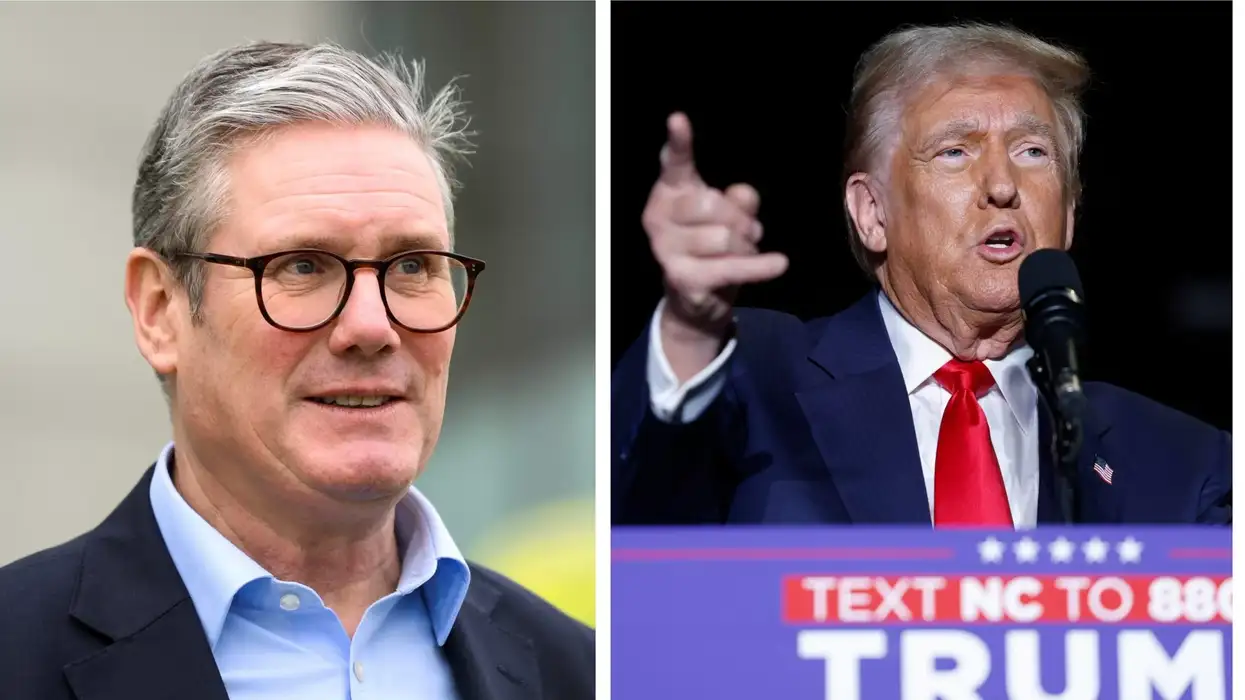

PRIME MINISTER Keir Starmer and US president Donald Trump on Thursday discussed the need for a “practical plan” to get shipping moving again through the Strait of Hormuz after the US-Iran ceasefire, Downing Street said.
The two leaders “agreed that now there is a ceasefire in place and agreement to open the Strait, we are at the next stage of finding a resolution,” the prime minister’s office said.
“The leaders discussed the need for a practical plan to get shipping moving again as quickly as possible,” it added, saying they agreed to speak again.
Starmer arrived in Qatar on Thursday as part of a trip to discuss the war and the ceasefire with Gulf leaders.
He said earlier that Israel’s continued attacks on Lebanon were “wrong”.
“Let’s be really clear about it, they’re wrong,” Starmer told Britain’s ITV News when asked about Israel’s insistence that Lebanon was not part of the ceasefire.
“That shouldn’t be happening, that should stop, that’s my strong view,” the prime minister added, calling this a “matter of principles”, while acknowledging he did not have full details of the ceasefire deal.
Starmer also criticised Trump’s rhetoric on Iran, saying that he would “never use” such a threat as “a whole civilisation will die tonight”.
Starmer spoke while in Bahrain, having already met the leaders of Saudi Arabia and the United Arab Emirates.
He rejected a suggestion from Iran that it could charge for letting ships use the Gulf waterway, telling ITV: “Our position is ‘open’ means open for safe navigation.”
“That means toll-free navigation and vessels can get through,” he added.
Traffic through the Strait of Hormuz remains at a standstill despite the announcement of the ceasefire.
Starmer told journalists the mood among Gulf states was that the ceasefire is “fragile, that there’s work to do in relation to it”.
The Gulf leaders see Britain as a “friend”, Starmer said, describing the aim of his trip as “to make sure the ceasefire is a permanent ceasefire and that the Strait of Hormuz is open”.
In Bahrain, Starmer met King Hamad bin Isa Al Khalifa and Crown Prince Salman bin Hamad Al Khalifa, who is also prime minister.
Earlier on Thursday, he met UAE president Mohamed bin Zayed Al Nahyan, where the official news agency said they discussed the “serious implications” of developments in the Middle East.
On Wednesday, he met Saudi Arabia’s Crown Prince Mohammed bin Salman in Jeddah.
In Saudi Arabia, Starmer “set out how efforts must now be focused on upholding” the ceasefire “and turning it into a lasting peace,” a Downing Street spokesperson said.
His visit followed a virtual meeting on Tuesday of military planners from over 30 countries hosted by Britain on potential efforts to protect shipping in the Hormuz Strait.
(With inputs from agencies)