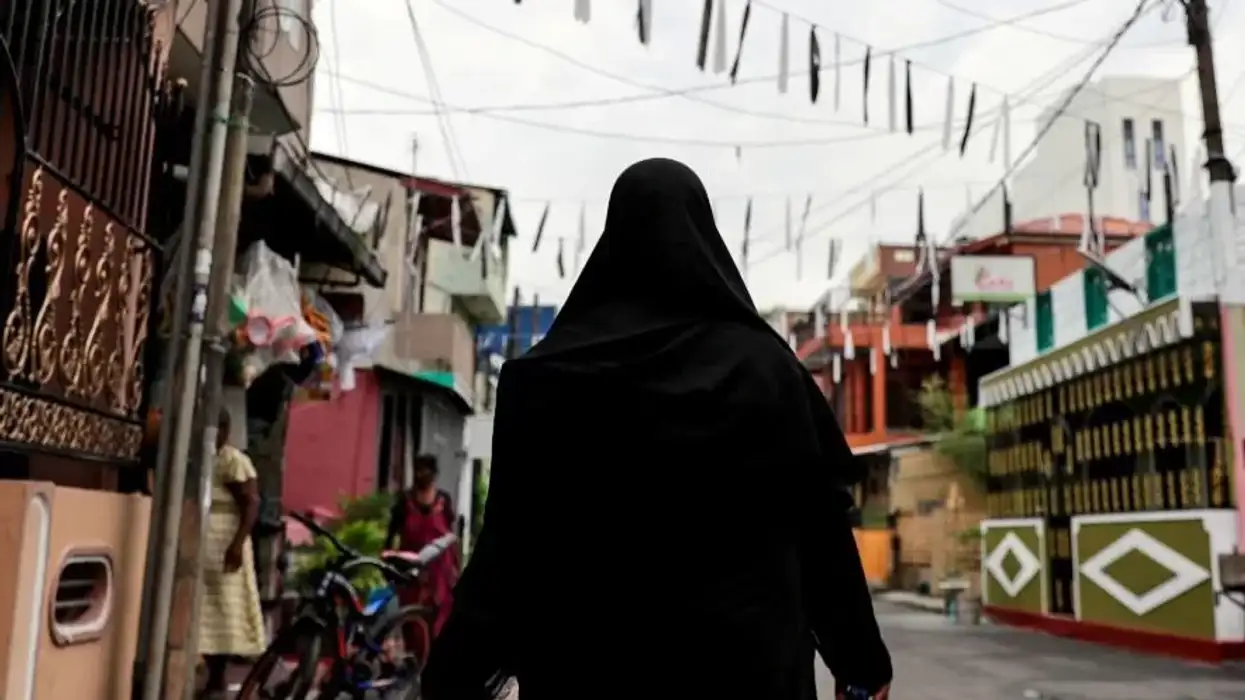

SRI LANKA has said that a call to ban the wearing of the burqa was 'merely a proposal', following criticism from regional allies ahead of a crucial UN vote on human rights in the island nation.
Sri Lanka's minister for public security, Sarath Weerasekera, said on Saturday (13) it would 'definitely' ban the full face covering worn by some Muslim women on national security grounds, pending cabinet approval.
But the foreign ministry said on Tuesday (16) a decision had not yet been taken on what it described as "merely a proposal... under discussion".
"The government will initiate a broader dialogue with all parties concerned and sufficient time will be taken for necessary consultations to be held and for consensus to be reached," it said in a statement.
Muslims make up around a tenth of the population in majority-Buddhist Sri Lanka.
The statement follows criticism from Pakistan's ambassador to Sri Lanka, Saad Kattak, who said in a tweet on Monday (15) a ban "will only serve as injury to the feelings of ordinary Sri Lankan Muslims and Muslims across the globe".
Ahmed Shaheed, a Maldivian diplomat currently serving as the UN Special Rapporteur on Freedom of Religion or Belief, said a ban was incompatible with international laws that protect religious belief and freedom of expression.
Several Muslim-majority countries, including Pakistan and Bangladesh, are among the 47 nations that will vote on Sri Lanka's human rights record at a UN session in Geneva next week.
A UN resolution passed against Sri Lanka could allow for prosecutions of government and military officials involved in ending a decades-long civil war in 2009, and Colombo is sensitive to anything that may impact voting there, according to a person familiar with the developments.
Almost a third of the 47 nations are members of the Organisation of Islamic Cooperation, which last year criticised a Sri Lankan policy to forcibly cremate coronavirus victims in the country, in violation of the Islamic tradition of burial.
The policy was repealed last month.