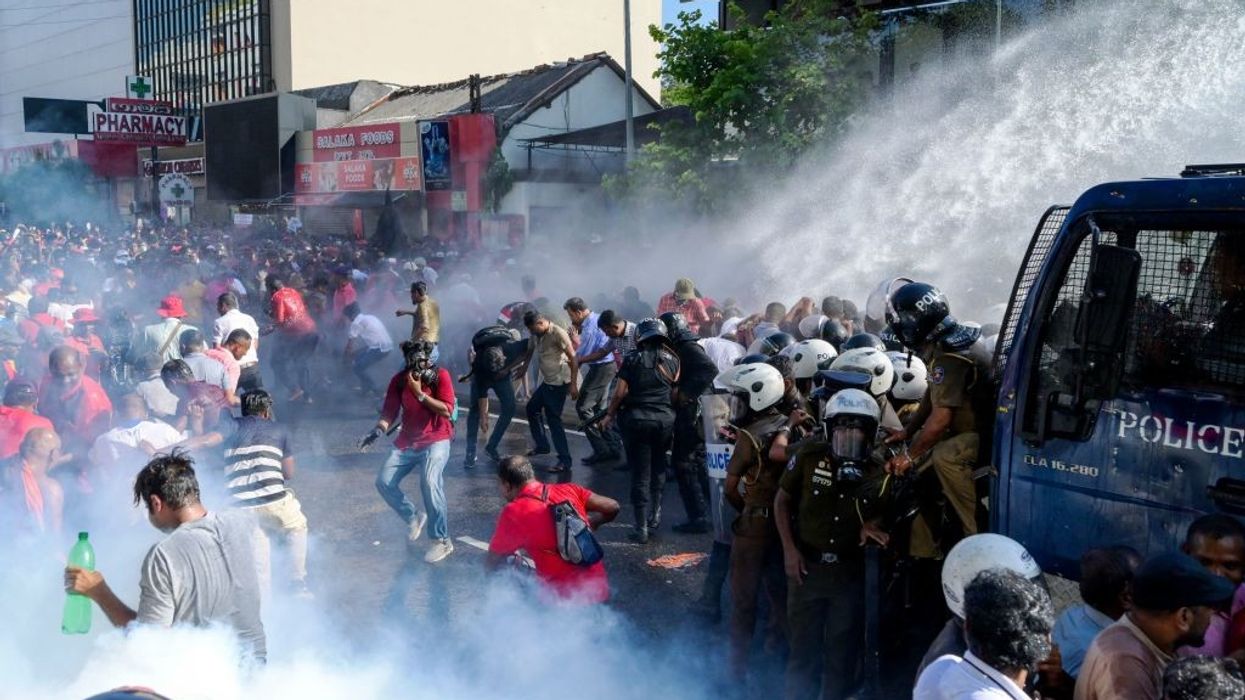

SRI LANKA's government said Tuesday (28) it was banning strikes in several key sectors, a day ahead of a planned one-day national stoppage called by unions to protest against painfully high taxes and utility bills.
Anger towards president Ranil Wickremesinghe is growing as his government slashes spending and hikes taxes to secure an IMF bailout after more than a year of economic and political upheaval.
Wickremesinghe's office said he used his executive power to invoke an "essential services" order that effectively outlawed the planned trade union action.
He declared "public transports, delivery of food or drink, or coal, oil, fuel, the maintenance of facilities for transport by road, rail or air... airports, ports and railway lines, as essential services with immediate effect," a statement said.
Anyone defying the essential services order risks losing their job.
More than 40 trade unions, including bank employees and government hospital staff, had said they would not carry out work on Wednesday as a token protest against the doubling of taxes since January.
The government has raised energy costs threefold in line with demands by the International Monetary Fund to reduce losses of state utilities in order to qualify for a $2.9 billion (£2.4bn) rescue.
Sri Lanka sought help from the IMF after defaulting on the country's $46bn (£38bn) in external debts in April.
The IMF is yet to unlock the funds pending financial assurances from China, the largest single bilateral creditor of Sri Lanka, that it is willing to take a haircut on loans to the South Asian nation.
Sri Lanka's unprecedented economic crisis since late 2021 has caused severe shortages of food, fuel and medicines and led to months of protests that toppled president Gotabaya Rajapaksa in July.
Wickremesinghe, who was elected by parliament to replace Rajapaksa, says the economy contracted by 11 percent last year and the island will remain bankrupt until at least 2026.
He has also announced that the country did not have money to finance a local government election which was scheduled for March 9, prompting accusations that he was using the economic crisis to stifle democracy.
(AFP)