

SRI LANKA'S central bank on Monday (28) called for further import restrictions to address a crippling foreign exchange crisis, following a string of loans from Asian neighbours including Bangladesh.
The island nation's foreign exchange reserves were badly hit last year amid the Covid-19 pandemic as the local currency came under intense pressure.
International rating agencies have since expressed fears that Colombo would not be able to service its huge foreign debt.
The Central Bank of Sri Lanka last week tightened its controls on dollar sales, leading commercial financial institutions to impose quotas on importers of essential commodities.
But central bank governor WD Lakshman said more restrictions were needed.
"What the central bank is doing now with the participation of all commercial banks, is judicious management of imports and foreign reserves," Lakshman said in a statement.
The bank was "of the view that there is further space to curtail non-essential and non-urgent imports," he added.
Sri Lanka had already banned luxury goods and car imports to combat the outflow of foreign currency.
The ban first imposed in March last year applied to turmeric, a staple in local curries as well as tiles, toilets, tyres, cosmetics, vehicle spare parts, electronic and electrical appliances.
The country's foreign reserves are currently at $4 billion (£2.8bn), down from $7.8bn (£5.6bn) in late 2019 when the government of president Gotabaya Rajapaksa came to power promising robust growth.
The economy shrank by a record 3.6 per cent last year - the worst downturn since independence from Britain in 1948 - as the pandemic wiped out the island's lucrative tourism sector.
Lakshman said Sri Lanka would continue to meet its debt service obligations amounting to $3.6bn (£2.5bn) in the next six months.
Sri Lanka has loaned $250 million (£179m) from neighbouring Bangladesh, which is expected to come through next month.
It also expects to borrow another $400m (£287m) from India in August.
The country also hopes to get $800m (£575m) from the International Monetary Fund in August, the governor said.
In May, Sri Lanka secured a $500m (£359m) loan from South Korea.
China's central bank also granted a $1.5bn (£1bn) currency swap to finance imports from the Asian giant in February.
Sri Lanka has borrowed heavily over the years. Some of the debt was used to finance vanity projects like massive convention centres and other infrastructure that have become white elephants.








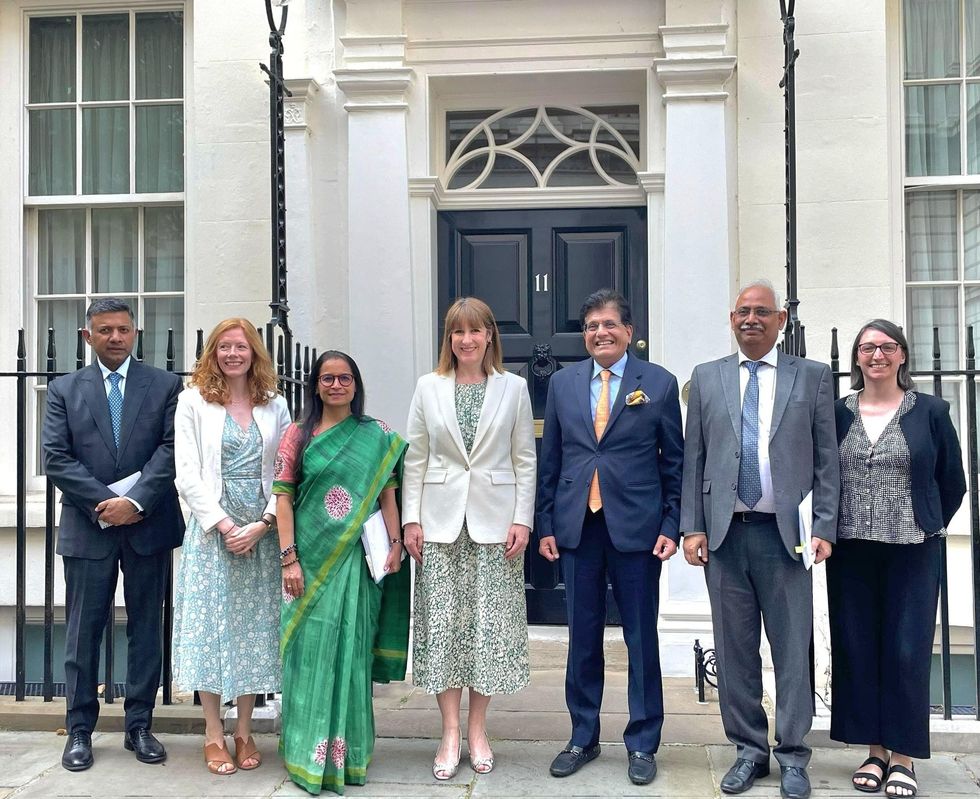 Piyush Goyal with shadow chancellor Rachel Reeves (centre), Vikram Doraiswami and other officials at the India Global Forum
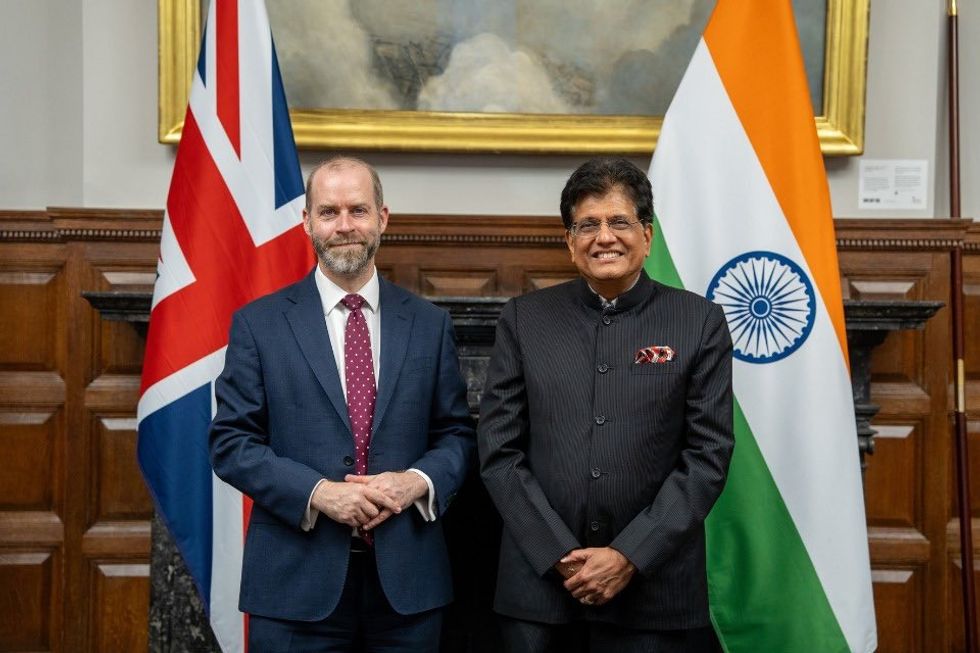 And , Goyal with Jonathan Reynolds