
Highlights
- Bodycam footage shows dying student repeatedly telling police: “I can’t breathe”
- Officers handcuffed Henry Nowak after accepting his killer’s account at the scene
- Vickrum Digwa jailed for a minimum of 21 years for the fatal stabbing
- Politicians, campaigners and public figures react as watchdog investigates police response
BODYCAM footage showing a dying student being handcuffed by British police after he was stabbed by a Sikh man and falsely accused of racial abuse sparked outrage on Tuesday.
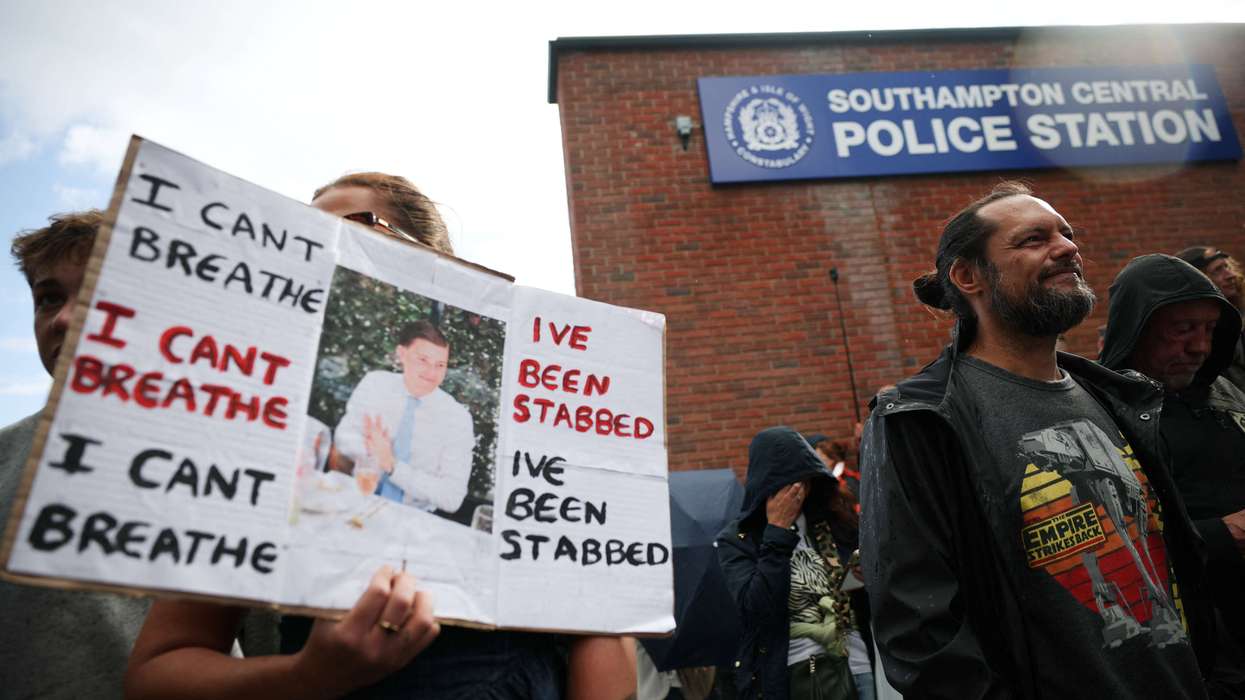
Eighteen-year-old Henry Nowak was heard repeatedly telling police “I can't breathe” in footage captured after a night out with members of his football team in December.
A judge on Monday jailed 23-year-old Sikh Vickrum Digwa for at least 21 years for stabbing Nowak to death with a ceremonial knife with a 21cm (eight-inch) blade.
Police arriving at the scene in Southampton were told by Digwa that Nowak had racially insulted him and that he was the victim.
Footage shown during the trial showed officers accepting Digwa’s account and handcuffing Nowak despite his repeated pleas that he had been stabbed and could not breathe.
One officer was heard asking Nowak: “You've been stabbed, whereabouts?” before adding: “Don't think you have, mate.”
ALSO READ: British Sikh man jailed for life for killing student in Southampton
Moments later, the student collapsed and lost consciousness.
Speaking after Digwa was sentenced at Southampton Crown Court, Nowak’s father, Mark, described the police treatment of his son as “shocking”.
He called the treatment “inhumane and degrading... his murderer, however, was afforded decency. He was believed”.
The family gave police permission to release the bodycam footage.
Prime minister Keir Starmer condemned the “awful, shocking case” on X on Monday and said it was right that the police complaints watchdog was investigating officers’ “response to (Nowak's) senseless murder”.
Home secretary Shabana Mahmood on Tuesday urged people not to allow the murder to “turn communities against one another”.
“We must condemn those who seek personal political profit from tragedy,” she told parliament.
Opposition Conservative Party leader Kemi Badenoch and Reform UK leader Nigel Farage called for changes to police diversity policies.
ALSO READ: Sikh man convicted of murder after jury rejects racist abuse claim
Farage said there needed to be an end to “anti-white prejudice” and recognition that “white lives matter”.
He said Nowak’s words echoed the 2020 case of George Floyd, a black man killed by police in the United States.
“I can't breathe. Familiar words. Remember career criminal George Floyd, who died in appalling circumstances in Midwest America,” Farage said.
“At the time Keir Starmer was taking the knee. Black Lives Matter exploded all over the country. Churchill's statue was defaced,” he added.
Farage said that after Nowak’s death there had been “absolute silence, proof ... we're living in a two-tier culture in this country where the rights and privileges of white people matter less than those of ethnic minorities”.
Badenoch accused Farage of “deepening divisions” with his comments.
But she also criticised what she called “two-tier policing”, where officers allegedly deal with ethnic minorities more leniently.
Badenoch, whose party has lost support on the right to Reform UK, said citizens should be treated equally by police regardless of ethnicity.
“No two-tier policing, no believing that racism only happens to ethnic minorities. It happens to everyone,” she told Good Morning Britain.
“And the police need to be trained like that, not with the terrible anti-racism training, which is just reverse racism and reverse discrimination,” she said.
American tech businessman Elon Musk posted on X offering to fund a private prosecution against police over their handling of the murder.
Far-right leader Tommy Robinson said he would attend a protest demanding “justice” for Nowak on Tuesday evening outside Southampton’s main police station.
Digwa appeared in court again on Tuesday alongside his brother Gurpreet Digwa, 27, and his father Moga Singh, 52, on weapons offences.
All three face charges of possession of offensive weapons, including a flick knife, an extendable baton, knuckledusters, a machete and swords.
Digwa’s brother and father were granted bail until the next hearing in July.
Digwa’s family apologised to Nowak’s family for the killing and for bringing the Sikh community into “disrepute”.
The convicted killer’s mother, Kiran Kaur, 53, will be sentenced on July 17 for assisting an offender by taking the knife back to the family home.