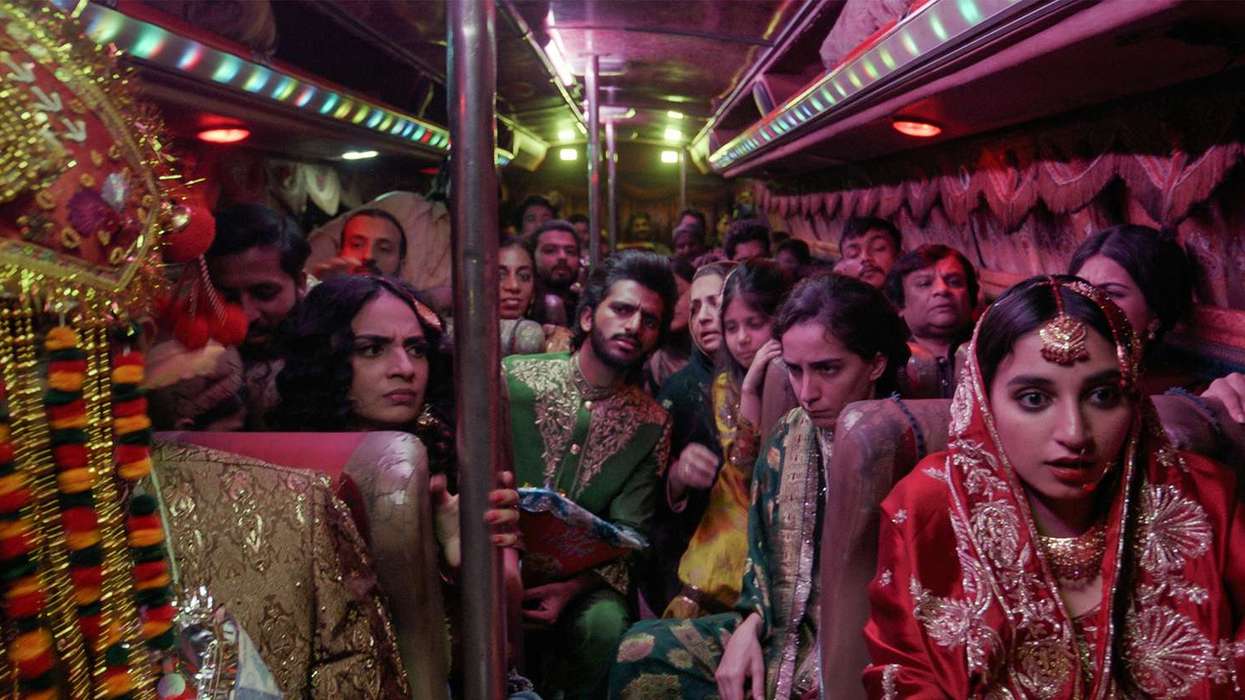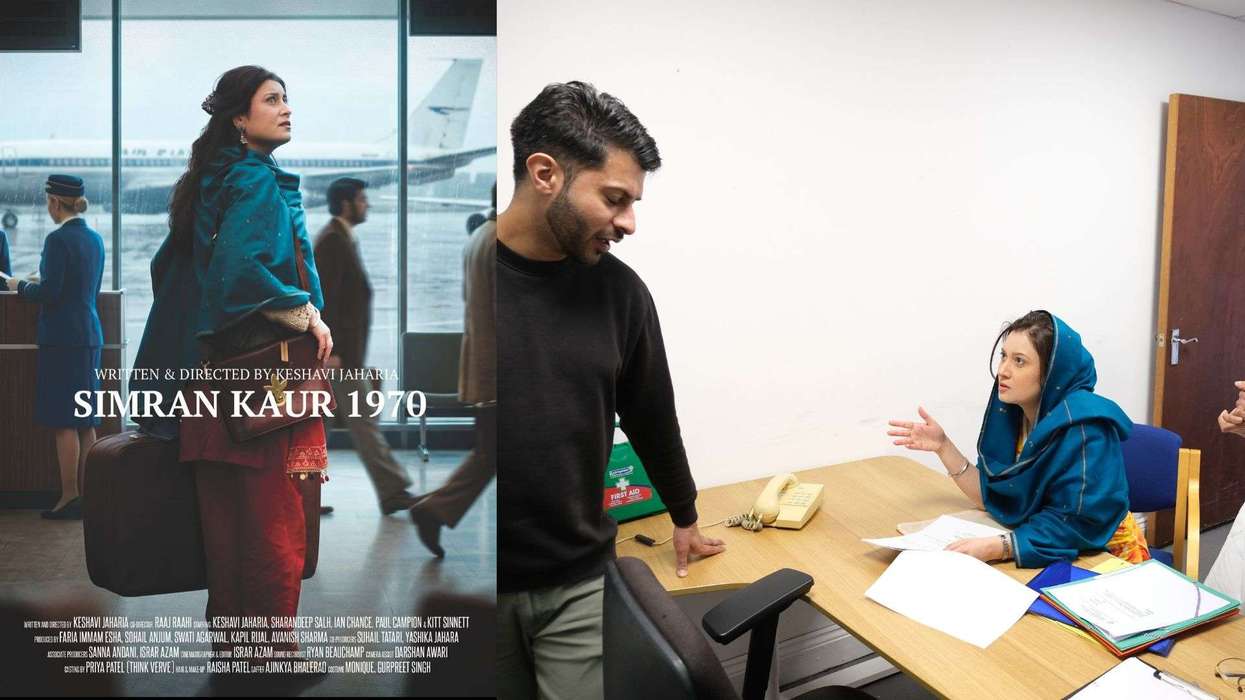

Women arrived in Britain hoping to marry and begin a new life. Some were instead subjected to intimate virginity examinations at Heathrow Airport, with their bodies scrutinised by officials seeking to establish whether their stated reasons for entering the country were genuine. Decades later, many people remain unaware that the practice took place.
For filmmaker Keshavi Jaharia, that lack of awareness was one of the reasons the story needed to be told. Her short film Simran Kaur 1970 revisits the disturbing history of virginity examinations imposed on women arriving from the Indian subcontinent, particularly India and Pakistan, to marry in Britain.
While interacting with Eastern Eye, she mentioned, “I discovered it much later and when I actually, I came across these articles and later on I found some small documentaries on YouTube, I was shocked. I was like, I mean, I couldn't believe this was actually happening and the state was involved, you know, but and it's just it's still a shock,” Jaharia said in an interview.
The discovery prompted her to make a film about a chapter of British immigration history that she felt had received too little attention. Rather than presenting the story as an attack on one institution, she wanted audiences to consider the consequences of policies for the people forced to live through them.
- YouTube youtu.be
“I just wanted to, you know, bring it out, but not in a way where you point your finger on a certain institution for all the wrongdoings, but it is more as a part of like history which has to be told. And also to remind people that certain policies are, you know, what or the effects what certain policies can have on real humans,” she said.
The subject is uncomfortable because it challenges the familiar image of immigration checks as routine administrative procedures. In this case, women’s intimate lives became the subject of official scrutiny, with examinations used to question whether they were telling the truth about travelling to Britain to marry.
For Jaharia, the central issue was not simply that the practice happened, but that so few people knew about it.
A history many people never heard about
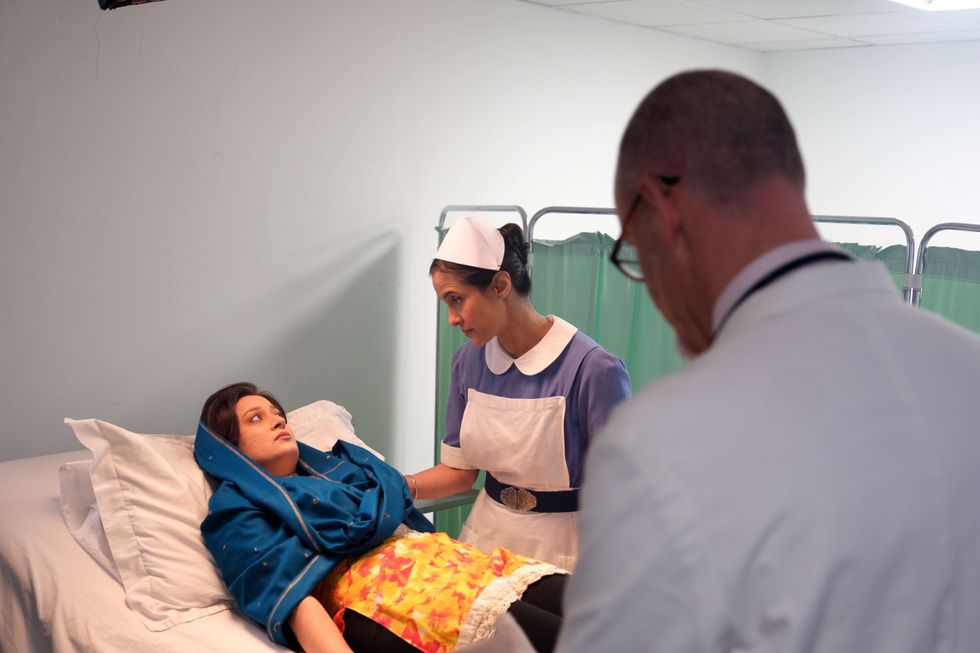 A still from the film showing nurse interacting with Simran Kaur for the virginity test.Google Drive
Jaharia, who was born and raised in Amsterdam, said she came across the history through articles and later watched short documentaries on YouTube. She had not encountered it through family or community conversations.
Her reaction was one of disbelief. The involvement of the state made the practice particularly difficult for her to comprehend, and she began to question why a story with such serious consequences for women had not been more widely discussed.
The examinations were intended to establish whether women arriving on fiancé visas were genuinely travelling to marry. In her research, Jaharia found accounts of women from the Indian subcontinent being subjected to examinations that placed their sexual histories under official scrutiny.
“It's just scary to know that a policy of the state can, well, they think that they have the right to examine or do virginity testings on,” she said.
The practice was deeply dehumanising, she added. Women were not simply being asked to provide documents or explain their plans. They were placed in a position where an institution could subject them to an invasive examination as part of deciding whether their account was credible.
“Very, very dehumanizing for these women,” Jaharia said.
The consequences did not necessarily end when the women left the examination room. Shame and fear could make it difficult for them to discuss what had happened, even with those closest to them.
“Back in the day, it was, I think many women, they haven't raised their voices because they were ashamed. They were, they didn't know how to bring this, you know, to their family or to their, New husbands, so they just kept quiet,” she said.
Some women disclosed their experiences to their children years later, Jaharia explained, including after their husbands had died. For those families, the truth emerged long after the events themselves.
The delayed disclosures reveal another consequence of the practice: the women had to carry experiences they may have felt unable to share. Their silence should not be mistaken for an absence of harm.
Why Jaharia chose to make the film
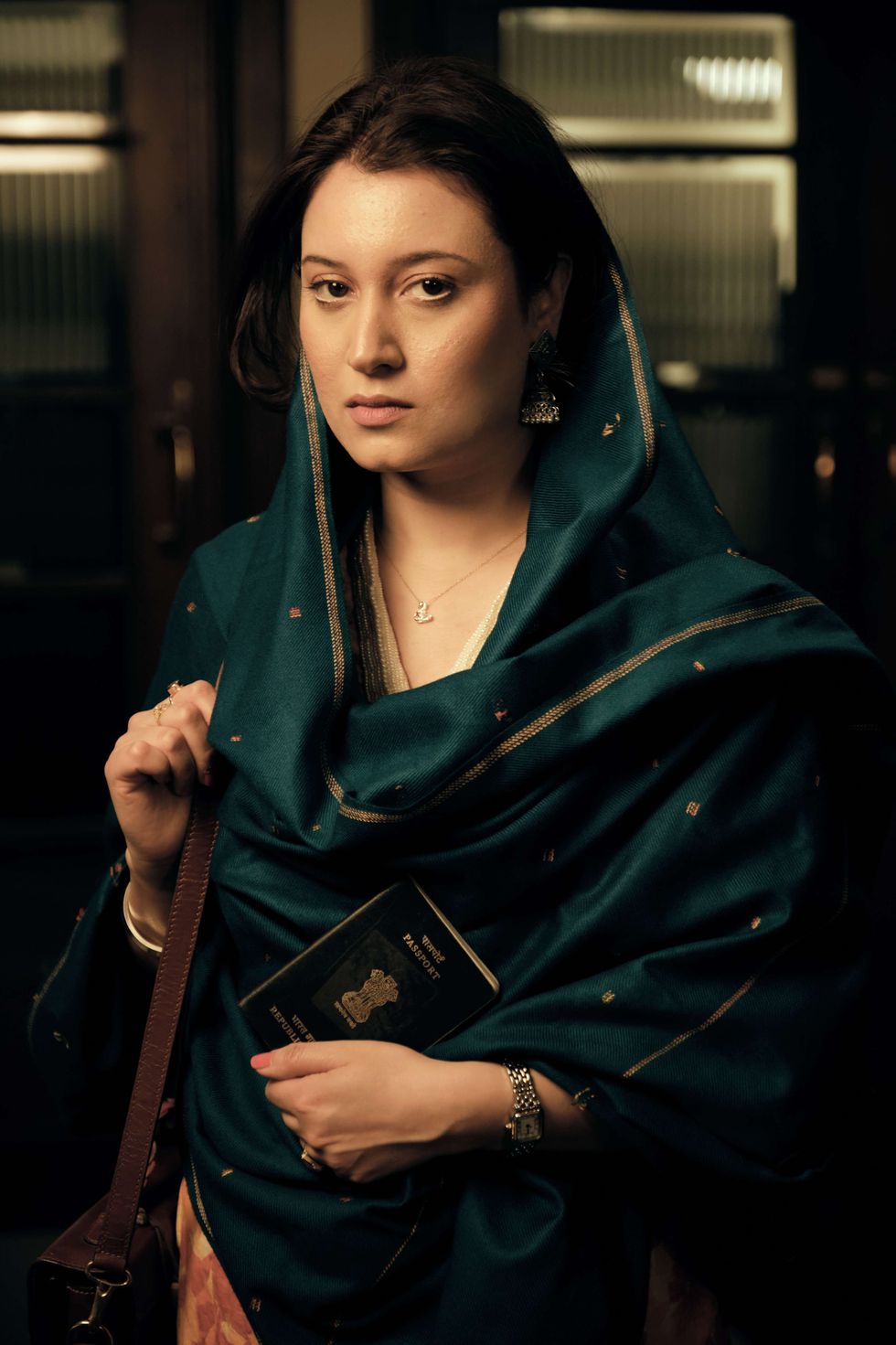 Keshavi Jaharia as Simran KaurGoogle Drive
Simran Kaur 1970 approaches the history through a dramatised story rather than attempting to represent every woman's experience. Its focus is on the individual caught within an official process, and on the gap between the way a procedure may be understood by an institution and the way it is experienced by the person subjected to it.
Jaharia said portraying the women's experiences was challenging because trauma is not uniform. Each person responds differently, and a filmmaker must make choices about how to convey those emotions on screen without reducing them to a single reaction.
“Because it happened to a lot of women and later on it was determined that the numbers were much higher than actually described in the first articles. Everyone has their own experience and the way it has been carried out or how people deal with it is everyone like has their own way of dealing with certain traumatic experiences,” she said.
That was an important consideration in shaping the film. The aim was to make audiences understand the emotional weight of the experience without turning the women's suffering into spectacle.
Jaharia's interest in socially relevant subjects also informed the project. She said she was drawn to stories about issues such as cybercrime and domestic violence because they could make a difference, rather than simply offering entertainment.
“Most of the stories I tell and I like to speak about are stories which can actually change something. Like, you know, stories about cyber crime or domestic violence or... Cancer. I like this kind of topics because it makes it can make a difference. Instead of just, you know, making a Romeo and Juliet film. Yeah,” she said.
She was also surprised by how little information she found about the examinations and that no film had brought the subject to wider attention in the way she hoped hers would.
“I never thought about that. It's just, you know, I found something and I just, I just thought that it should come out. And I was surprised that, you know, no one actually made a film about this or, or there was like so less information about this on the internet and people didn't really know about this,” she said.
She hopes the film can help women who experienced the examinations feel that their experiences have been acknowledged.
“I think maybe because of this film, it can open certain doors and also allow to have, for these women to have some closure. And if not, and if not, just to have that acknowledgement there, you know, for them. Yes,” she added.
British audiences were surprised, too
 A still of the film portraying the alleged virginity testGoogle Drive
Although the events took place in Britain, Jaharia found that many people there were unfamiliar with the history.
When she discussed the film with people in the UK, some searched online for information and were surprised by what they discovered.
“They just they Google it and then they find, you know, articles and stuff, and then they say, ‘Wow!’ I didn't know that, you know,” she recalled.
That response reinforced her belief that the story needed a wider audience. The lack of awareness was not limited to people outside Britain or to younger generations. Some people living in the country where the examinations took place had never heard about them.
The film also offers an opportunity for younger British South Asians to explore a difficult part of migration history that may never have been discussed within their own families. For some, the story may connect with accounts of parents or grandparents who moved to Britain to marry and build new lives.
For audiences in the United States, the film provides a perspective on the experiences of South Asian women navigating immigration systems and the power authorities can exercise over those seeking entry. The historical circumstances are specific to Britain, but the questions about dignity, consent and institutional power have a wider relevance.
Taking Simran Kaur 1970 to international audiences
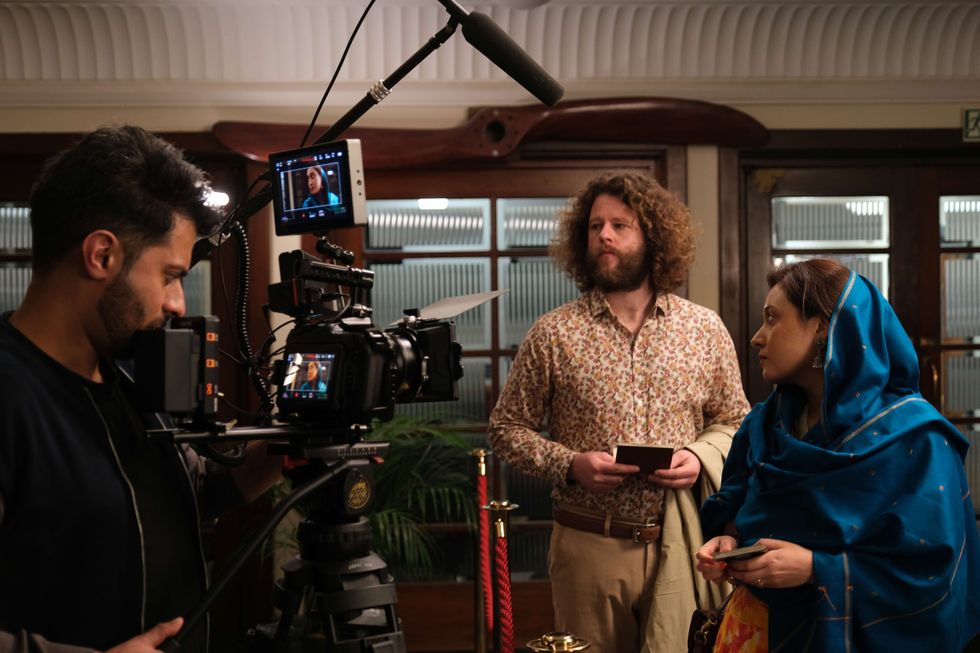 BTS of 'Simran Kaur 1970'Google Drive
The film's festival journey has given Jaharia an opportunity to bring the story to audiences beyond the communities most directly connected to it. The short drama was selected for the Bengaluru International Short Film Festival and the Tasveer International Film Festival, according to the film's promotional material.
At the time of the interview on 5 October, the team was preparing for a screening in Seattle on Sunday (18). Jaharia described the upcoming event as an important milestone and welcomed the opportunity to have the film shown at festivals.
Jaharia hopes the film will encourage people to look beyond the screen and learn about the history that inspired it. She does not expect a short drama to resolve every question surrounding the examinations but wants it to prompt audiences to consider the human consequences of government policies.
“I think cinema, so the cinema reminds us that certain policies of the state and institutions, they can ultimately have a big effect on a human, on us. Um, it's just that what I want Simran Core to deliver,” she said.
That is the central concern of Simran Kaur 1970: what happens when an institution's procedures become more important than the dignity of the people subjected to them?
The virginity examinations belong to a particular period of British immigration history, but the women who experienced them should not be reduced to a forgotten footnote. Some stayed silent for years because they did not know how to explain what had happened. Others eventually told their children, allowing their experiences to be heard within their families.
Jaharia's film seeks to bring those experiences into public conversation. By revisiting a practice that many viewers may never have encountered in their history books, Simran Kaur 1970 asks audiences to recognise the people behind the policies — and to consider why their stories took so long to be heard.