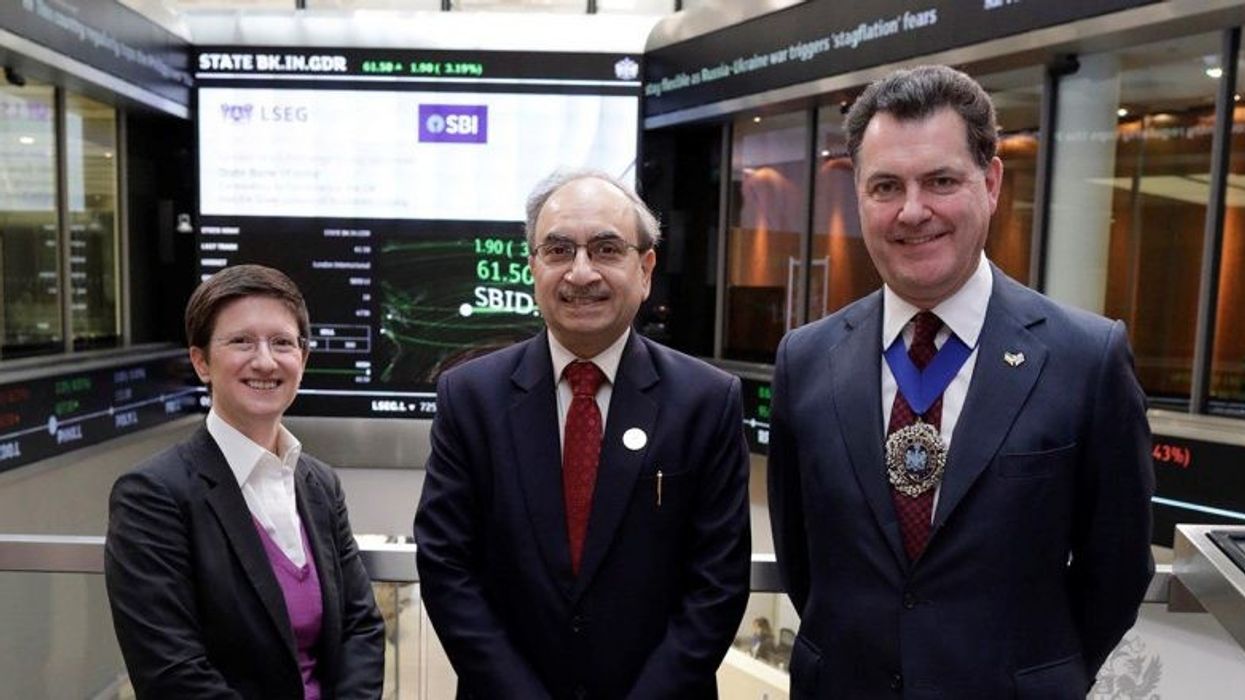
INDIA’S largest lender State Bank of India (SBI) is celebrating the centenary of its presence in the UK and the silver jubilee of its listing on the London Stock Exchange (LSE).
The bank’s chairman Dinesh Khara opened the exchange on Friday (10) as part of the celebrations.
Previously known as the Imperial Bank of India, SBI has been active in the UK since 1921 when it opened its first British branch to provide banking services to the Indian diaspora, corporates and small businesses.
Its wholly-owned subsidiary SBI UK, incorporated in 2018, is the largest Indian bank operating in Britain with a network of 12 branches across the country.
“As a nation with a rich, historical relationship with Britain, linked by language and culture, SBI looks forward to finding tremendous opportunities for shared prosperity. Having proudly served the UK community for 100 years, SBI UK remains committed to its corporate, business and individual customers and looks forward to the next hundred years of stewarding financial security and prosperity for its clients in the UK”, a statement on the LSE website said.
Separately, the bank said it will reopen its Golders Green branch in London on April 4 as the refurbishment works are “now nearing completion".
The Indian government holds a 56 per cent stake in the Mumbai-headquartered SBI, which enjoys a market capitalisation of Rs 4.33 trillion (£43 billion) as of Monday (14).
SBI’s UK arm celebrates centenary