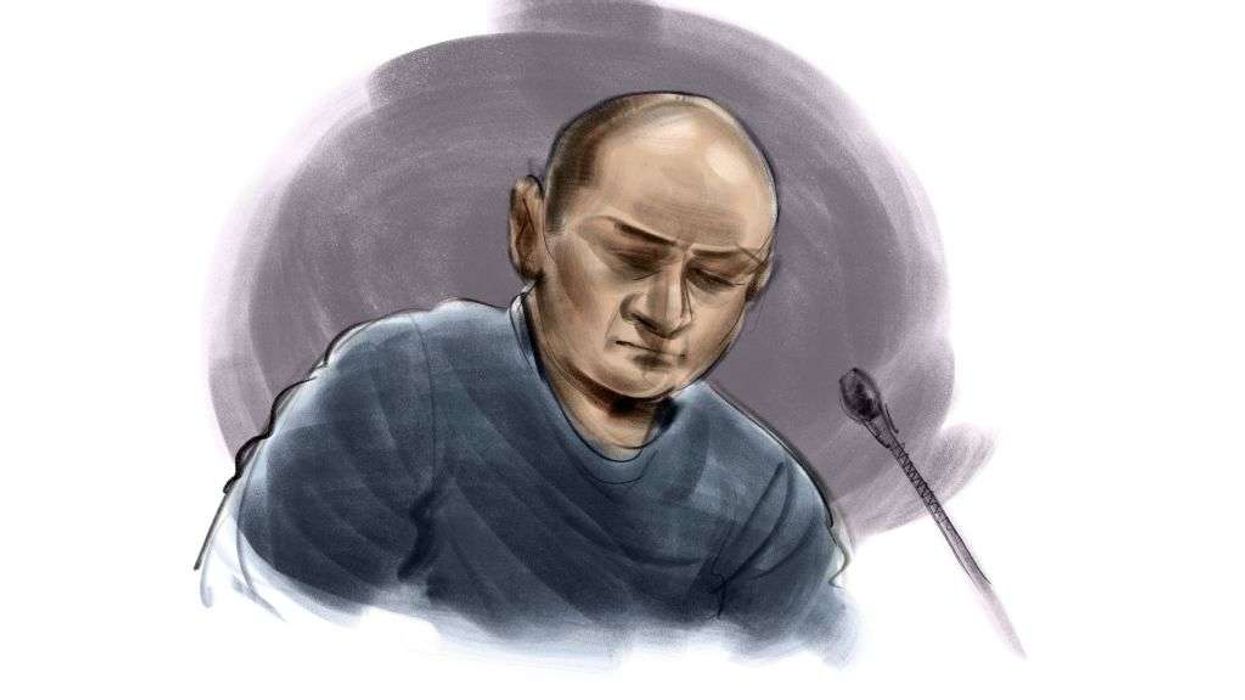

DENMARK has lost a landmark £1.4 billion tax fraud case at London’s High Court, in a ruling that placed the spotlight once again on Asian financier Sanjay Shah, the man once described as the “mastermind” of complex dividend schemes that cost European governments billions.
Shah, a British Indian trader and hedge fund manager, was the most prominent name in the eight-year legal battle brought by Denmark’s tax authority, Skatteforvaltningen (Skat).
At the centre was his company, Solo Capital Partners, which played a major role in so-called cum-ex schemes – a method of exploiting tax loopholes to generate multiple refunds of dividend taxes that had only been paid once.
Justice Andrew Baker, delivering his decision after an 18-month trial, said Skat had not proved that it was deceived into paying out the refunds. He was scathing about Shah’s evidence, calling him “not a trustworthy individual” who gave “implausible claims and obvious lies”.
“I do not consider it safe, in general, to treat anything Shah says for himself or about the Danish dividend tax refund factory he created as reliable evidence of fact,” the judge said.
Despite those words, the court found the Danish tax authority’s controls were “so flimsy as to be almost non-existent”. Of 4,170 refund claims examined between 2012 and 2015, none were valid under Danish law – yet all could have been rejected if proper checks had been in place.
Born to Indian parents and raised in London, Shah founded Solo Capital in 2009, building it into a hedge fund known for high-risk, high-reward strategies. By the early 2010s, it had become a key player in refining cum-ex trades, focusing particularly on Denmark.
In 2016, amid growing scrutiny, Solo Capital was shut down. Shah moved to Dubai, where he lived in luxury until Danish prosecutors secured his extradition in 2023. A year later, he was convicted of fraud in Denmark and handed the country’s toughest sentence in such a case.
The London ruling represents a major setback for Denmark, which had sought to recover billions through the English courts. “We strongly disagree with the premises of the judgment and are now seeking to appeal it,” the Danish government said in a statement.
The case, originally involving over 100 defendants, has been one of the most expensive civil proceedings ever brought in Britain. Legal sources suggest costs could reach hundreds of millions of pounds.
The court also cleared Jas Bains, a British lawyer of Indian heritage who worked at Solo Capital from 2010 to 2013. Bains later turned whistleblower, warning Danish authorities about the volume of trades. He said the long legal fight had cost him eight years of his life.
“I’m grateful to the justice system for exonerating me,” Bains told the BBC.
For Sanjay Shah, the judgment underlines his notoriety. Though Denmark failed in London, his name is now firmly associated with one of Europe’s biggest financial scandals. For many, the case highlights not only individual greed, but also the systemic failings that allowed billions to flow out of public coffers unchecked.