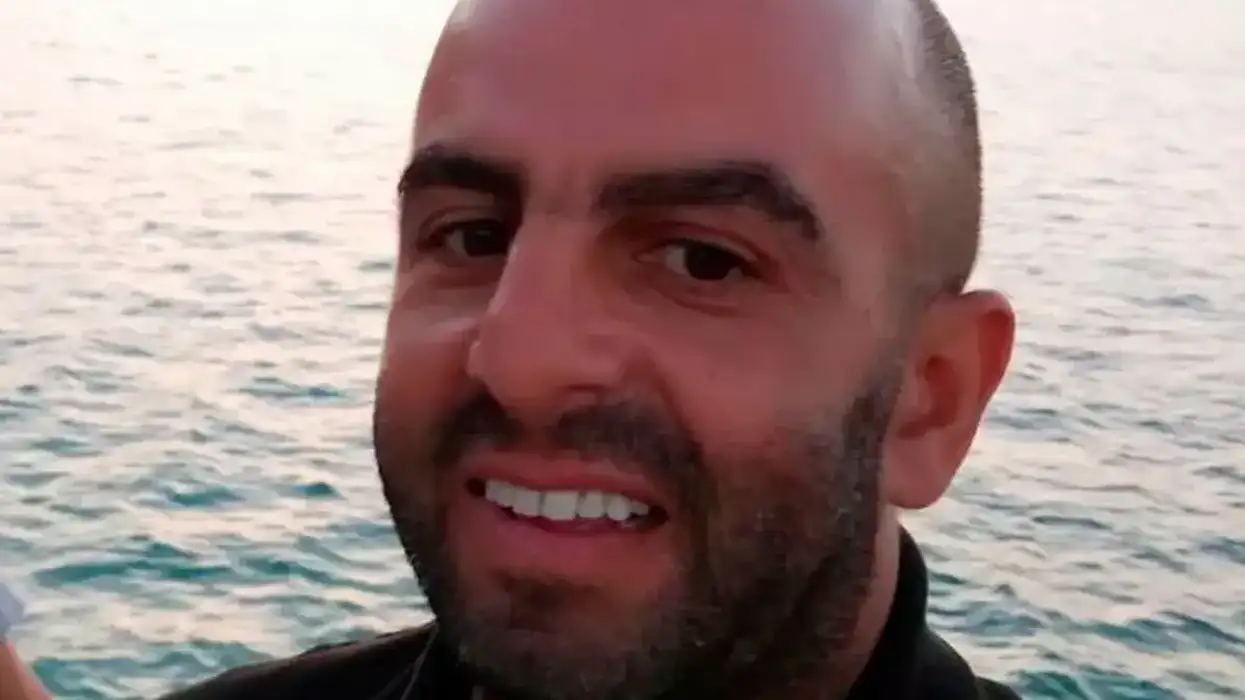

SAMIR ZITOUNI’s selfless act is a powerful reminder that courage, compassion, and decency—not division—are what hold this country together.
When the usual suspects dust off their tired, toxic phrase that immigrants are a ‘problem’, my mind immediately flashes to a recent crisis and the name Samir Zitouni. He’s the LNER rail worker who didn’t hesitate for a second, the man who stepped straight into danger to shield passengers from a brutal knife attack. While others understandably fled or retreated, Samir acted, driven by a selfless courage that cost him a stab wound. This wasn’t just an act of bravery; it’s pure, unforgettable heroism.
Samir's family comes from Algeria and the Arab world, making him a descendant of immigrants. Still, he is undeniably a key, irreplaceable part of the vibrant fabric of modern Britain. The bravery shown by Samir isn't some rare or one-off event that we can quickly dismiss. Instead, it’s a powerful reminder of a basic, fundamental truth we often forget: Britain’s strength has always been rooted in people who show up, who care deeply, and who are willing to risk something, even their own safety, for the sake of others.
It’s about pure selfless action. There’s no need for plastic flags, painted roundabouts, shouted slogans, or a theatrical performance of patriotism. Just quiet, innate decency that kicks in when it matters most.
This incident offers us a humbling and necessary moment for reflection. We see in Samir not just a hero, but a shining example that we are all of one humanity. His actions are a direct, living rejection of the vile hatred peddled by certain groups, political parties, and those who wish to diminish or exclude people whose family histories stretch beyond these islands.
Let’s be clear: the contribution of immigrants to Britain isn’t just a footnote—it is absolutely vital. Immigrants haven’t just contributed to making Britain; they have made Britain great. They have filled essential roles across our economy, culture, and social fabric—from the front lines of healthcare and construction to transport and technology—driving innovation and growth that we all rely on. They enrich society daily with diverse culture, cuisine, music, and traditions, creating the dynamic, energetic national identity that is unique to this country. Diversity, inclusion, and social justice aren’t optional extras that we can afford to debate; they are the fundamental pillars of our best British values.
Samir Zitouni is one of countless heroes—past, present and future—whose family roots may be miles away, but whose heart and sheer humanity define what “here” truly means.
So, the next time the divisive rhetoric starts—when someone tries to claim that immigrants are the issue—remember this stark moment of truth. When the worst happened on that train, it wasn’t hate, division, or fake patriotism that saved lives. It was compassion, courage, and a man whose simple, heroic actions should finally, permanently silence every bigot and hater in the land.
Humanity should always supersede politics and prejudice. Thank you, Samir, for reminding us to speak the language of humanity and kindness first. May you soon be restored to full health. You are a real hero. This is an important lesson for all of us to hold close: we are all human.
Instagram @itsmitamistry @HealingPlace


 Kees Van Dongen’s The White LadyAmit Roy