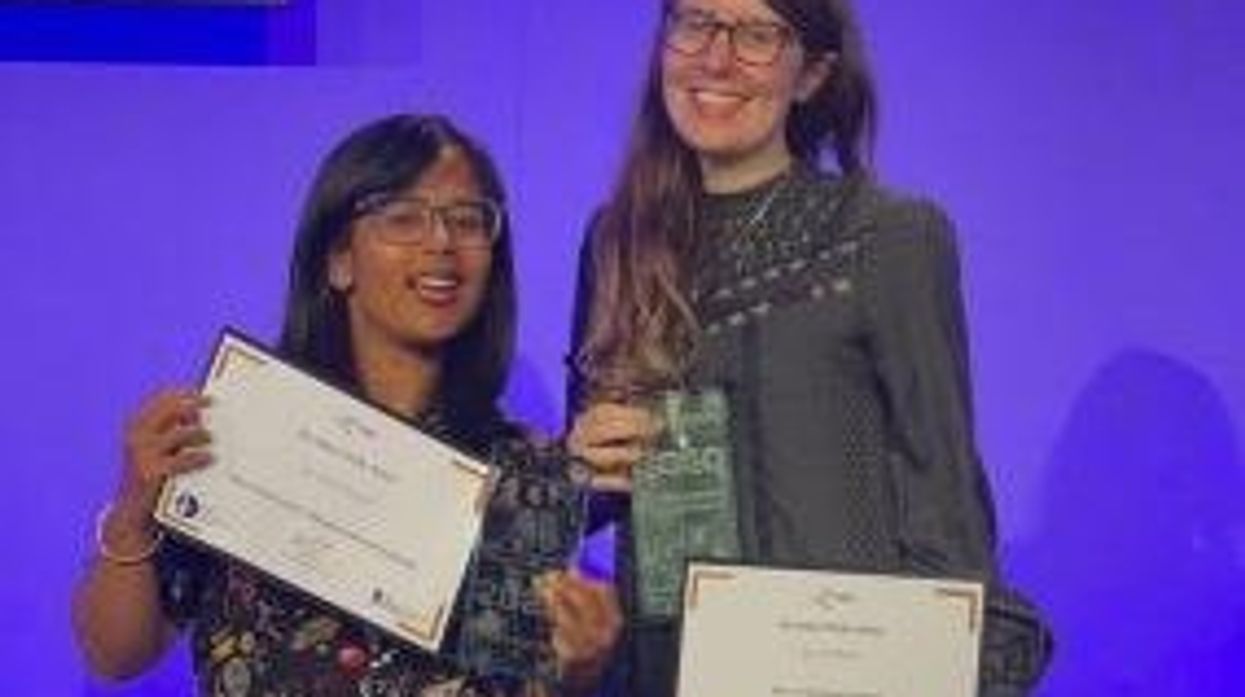

TWO leading astronomers of Royal Astronomical Society's (RAS), Dr Sheila Kanani and Aine O'Brien have won the Sir Arthur Clarke Awards popularly known as Arthurs - for their outstanding work in outreach.
Dr Kanani, a outreach and diversity officer at RAS won the Space Achievement Award for Education and Outreach, and was nominated for the award for her continued outreach work in space and astronomy both before and during the pandemic.
While Aine, a diversity officer was the winner of the Space Achievement Student Award, and won a nomination for co-creating the national ExoMars outreach programme ‘Roving with Rosalind’, establishing and leading the RAS’s Early Career Network in 2020 and the Diversity team for the UK students for the Exploration and Development of Space in 2018.
Sheila and Aine have been connected throughout their time in the space industry, meeting at Space School UK at the University of Leicester in 2008. Aine won a scholarship to attend Space Summer School, at which Sheila was her group mentor.
RAS president Professor Emma Bunce said: "Many congratulations to our team members Sheila and Aine on their Sir Arthur Clarke Awards. It is always a great pleasure to see our own team recognised within the space industry, and for such excellent work in outreach and engagement. Well done!"