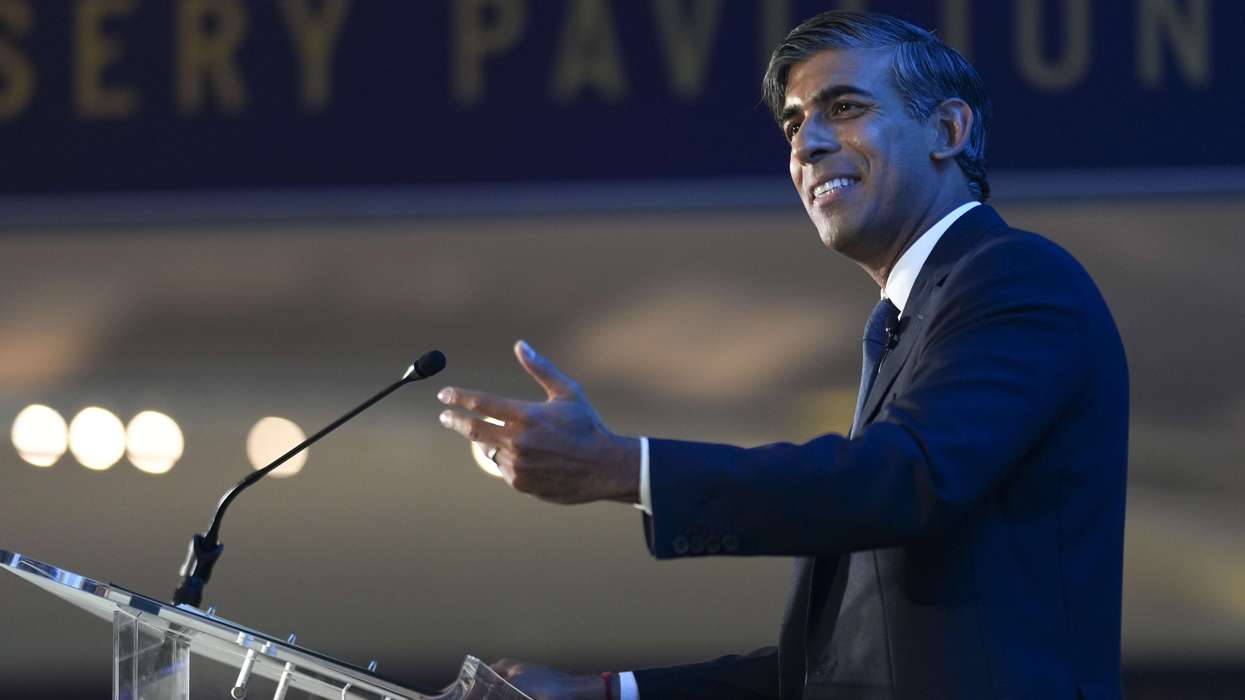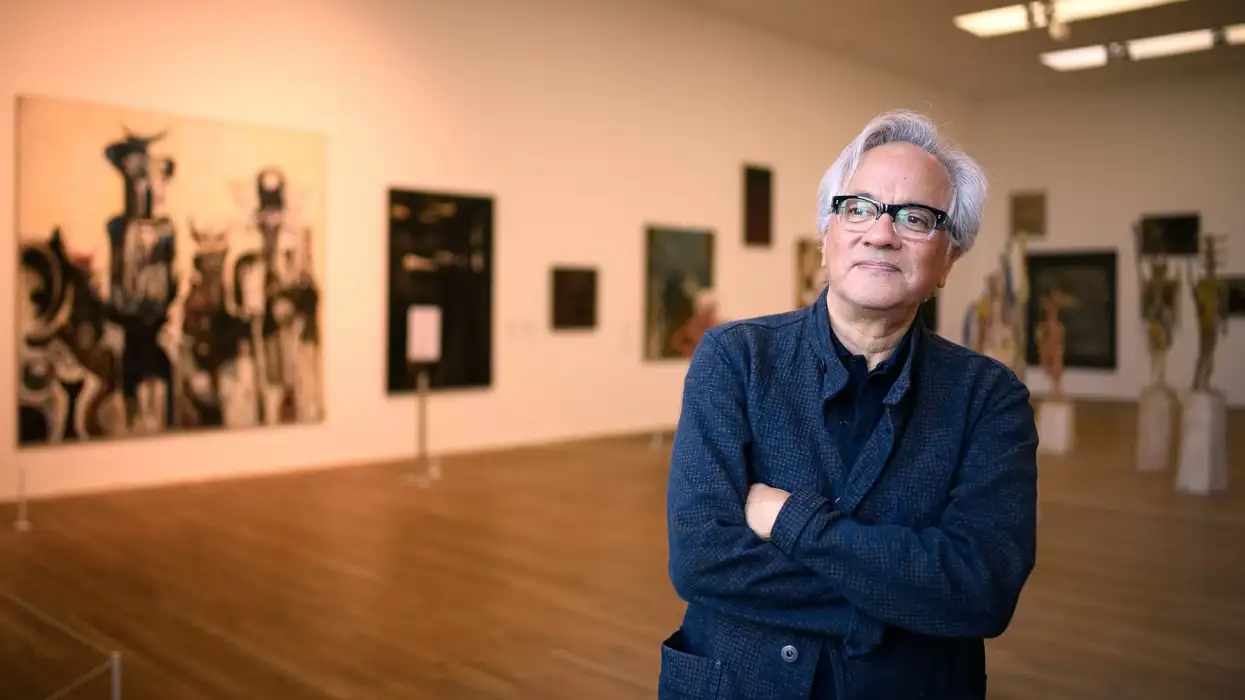

ASKED about British Asian representation in the 2026 Summer Exhibition at the Royal Academy, Ryan Gander, who chairs the hanging committee, said he was speaking to Eastern Eye in front of the work submitted by probably the most famous artist featured this year.
“Anish Kapoor is here – he’s British Asian,” responded Gander. “We’re standing right next to his work. The most famous artist in the exhibition is a British Asian.”
The committee selected 1,800 works of art for display from the tens of thousands that were submitted. Anyone can send in a work of art.
To be fair, Sir Anish Kapoor considers himself to be an international artist. He most certainly does not like to be defined by his ethnicity. His untitled work, made from acrylic, is a transparent cube which plays tricks with what can be seen as people walk round it.
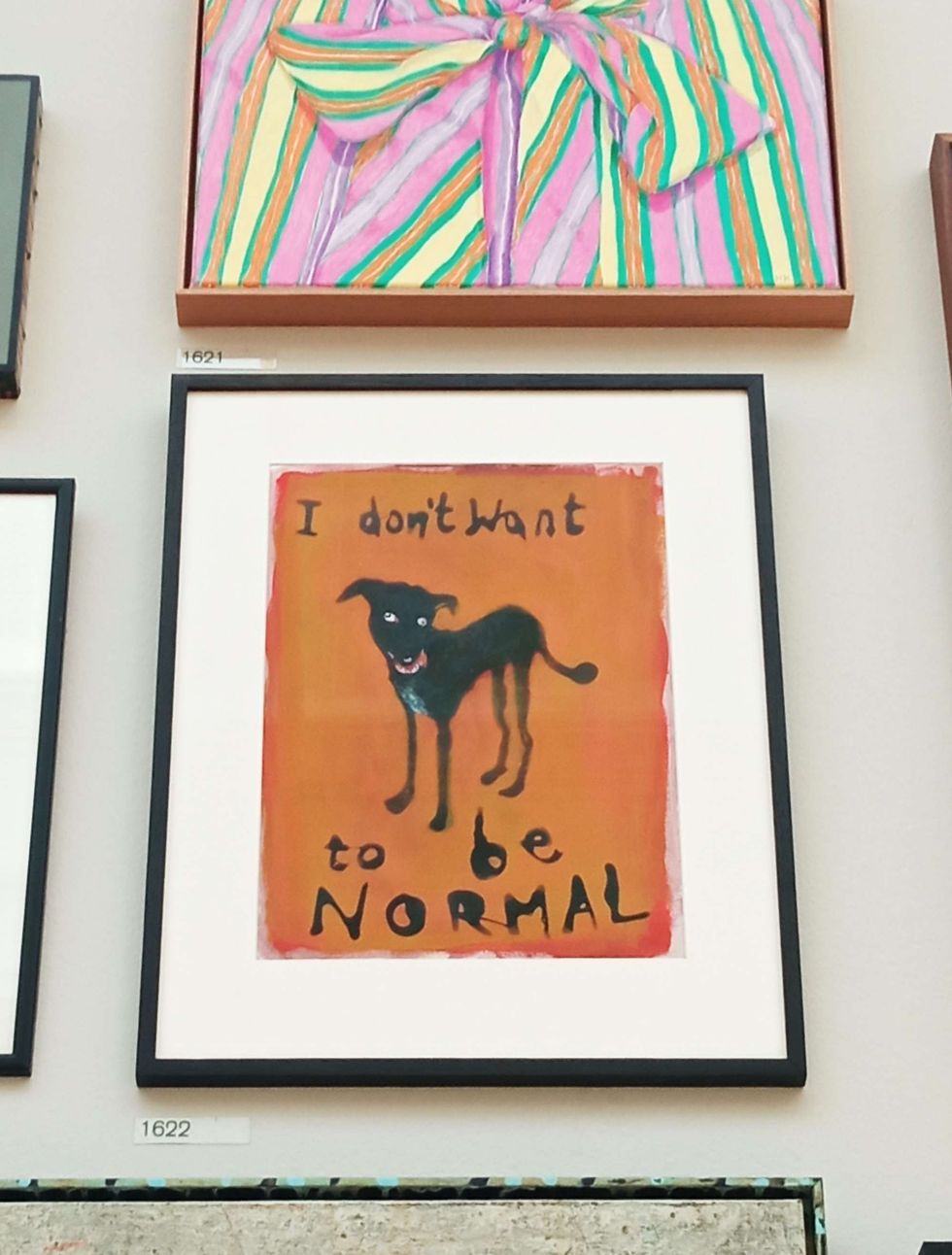 I don’t want to be normal by Akash BhattRoyal Academy
Previewing his major exhibition which has now opened at the Hayward on the South Bank, Financial Times journalist En Liang Khong noted that “he loathes being thought of as an Indian artist. Kapoor was born in 1954 (in Bombay) and educated at the Doon School, sometimes described as the ‘Eton of India’ (where the novelist Vikram Seth was a near contemporary). His mother was Iraqi Jewish – the daughter of a cantor – and his father secular Hindu. He moved to the UK to study in 1973, where he has remained.”
Sir Anish told the FT: “I’m Indian. I’m also Jewish, married to a Muslim woman and I’ve been a practising Buddhist for god knows how long. My wife Oumaima keeps reminding me of this multi-layered cultural reality, which I think is very important.”
Sir Anish is one of about 80 academicians at the Royal Academy.
The way the Summer Exhibition works is that art submitted by academicians are accepted by the hanging committee, which this year is made up of Eileen Cooper, Michael Craig-Martin, Oona Grimes, Katherine Jones, Goshka Macuga, Humphrey Ocean and Peter St John, with Gander acting as “coordinator” (chair).
The Summer Exhibition, which has been going for 258 years without a break, is described as “a unique celebration of contemporary art and architecture”.
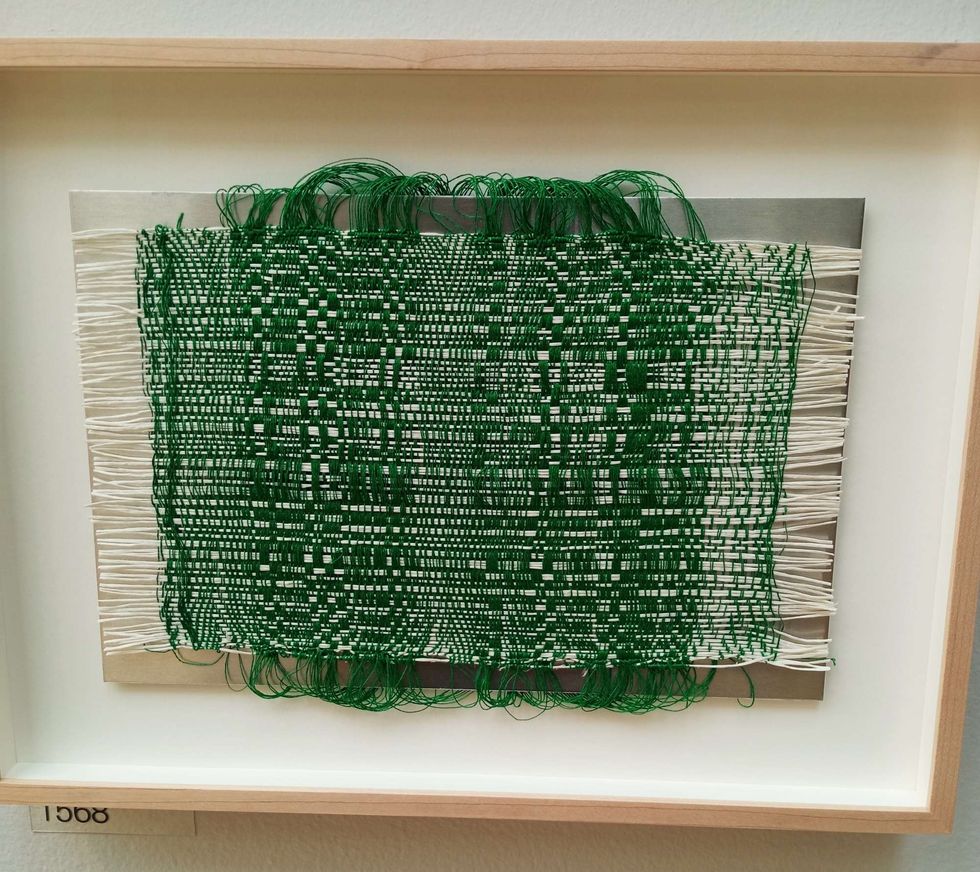 Soft Circuit I by Asha VaidyanathRoyal Academy
Rana Begum, who is the only other academician of Asian heritage, submitted four pieces. Two are labelled “acrylic paint on anodised aluminium”, and the other two “colour changing lenticular acrylic panel mounted on 3mm dibond”.
Among other artists, Akash Bhatt’s acrylic work is called, I don’t want to be normal.
This has been made into a postcard (which Eastern Eye bought for £1).
“They had prearranged a postcard should I get selected into the exhibition,” Bhatt explained to Eastern Eye. “Exciting to have mine not only in the show, but on a card. Thanks for buying it! I got back from a three-month trip in Australia where I was an artist in residency with an exhibition of the work I produced.”
Tarang Bharti’s entry, Trace temporal, is a Giclée print. Zarin Islam’s The Astral Folly, is done in graphite. Simran Sidhu’s Contact Zone is made from calico, cotton thread, masking tape, and piano wire. Chitra Merchant’s Under one night sky is a handdrawn screenprint.
And Asha Vaidyanath’s Soft Circuit I, is handwoven linen on wash paper, mounted on aluminium.
In his conversation with Eastern Eye, Gander said the art work “comes from every section of society that is interested in participating, but different people like different things. That’s the nature of being human. That’s the wonder of difference.”
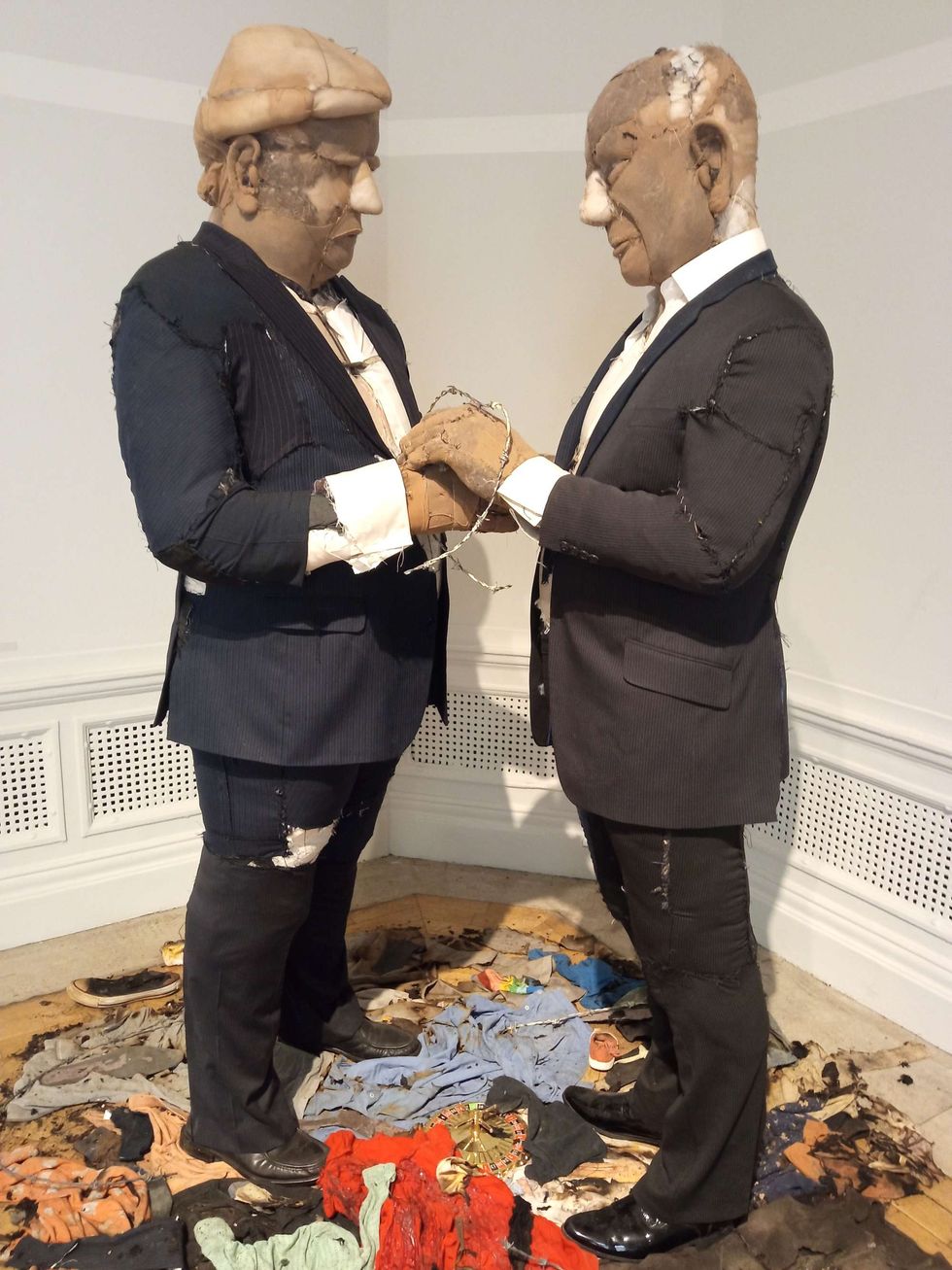 Pin it on them by Tim ShawRoyal Academy
He said: “My work is not related to solving problems. That is the role of the spectator, not the role of the artist. There are artists that are incredibly political. There are a lot of artists that are pseudo political, like it’s some kind of currency or unique selling point. I’m not interested in making politically motivated art, whatsoever. I think everyone should be left to their own opinions. Art should be the thing that mixes you up and introduces you to things that you wouldn’t have thought of before; makes you feel uncomfortable, makes you question all the status quo in your life, increases empathy, increases understanding. In my opinion, art that is politically motivated is usually terrible, terrible art, because art, by its nature, by definition, should be about ambiguity. It shouldn’t be didactic, shouldn’t be telling you what to do, giving you an opinion. It should be proposing the illogical, irrational, should make you stand outside yourself, see yourself from another person’s perspective in the world.”
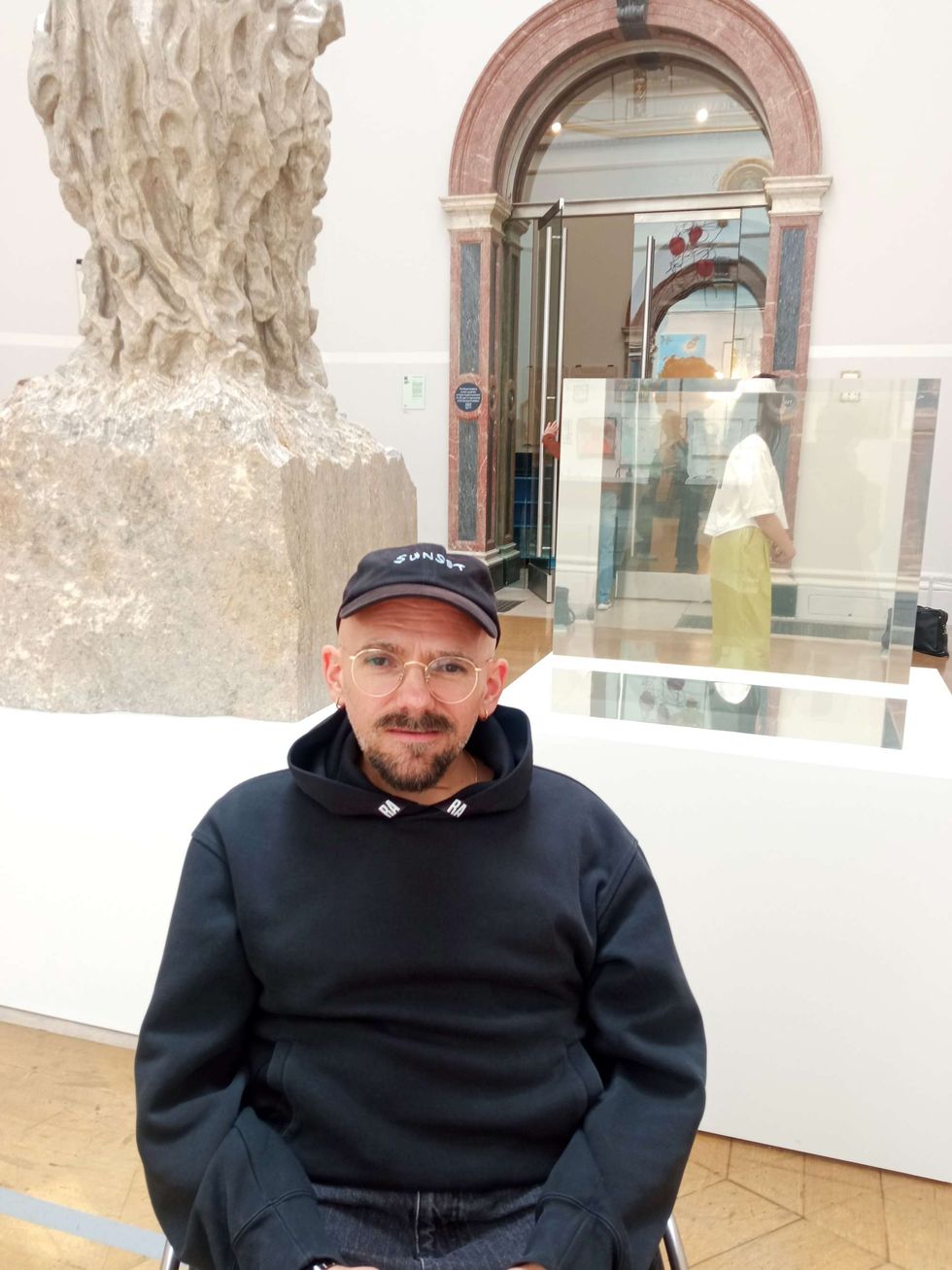 Ryan Gander Royal Academy
That said, there were effigies by Tim Shaw of US president Donald Trump and the Israeli prime minister, Benjamin Netanyahu, with their hands entangled in barbed wire.
Gander was all in favour of introducing children to art from a young age.
“Children encourage us, don’t they?” he commented. “It’s the other way around. Didn’t Picasso say he spent his whole life trying to remain a child?”
Simon Wallis, who took over as secretary and chief executive of the Royal Academy in September 2025, said: “It’s been an amazing experience, actually watching what it takes to pull a summer exhibition together. I’ve been coming to the summer exhibition ever since I was a small kid when my grandparents used to take me and then I was an art student in London for years.
The theme of this year’s Summer Exhibition is “Interconnectedness”.
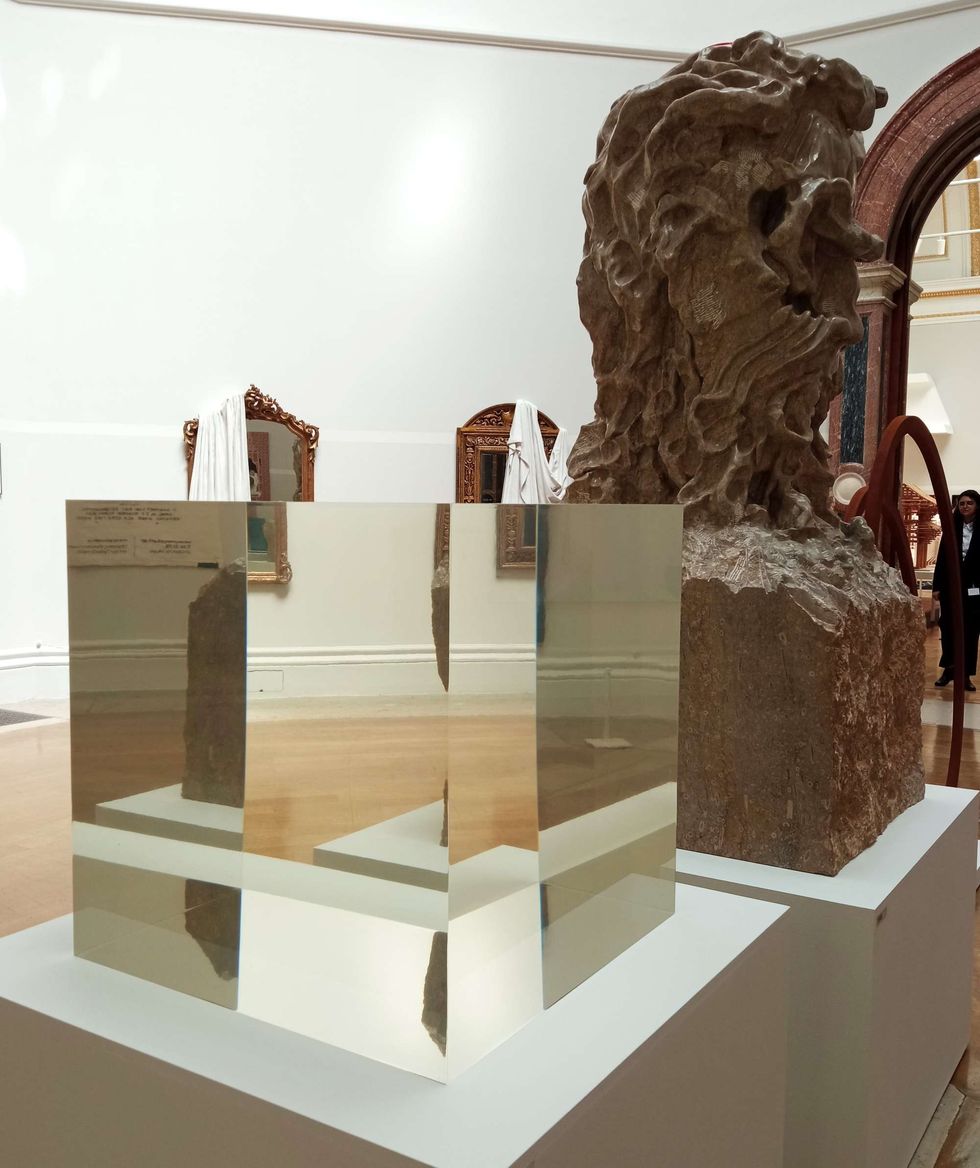 Anish Kapoor’s untitled workRoyal Academy
“It’s such an apposite theme, given there are 1,800 works here, and given the Royal Academy is so much about connecting all these very disparate, wonderful artists,” said Wallis. “It is the world’s oldest artist-led organisation, so (it has) lots of wonderful tradition and special histories that have a living contemporary presence embodied in this amazing event.”
Raman Srivastava, CEO, Insight Investment, said: “We are proud to mark 20 years as lead sponsor of the Royal Academy of Arts Summer Exhibition. For over 250 years, the Summer Exhibition has brought together artists and audiences in an open, multidisciplinary celebration of creativity. We hope as many people as possible will enjoy this year’s Exhibition and discover its vibrant contributions to our cultural life.”
The Summer Exhibition is at the Royal Academy until August 23, 2026

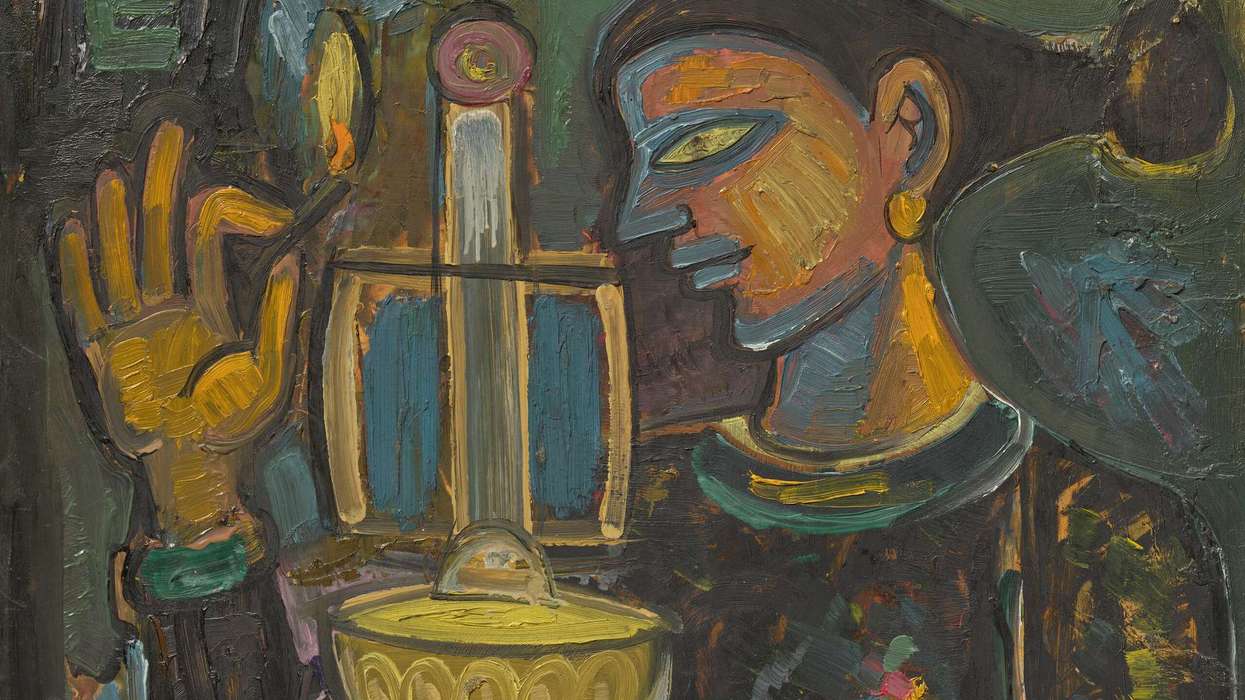


 Kate Varah Adama Jalloh
 Hiran Abeysekera (Hamlet) in Hamlet at the National Theatre. Sam Taylor
  Ncuti Gatwa as Algernon in The Importance of Being Earnest at the National Theatre Marc Brenner
 Sharon D Clarke as Lady Bracknell in The Importance of Being Earnest at the National Theatre Marc Brenner
  Indhu Rubasingham left and Kate Varah Amit Roy
 The company of Bacchae at the National Theatre Marc Brenner
  Ballet Shoes poster National Theatre
  Rosamund Pike (Jessica) in Inter Alia at the National Theatre resize Manuel Harlan