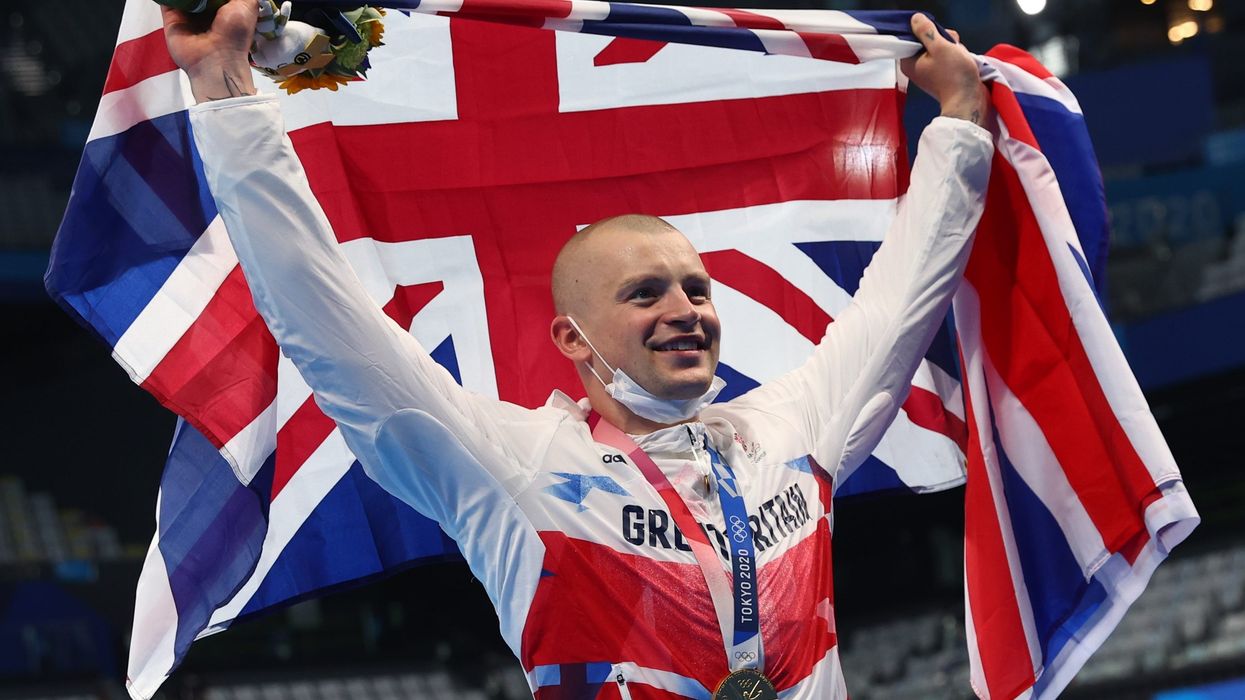

ADAM PEATY labelled his achievement in becoming the first British swimmer to defend an Olympic title an "immortal moment" after claiming gold in the 100m breaststroke on Monday (26).
Peaty lived up to his billing as the overwhelming favourite by powering to the line in 57.37sec, ahead of Dutchman Arno Kamminga (58.00), the only other swimmer besides Peaty to ever go under 58 seconds. Italy's Nicolo Martinenghi took bronze in 58.33.
It is now seven years since Peaty was last beaten in the event, a run that includes his gold medal in Rio in 2016, when he broke the world record in the heats and then again in the final.
"It doesn’t matter what happens, these moments are immortal," Peaty said after his latest Olympic triumph. "I will take these moments for the rest of my life."
Peaty has broken the world record five times in total and also won the 100m breaststroke at the past three world championships.
"I believe I've been given a gift and that’s why in the last 25 metres I can find something no one else has got," he said. "I don’t want this gift to be wasted."
The unstoppable Peaty turned at the halfway mark in 26.73 and was never threatened, finishing 0.63sec clear of Kamminga.
Looking exhausted but ecstatic, Peaty slapped the water in delight and bowed to the stadium when he climbed out of the pool. He then celebrated in front of his British teammates, who were at the near-empty Tokyo Aquatic Centre to offer support.
"I don’t think people at home will understand the amount that goes into this swim," said Peaty. "You can lose in the last moment. It's like going for a promotion and trying to prove yourself in 56 seconds. You can easily lose it. I know the effort the team has put in."
The only surprise was that Peaty was unable to beat his own world record again.
"No one thinks about times. It would have been amazing to finish on a world record," he said. "It's not about the time, it's about the race. No one races better than me."
Motivation
Peaty admitted he had found it hard to motivate himself over the past year and how it had been "hard to find that emotion" when competing without fans.
"The 99.9 percent of the time in the dark is for the 0.1 per cent of the time in the light," he said.
"That’s why I think no-one deserves it more than me. That’s not an arrogant thing, I just love what I do and I know how powerful sport can be."
The 26-year-old also said combining training with bringing up his son George, who was born in September, had been challenging.
"You have those moments when you're up at 3:00 am and you think, 'this is very, very hard'," Peaty said.
"I'm just glad I can go home with at least one gold medal, and we'll see what the next week brings."
Peaty will hope to add another medal to his collection when he swims in the men's 4x100m medley relay on Friday (30). He could also compete in the mixed event on Thursday (29).
Peaty's mother Caroline wrote on Twitter: "So glad that’s over, blood pressure must be through the roof lol x Our house was so quiet, we couldn't breathe. We are beyond proud of @adam_peaty love you loads."
(AFP)



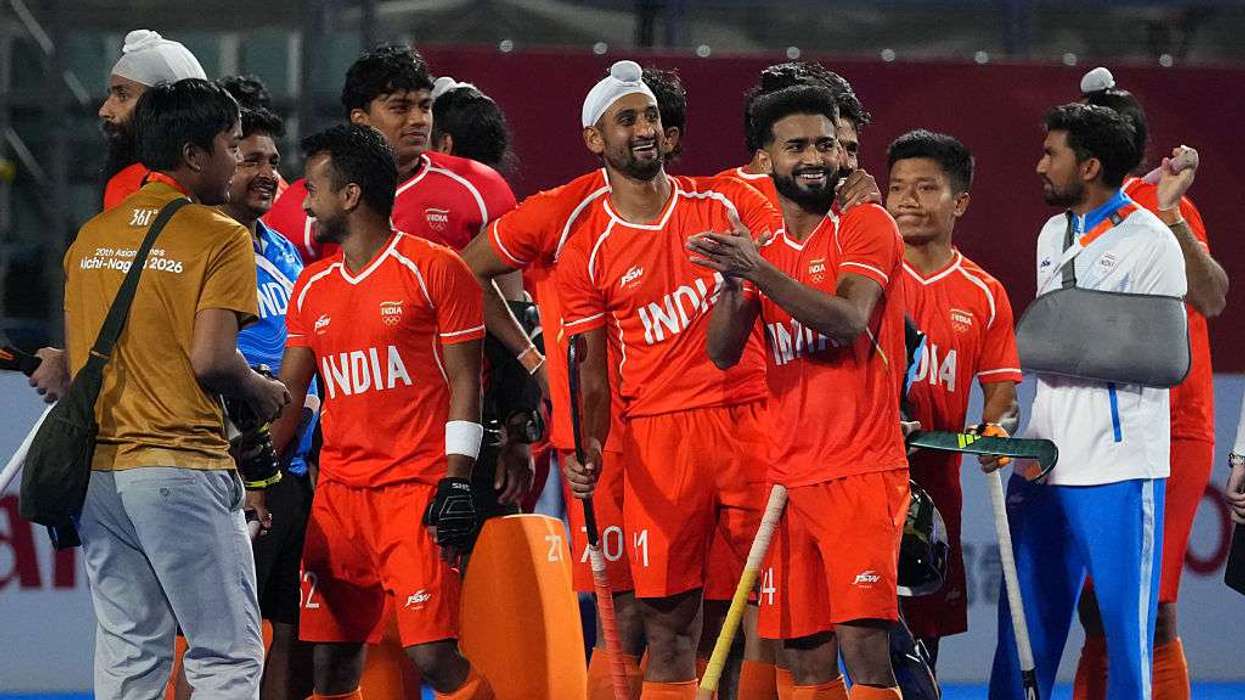
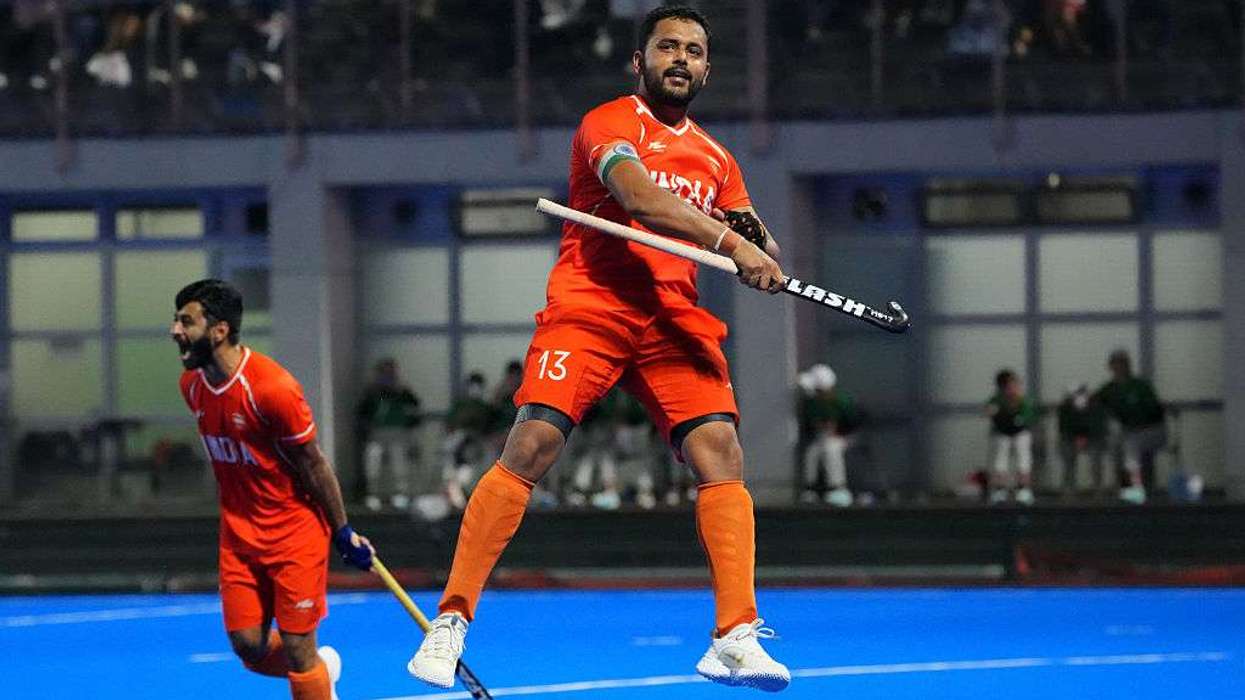 Harmanpreet Singh of India celebrates scoring the team's fifth goal from a penalty corner during the Hockey Men's Gold Medal match between India and Malaysia on day fourteen of the 20th Asian Games Aichi-Nagoya at Gifu Prefectural Green Stadium on October 03, 2026 in Kakamigahara, Gifu, Japan. (Photo by Toru Hanai/Getty Images) (Photo by Toru Hanai/Getty Images)