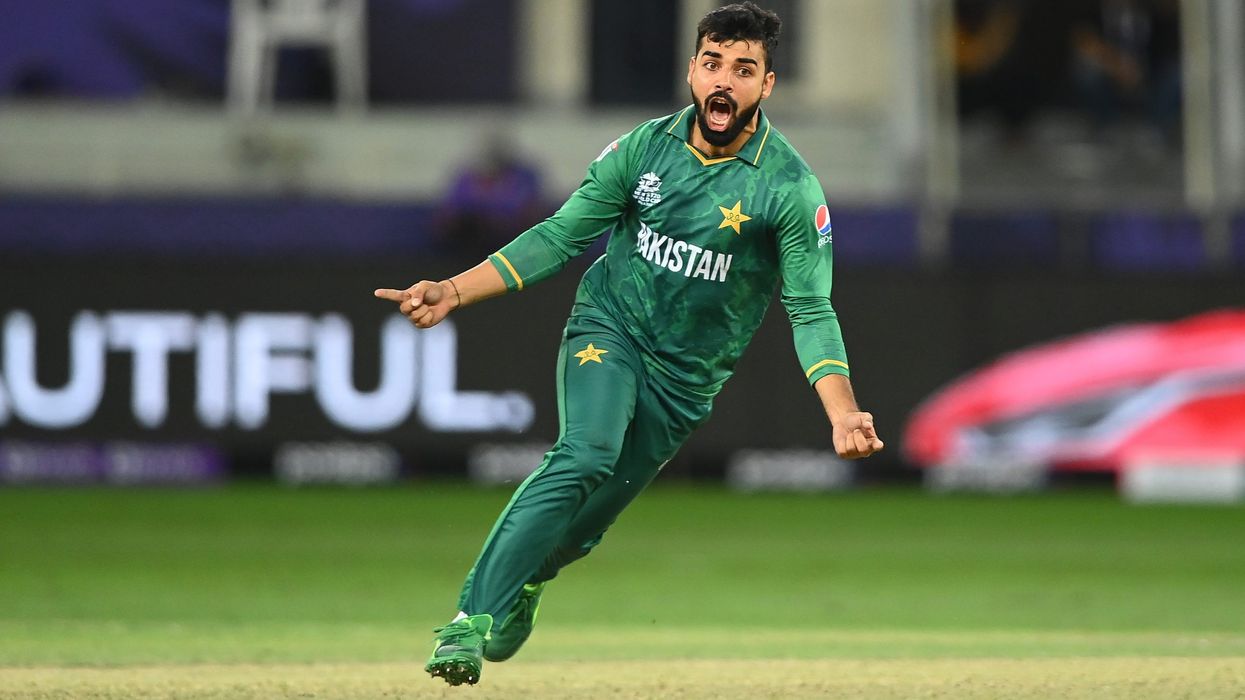

Pakistan all-rounder Shadab Khan has signed to play for Yorkshire in the Twenty20 Blast, the English county announced Friday.
The 23-year-old leg-spinner will be available for the club's first five and last six fixtures of the domestic T20 competition.
Shadab has represented Pakistan in all three international formats, including 64 Twenty20s where he has taken 73 wickets and boasts a batting strike-rate of 136.81.
Subject to obtaining international clearance, he will now join Pakistan team-mate Haris Rauf at Yorkshire, with the fast bowler available for the first five matches of the Blast.
"Shadab Khan is someone who can bat at the top, bat in the middle order and hits the ball a long way," said Darren Gough, Yorkshire's interim managing director of cricket.
"He is also an unbelievable spinner," the former England fast bowler added.
Shadab said: "I'm really excited to be heading to Yorkshire for the Blast. Ever since I started my cricketing journey it has always been a dream of mine to play county cricket.
"It will be made even more special with me being able to play alongside my good friend, Haris."
- Ballance break -
But Gary Ballance is set to miss the start of Yorkshire's season by taking a break in order to improve his mental health.
The batsman, who featured in 23 Tests for England between 2014 and 2017, faced fierce scrutiny in November after last November after admitting he had used racist language towards former Yorkshire team-mate Azeem Rafiq.
Pakistan-born spinner Rafiq accused Yorkshire of failing to deal adequately with the abuse he suffered while playing for the county side, saying he had been driven to thoughts of suicide.
His revelations led to a mass clear-out of senior boardroom figures and coaching staff at the club, with former Yorkshire quick Gough called in while new chairman Kamlesh Patel became the face of a fresh regime.
Yorkshire hope Zimbabwe-born Ballance, 32, will return to action later in the season, with the left-hander having come back from a stress-related break in 2020.
"He's still a Yorkshire player," Gough told Britain's Press Association news agency. "He's off with his mental health, he's struggled with that in the past as well.
"We will support him in any way possible to hopefully, sometime this season, represent Yorkshire again."
Gough was speaking just hours after Yorkshire's members approved a reform package at an extraordinary general meeting.
English cricket chiefs were so dismayed by Yorkshire's initial response to Rafiq's revelations they threatened to withdraw lucrative England fixtures from Yorkshire's Headingley headquarters in Leeds.
But Thursday's EGM votes mean that threat has been lifted, with Gough saying: "It was a relief that happened and now we can move forward.
"It's about accepting what's happened in the past, never forgetting it and making sure something like that doesn't happen again."