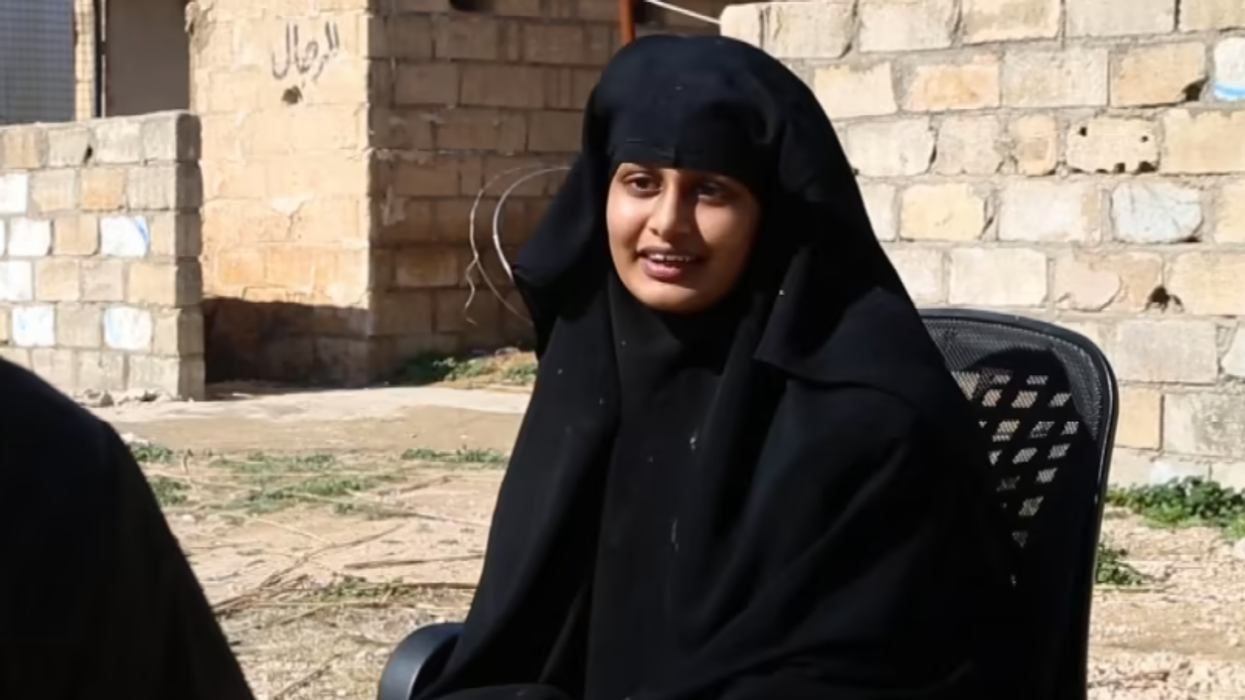

EUROPE's top rights court on Tuesday (6) said it had asked the UK to supply more information about the highly publicised case of young woman Shamima Begum who was stripped of her British citizenship after going to Syria to marry a Daesh (Islamic State group) fighter.
Begum, now 26, has now exhausted all domestic legal avenues in the case, leaving the Strasbourg-based European Court of Human Rights as her only hope to reverse the decision.
The ECHR's request for information -- known as a communication -- does not mean that the case against the UK is admissable but means the British government is informed a case is pending against it.
Begum filed a complaint to the ECHR against the 2019 decision to revoke her British citizenship.
She had left the UK in 2015, then aged 15, to travel to Syria to "align herself with" the Daesh, according to the ECHR.
Begum, whose family is of Bangladeshi origin, left her east London home for Syria with two school friends.
While in Syria, she married a Daesh fighter and had three children, none of whom survived.
She said she was left stateless in February 2019 when Britain's then-home secretary revoked her citizenship on national security grounds after she was found in a Syrian refugee camp.
It means she has not been able to return to Britain from the camp in northern Syria.
UK courts have ruled that she is a threat to national security, a charge she had repeatedly denied in media interviews in what has become a widely followed case.
Her defence lawyers have presented her as the victim of a trafficking operation set up by the Daesh.
Begum in her complaint to the ECHR maintained that the decision to deprive her of her citizenship "did not take into account a number of questions linked to the question of whether she had been a victim of trafficking", the ECHR said.
She argues that her rights under Article 4 of the European Convention of Human Rights that the court oversees -- the prohibition of slavery and forced labour -- were violated.
Around 900 people are estimated to have travelled from Britain to Syria and Iraq to join the Daesh.
Of those, around 150 are believed to have been stripped of their citizenship, according to government figures.
The ECHR is part of the Council of Europe where Britain is one of 46 member states. It is entirely separate from the EU.
(AFP)