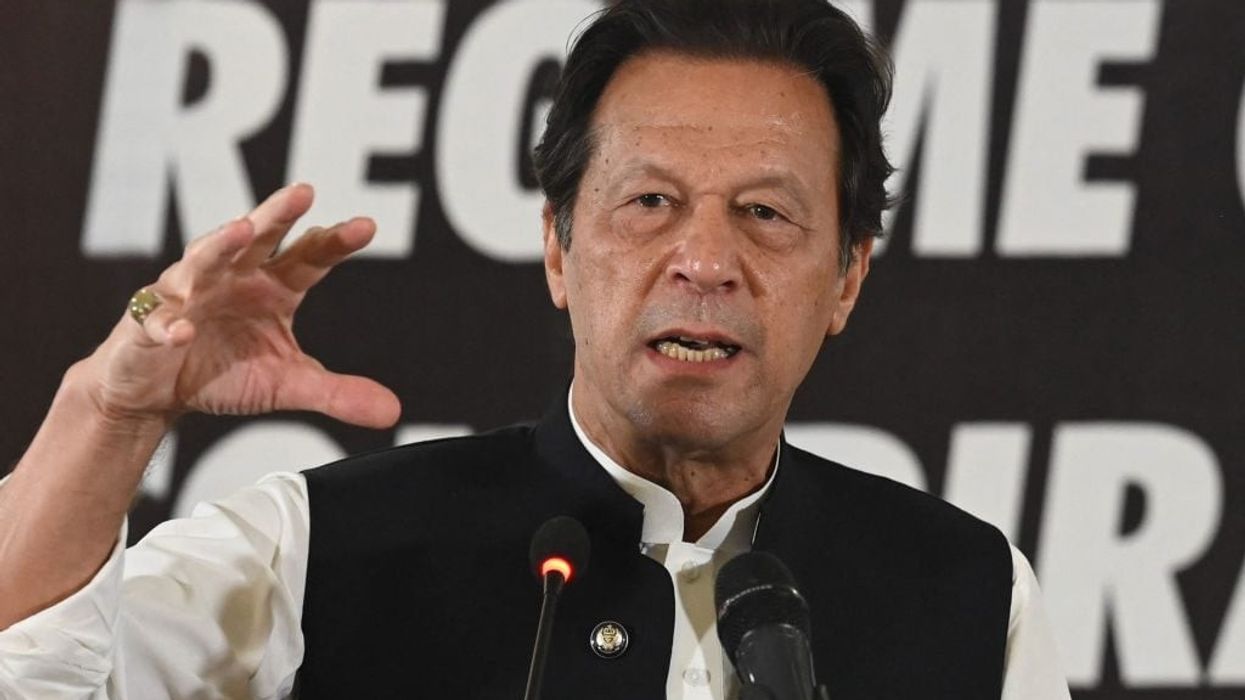
Thirty-three supporters of former Pakistan Prime Minister Imran Khan have been handed over to the army to face trial in military courts on charges of attacking armed forces' installations, Interior Minister Rana Sanaullah said on Friday (26).
The 33 accused are among the thousands detained since Khan's May 9 arrest sparked violent protests across Pakistan. Those handed over to army authorities are accused of trespassing on and vandalising sensitive military installations, Sanaullah said.
Khan was arrested on graft charges, which he denies. While he was subsequently released on bail, his confrontation with the country's powerful generals has escalated.
The political unrest has worsened as Pakistan faces its worst economic crisis in decades. Inflation is at record highs, economic growth is anaemic, and there are fears that the country could default on external debts unless the International Monetary Fund unlocks delayed disbursements.
"The accused who are being handed over to the military are those who trespassed and entered very sensitive defence installations," Sanaullah told a press conference in Islamabad. He said that evidence suggested the protesters damaged or stole important equipment, computers and other sources of data collection.
He said only those involved in breaching out-of-bounds areas would face trial under army laws, suggesting there would not be mass trials in military courts.
But in response to a question, he also suggested that Khan could also be tried in a military court, saying: "as far as my own assessment and the evidence we have... this man is the architect of all this mess and planning, so yes he comes under this category."
Rights groups have raised concerns over military trials of civilians, saying they cannot ensure a fair trial. Such courts are closed to outsiders and the media.
The minister said after a verdict from the military courts the accused would have a right to appeal to a high court and then the Supreme Court.
(Reuters)
Pakistan hands over 33 pro-Imran Khan protesters for trial in military courts
Interior Minister suggests the former prime minister could also be tried in a military court