
POPULAR support has surged for Pakistan’s army chief General Asim Munir, the most powerful man in the country, after the worst conflict in decades with India, shattering criticism of interference in politics and harshly cracking down on opponents.
A grateful government gave him a rare promotion last week to field marshal “in recognition of the strategic brilliance and courageous leadership that ensured national security and decisively defeated the enemy”.
The military has ruled Pakistan for at least three decades since independence in 1947 and wielded extraordinary influence even with a civilian government in office. But it, and its hardline chief, have rarely received the widespread outpouring of affection seen this month that analysts say has reinforced the military’s dominance in the country.
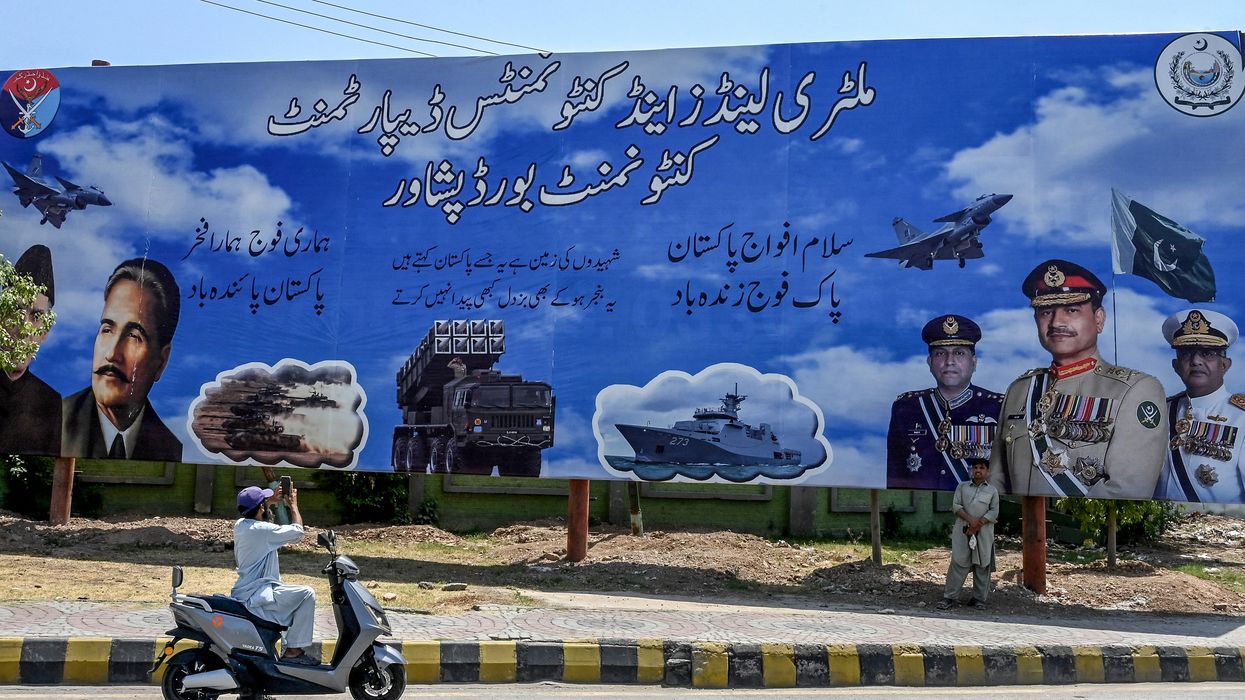
“Long live General Asim Munir!” read placards held aloft in rallies in recent days in towns across Pakistan. His picture was put up on lamp posts and bridges, with some banners saying: “You are our saviour!”
A survey conducted after the conflict by Gallup Pakistan, a local pollster, found that 93 per cent of respondents felt their opinion of the military had improved. Munir’s most bitter domestic foe, jailed former prime minister Imran Khan, also congratulated the military after this month’s clashes with India, claimed by both nations as a victory.
“It’s my country, it’s my army,” Khan said in a post on X last week. “I pay tribute to the Pakistan Air Force and all our military personnel for their professionalism and outstanding performance.”
Yousuf Nazar, a political commentator, said of Munir: “He has emerged as Pakistan’s strongman with his military’s reputation restored as a formidable force.”
Six months after he took charge in November 2022, Munir was faced with the most serious challenge to the military’s hegemony when Khan’s supporters ransacked military installations.
Munir later faced sharp domestic criticism for the jailing of Khan and cracking down on supporters of his Pakistan Tehreek-e-Insaf party, as well as what critics alleged was rigging the general election last year to favour a rival party.
But the conflict with India has turned that around, said Ayesha Siddiqa, author of Military Inc, a book on the Pakistan military.
“It has made the general stronger than any other previous generals. He is a hero now,” she said, adding that the contest between the neighbours will be headed by India’s prime minister Narendra Modi and Pakistan’s Munir, a devout Muslim.
The military did not respond to questions sent by Reuters.
Munir, who has memorised the Qu’ran, has underlined what he has said are fundamental differences between Islamic Pakistan and predominantly Hindu India.
“Our religion is different. Our customs are different. Our traditions are different,” he said in a speech in Islamabad a week before the attack in Indian Kashmir.
The Indian army “with all their wherewithal” cannot “intimidate” Pakistan, he said, peppering his