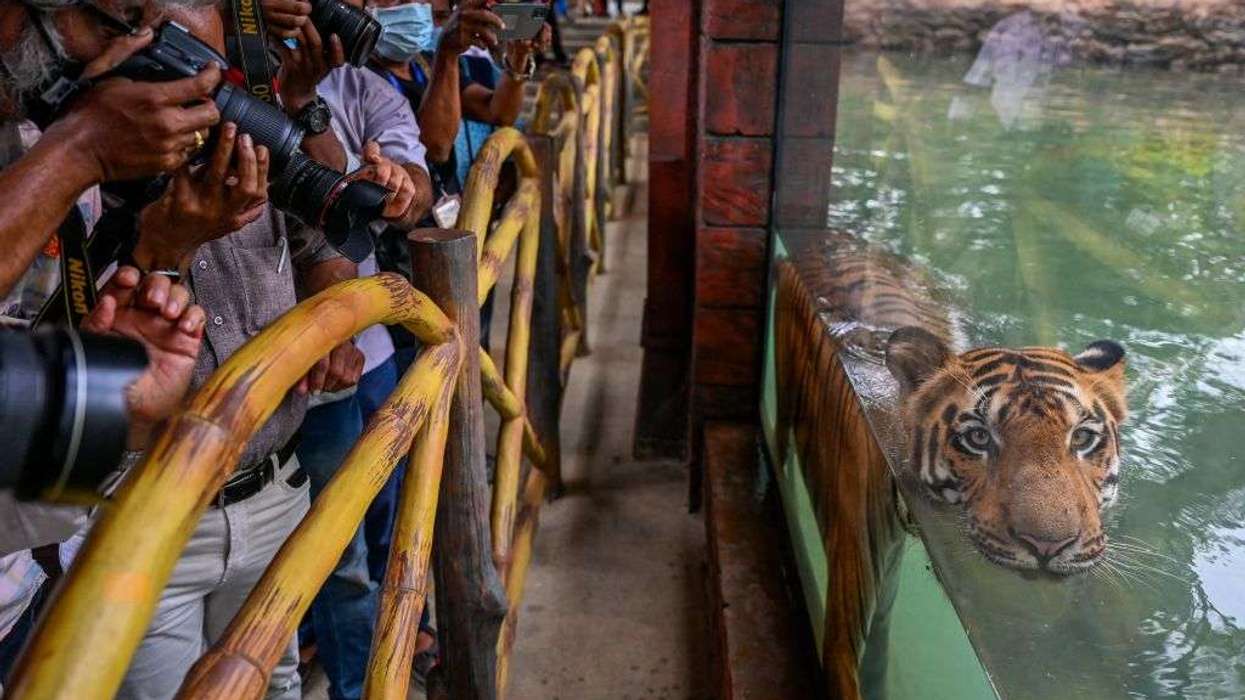

Highlights:
The death of William Chapman at Yorkshire Wildlife Park in 2026 has brought Britain's record of fatal tiger encounters under scrutiny. It also provides a striking comparison with India, where hundreds of people have died in encounters with wild tigers in recent years. Yet the difference between the two countries goes beyond the number of deaths. It lies in the circumstances that bring humans and tigers together.
Britain has recorded at least six known tiger-related fatalities between 1980 and 2026, involving five animal keepers and one visitor. India, by comparison, recorded 393 deaths between 2021 and 2025, according to figures presented to the Lok Sabha on August 3, 2026.
In 2022 alone, India recorded 109 deaths, roughly 18 times Britain's documented total across nearly five decades.
However, these figures measure different situations. Britain's incidents involved captive tigers in zoos and wildlife parks, while India's largely involved wild animals in forests and surrounding settlements. Comparing them reveals how human exposure, employment, land use and conservation policies shape the risk of fatal encounters.
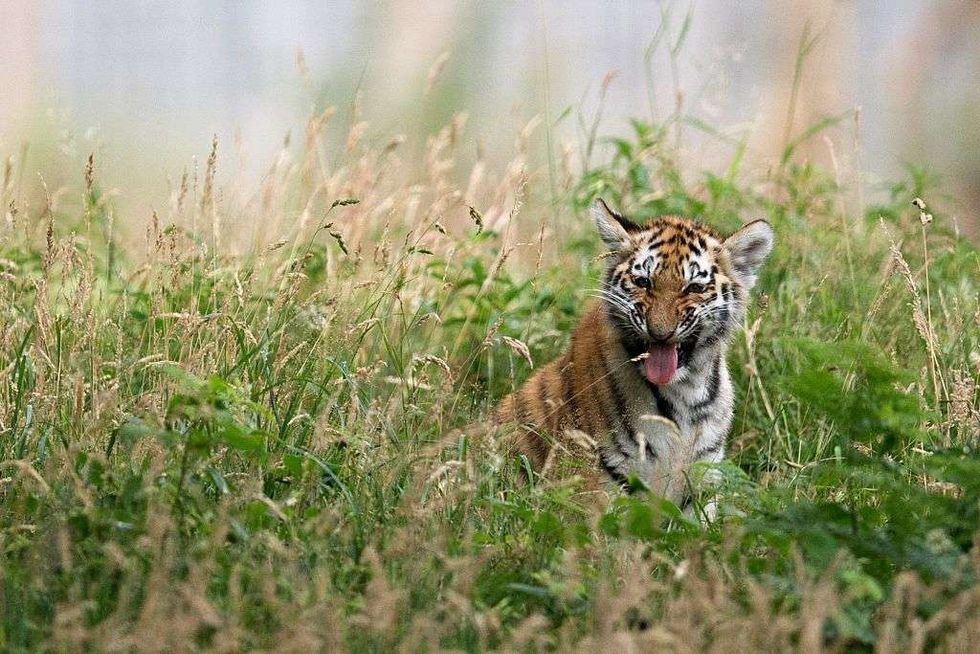 A rare Amur Tiger cub, aged four months, experiences its reserve for the first time at the Yorkshire Wildlife Park near Doncaster, northern England on July 29, 2015. Only around 450 Amur Tigers survive in the wild in their native Russia and Yorkshire Wildlife Park's release of three cubs, named Hector, Harley and Hope, into their reserve coincides with International Tiger Day. Getty Images
Britain: Six deaths in nearly five decades
Chapman's death at Yorkshire Wildlife Park was the first known case of a member of the public being killed by a tiger at a British zoo. He deliberately entered the enclosure, although his reasons remain unknown. An inquest has yet to establish the full circumstances.
The previous five documented fatalities involved people employed to care for captive animals.
Three occurred at Howletts in Kent. In August 1980, Siberian tigress Zeya killed keeper Brian Stocks, 29. A month later, the same animal killed another keeper, Bob Wilson, during routine cleaning. In 1994, keeper Trevor Smith was also killed at the park.
In 2013, Sarah McClay, 24, died at South Lakes in Cumbria after a Sumatran tiger entered a staff corridor. An inquest heard that a faulty bolt had allowed the animal through.
Four years later, Rosa King, 33, was killed at Hamerton in Cambridgeshire after entering an enclosure without realising that a separating slide was open. Her death was ruled accidental.
The common factor in the five earlier cases was occupational exposure. Keepers were working in environments designed to separate people from dangerous animals, but failures involving equipment, access or procedures contributed to fatal encounters.
The Yorkshire incident differs because it involved a visitor entering an enclosure rather than an employee carrying out animal-care duties.
India: Nearly 400 deaths in just five years
India's experience reflects a much broader pattern of contact between people and wild tigers.
Official figures show 51 tiger-related deaths in 2021, rising to 109 in 2022 before falling to 88 in 2023, 74 in 2024 and 71 in 2025.
Across the five years, that amounts to an average of almost 79 deaths annually, or approximately one death every four to five days.
Maharashtra accounted for 231 fatalities, nearly 59 per cent of India's total. Uttar Pradesh followed with 52, Madhya Pradesh with 39 and Bihar with 17.
The concentration of deaths in Maharashtra is particularly significant because the state does not have India's largest tiger population.
According to the 2022 tiger assessment, Madhya Pradesh had 785 tigers, compared with Maharashtra's 444. Yet Madhya Pradesh recorded only 39 human deaths over the five-year period.
In other words, Maharashtra recorded almost six times as many fatalities despite having substantially fewer tigers.
This suggests that tiger population size alone cannot explain human mortality. The frequency and circumstances of contact between people and wildlife are equally important.
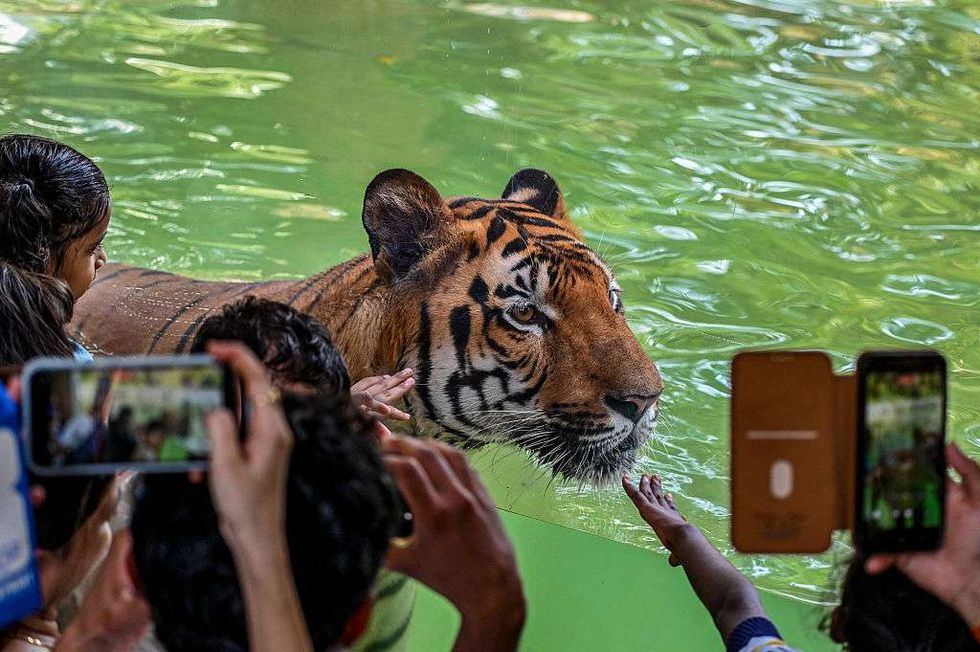 Visitors watch Jai, a Bengal tiger enjoying in a pool on a hot afternoon at the Veermata Jijabai Bhosale Udyan and Zoo in Mumbai on May 10, 2026. Getty Images
The biggest difference: Why people encounter tigers
The clearest distinction between Britain and India concerns the reasons people enter tiger habitats.
In Britain, five victims were animal keepers whose jobs required them to work around captive predators. The sixth was a visitor who entered an enclosure deliberately.
In India, many victims were villagers collecting forest produce, gathering firewood, grazing livestock or undertaking other activities connected to their livelihoods.
Chandrapur district in Maharashtra illustrates this difference.
More than 50,000 families, representing over 100,000 people, reportedly enter local forests during a single season to collect tendu leaves, which are used in bidi production.
In May 2025, five people were killed in three days in Chandrapur. All were women collecting tendu leaves inside the forest.
Their exposure to tigers was associated with earning an income rather than visiting a wildlife attraction.
Research from the Tadoba-Andhari landscape also recorded 132 tiger and leopard attacks between 2005 and 2011, including 71 fatalities. Most victims were collecting forest produce.
The comparison highlights two distinct forms of risk: controlled but potentially dangerous workplaces in Britain and shared landscapes where economic activity regularly brings people into contact with wild animals in India.
More tigers, but not necessarily more deaths
India's tiger conservation programme adds another dimension to the comparison.
The country's estimated tiger population increased from 2,967 in 2018 to 3,682 in 2022. India now supports approximately 75 per cent of the world's tigers.
This recovery follows a long decline. Estimates suggest India had around 40,000 tigers at independence in 1947, before numbers fell to 1,411 in 2006.
However, conservation gains have occurred alongside population growth, development, and continued dependence on forests.
The Indian government has identified expanding settlements, infrastructure development, depleted prey, and forest-based livelihoods among the factors contributing to human-wildlife conflict.
Around 40 per cent of tiger territory across 20 Indian states is reportedly shared with approximately 60 million people.
The Maharashtra–Madhya Pradesh comparison is especially revealing. A higher tiger population does not automatically produce a higher death toll. Human activity within tiger habitats and the nature of local livelihoods and patterns of settlement may be more important in determining exposure.
Britain faces a different conservation and safety challenge. Its tigers are kept in managed facilities, where preventing contact depends primarily on secure enclosures, operational procedures, and visitor controls.
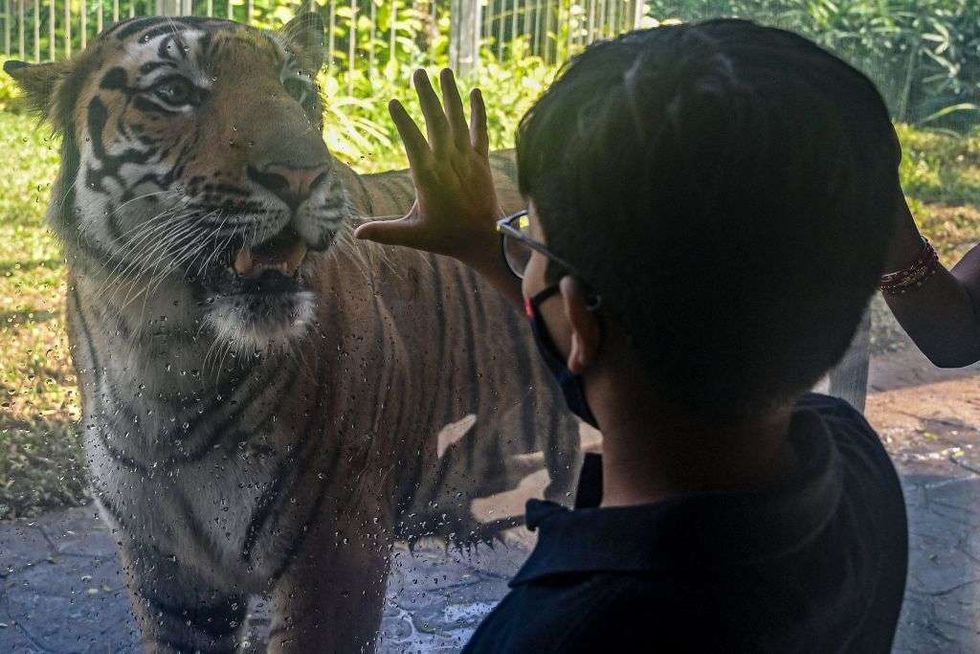 A boy looks at Shakti, a Bengal Tiger strolling inside its enclosure at Veermata Jijabai Bhosale Udyan and Zoo after the facility was reopened for visitors as part of easing of restrictions imposed earlier to curb the Covid-19 coronavirus pandemic in Mumbai on February 10, 2022. Getty Images
What international research says about captive tigers
A 2026 study examining 1,047 recorded accidents involving animals at zoos, parks, and aquariums found that tigers were involved in 169 incidents, more than any other species examined.
Of those incidents, 72 were fatal.
Elephants were involved in 142 accidents, killer whales in 123, lions in 86 and bears in 60.
The research also found that visitor accidents, particularly those involving intruders or children, were disproportionately represented among the most severe cases.
These findings provide context for Britain's incidents, although the study covers multiple countries and types of facilities. It cannot be used to calculate the likelihood of a tiger attack at a particular British zoo.
Compensation and the economic cost of conflict
India's response to fatal wildlife encounters also differs from Britain's captive-animal safety framework.
Since December 2023, the central government has provided $11,700 in compensation for deaths or permanent incapacitation caused by wild-animal attacks, and around $2,340 for grievous injuries.
Maharashtra increased its death compensation to ₹20 lakh in 2022, with ₹10 lakh payable immediately and the remainder placed in a fixed deposit.
These payments acknowledge the financial consequences for affected families. However, compensation addresses losses after an incident rather than the underlying reasons people encounter tigers.
For forest-dependent communities, reducing exposure can be complicated when the same land provides income, fuel and fodder.
There is also a wider wildlife conflict to consider. Elephants caused 2,898 recorded human deaths in India over five financial years from 2020–21 to 2024–25, approximately seven times the tiger death toll. Tigers attract considerable attention, but they are not India's leading cause of fatal human-wildlife encounters.
What the comparison ultimately reveals
The British and Indian figures should not be interpreted as equivalent measures of national safety. They cover different periods, different tiger populations and fundamentally different environments.
Britain's documented fatalities occurred over nearly 50 years in captive settings. India's 393 deaths occurred over five years, predominantly in landscapes where humans and wild tigers coexist.
The comparison nevertheless reveals an important distinction.
In Britain, preventing deaths largely depends on keeping people and captive predators physically separated through reliable equipment, secure enclosures, and effective safety procedures.
In India, prevention requires a broader approach involving forest management, local livelihoods, settlement patterns, early warnings, and conservation planning.
The Yorkshire death raises questions about how a visitor could enter a tiger enclosure. India's fatalities raise a more complex question: how can millions of people continue depending on forest landscapes without facing potentially deadly encounters with the wildlife those landscapes protect?
Both countries face the same biological danger, but the circumstances producing that danger are fundamentally different. Britain's challenge is primarily one of managing captivity. India's is managing coexistence.