

Agatha Christie wrote a great many mystery novels in her time but probably none as baffling as The Strange Case of the Indian Entrepreneur.
Eastern Eye asked Nirmal Sethia: “Have you read any of Agatha Christie’s novels?”
His reply was typical of the billionaire who ranked 4th in Eastern Eye’s Asian Rich List 2026 with a net value of £6.8 billion: “I’m not educated, I’m matric fail.”
And yet he is sponsoring the British Library’s exhibition, Agatha Christie: A World of Mystery, to mark 50 years since the author’s death on 12 January 1976 at the age of 85.
As the director of numerous companies, Sethia described his main interests in the following manner in 2017: “We are involved in security printing, sugar refining, banking – I am on the board of a bank in Dubai – we are involved in small power generation, in real estate, but 50 per cent of my time goes on tea because I love my tea.”
The clue is the word, “tea”.
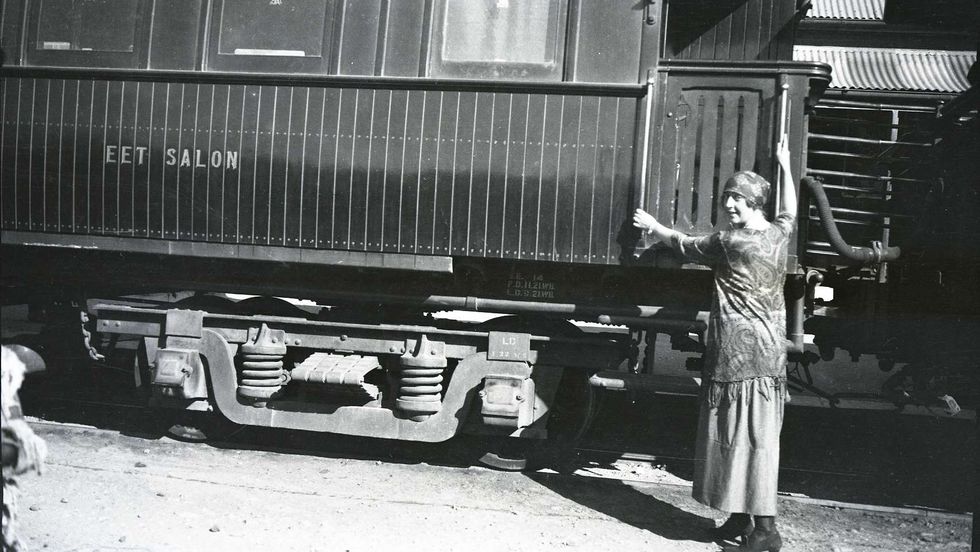 Agatha Christie boarding the EET Salon at lunchtime on the train from Bulawayo to the Cape. In 1922 Agatha Christie set sail on a 10-month voyage around the world. Her husband Archie had been invited to join a trade mission to promote the British Empire Exhibition and Agatha was determined to go with him The Christie Archive Trust
The British Library has announced that the Agatha Christie exhibition is taking place, “with thanks to Newby Teas”.
And Sethia is the man behind Newby Teas, which is a luxury brand.
Tea figures frequently in Christie’s novels, and the “Queen of Crime” herself loved her tea, probably the strong brands from Assam. Her famous creation, Miss (Jane) Marple, was also fond of tea. However, her Belgian detective, Hercule Poirot, preferred hot chocolate and syrups.
Newby Teas, Sethia confirmed in an interview with Eastern Eye, is owed by his family charities – “it’s owned 45 per cent by the N Sethia Foundation, and 55 per cent by N Sethia Trust”.
According to the British Library, “Newby is a London-based luxury tea brand sourcing exceptional teas from the world’s finest regions. Packed in its carbon-neutral factory, profits support charitable causes through the N Sethia Foundation. Newby is served by prestigious hospitality destinations worldwide.”
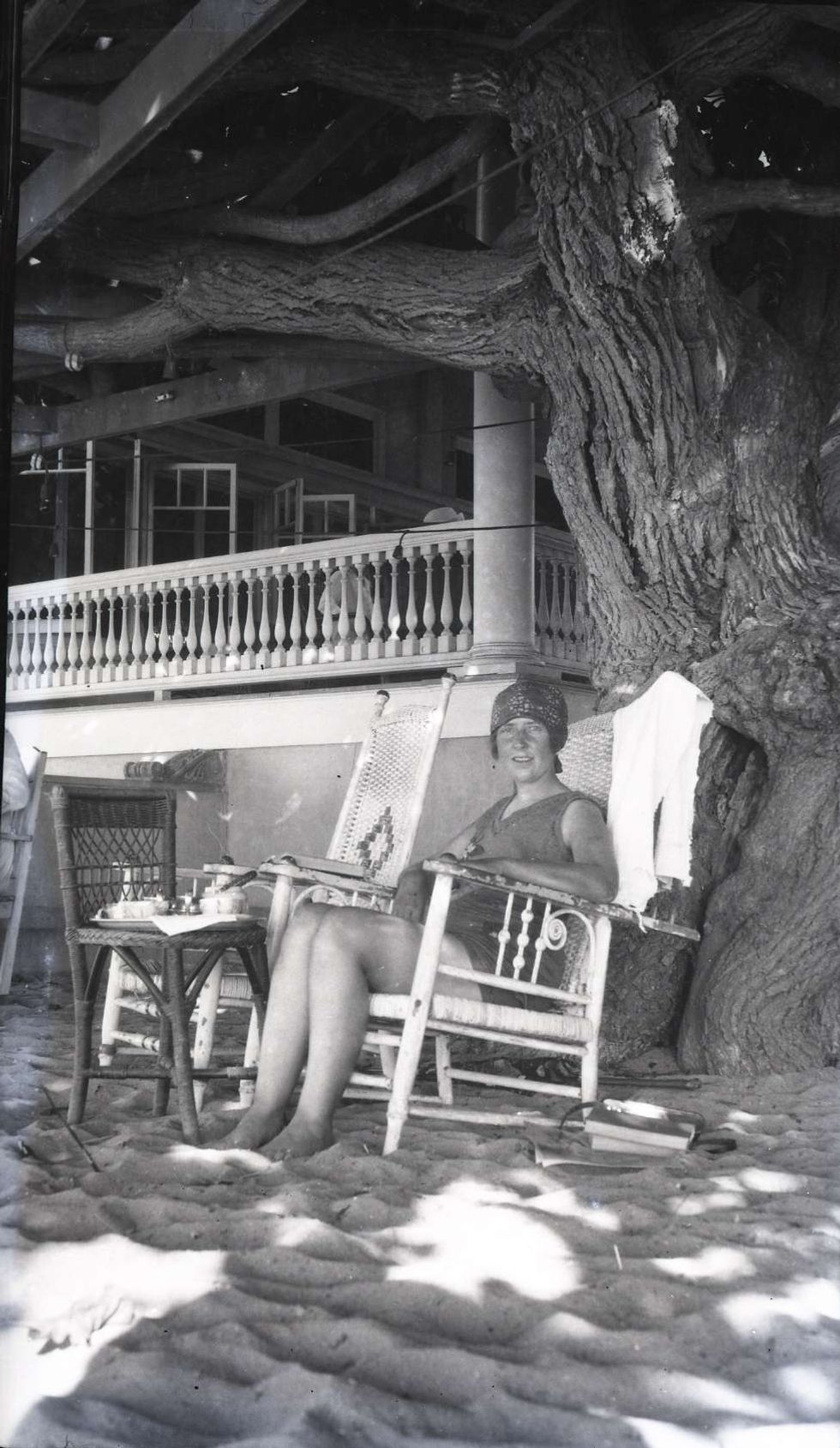 Agatha Christie under a tree on Honolulu beach after surfing, 1922. Agatha and her husband Archie were permitted to take a short holiday away from the 1922 trade mission and chose Honolulu where they learnt how to surf on longboards. Here Agatha purchased a surf suit in the local style, better suited to the demands of surfing than her swim attire for bathing in Torquay. The Christie Archive Trust
The tea is carefully packed at a plant in Calcutta (now Kolkata) so that it retains its distinctive flavour. Sethia gets very cross with people who put milk into their tea.
Although Sethia claims he does not read any books, his charity makes a point of supporting education in the widest sense.
Christie’s books, he said, “are literature. It’s part of education. Literature is imagination, and that capability can only come when wisdom is invoked. There is a mission to allow people to understand the fantasy of literature and the capability of writing.”
For his support for books, Sethia said that has been bestowed “honorary life membership of the Friends of the National Libraries”.
This is a registered charity founded in 1931 that supports the British Library, the National Library of Scotland and the National Library of Wales and other libraries in the UK recognised as being of national importance. Its chief patron is King Charles, who took on the position in 2016 when he was still the Prince of Wales.
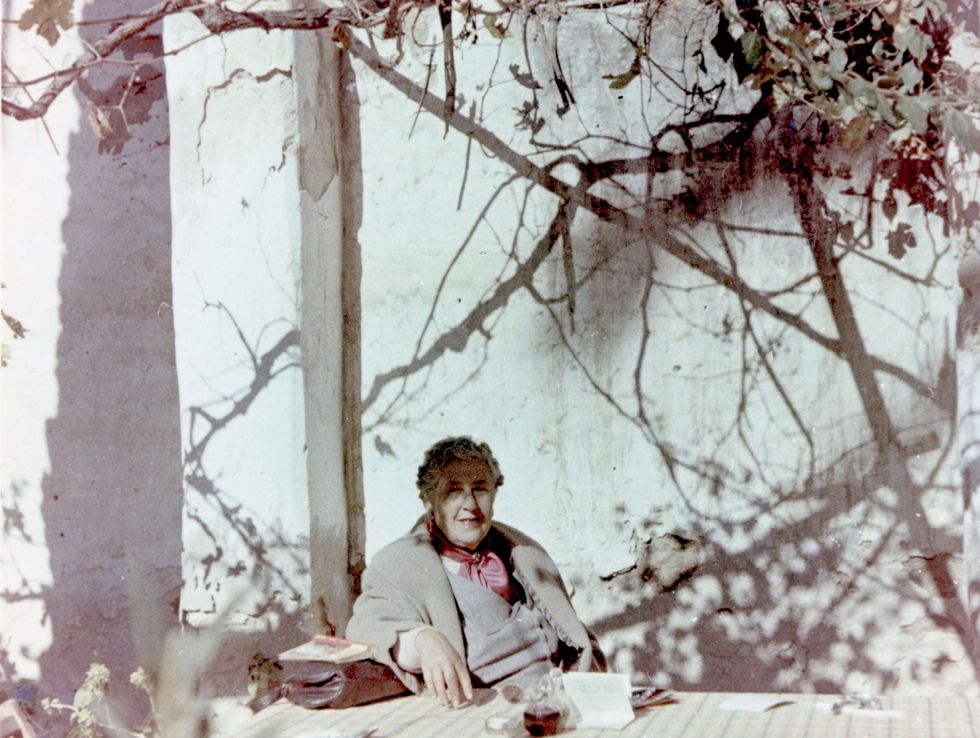 Agatha Christie relaxing during a sightseeing tour, Tajoura, Libya, 1955. Agatha and her second husband, archaeologist Max Mallowan had invited Agatha's daughter Rosalind and grandson Mathew to join them on a tour of the ancient sites of Leptis Magna and Sabratah during December 1955. The Christie Archive Trust
“I couldn’t refuse,” said Sethia. “The honour came from His majesty.”
Sethia has also been named “ambassador of peace” by the UN because of $50m sent to Africa by his charity to tackle cholera and other children’s diseases. He has also built two Tirupathi temples in India – in Delhi and in Kurukshetra, respectively.
Sethia, who was born in Calcutta on November 8, 1941, took over part of the family empire when his father, Sohan Lalji Sethia, died in 1967. His father was born on 5 September 1913 in Sujangargh, Rajasthan; graduated from Presidency College Calcutta, one of the foremost institutions of higher education in India; and had a very successful business career in the jute industry. His “entrepreneurial vision and innovation won him international recognition in the business community”.
His son first came to London as a boy (“my pay was 7 shillings a week”), returned to Calcutta at 16, and then came back to London in 1966.
He was deeply affected by the death of his wife, Chitra, in London, in 2010, after 41 years of marriage. Much of his charitable work is in her memory.
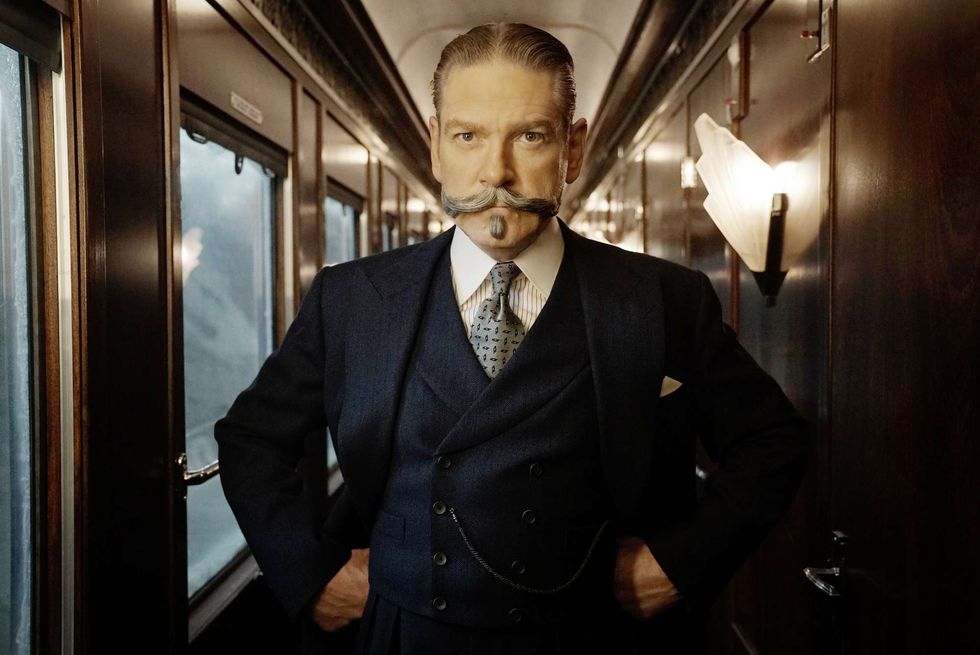 Kenneth Branagh as Hercule Poirot in Murder on the Orient Express, 201720th Century Studios
Sethia is the founder of the N Sethia Foundation, while his daughter Richa is a trustee.
The mystery of how he came to support the Christie exhibition was further unravelled by Aneta Aslakhanova, the global marketing director of Newby Teas.
She said both the British Library and Newby Teas are both members of Walpole, the organisation that represents British luxury brands.
“They approached us and we said yes,” she said. “Tea occurs frequently in Agatha Christie’s novels.”
Tea is used to create a deceptive English sense of ease and comfort in her novels. However, strong tea, containing tannins, often disguises the fatal poison.
She mentioned Christie’s The Harlequin Tea Set, a collection of nine short stories. Another collection, Partners in Crime, has a story called A Pot of Tea.
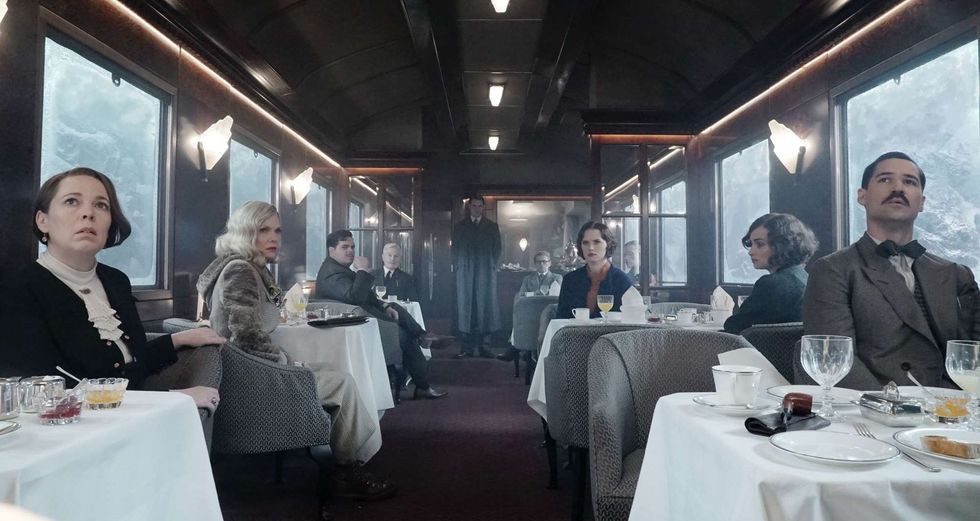 Still from Murder on the Orient Express, 201720th Century Studios
There is this passage in A Pocket Full of Rye: “There was no doubt but that Mr Fortescue was very seriously ill. Even as she came up to him, his body was convulsed in a painful spasmodic movement. Words came out in jerky gasps. ‘Tea—what the hell—you put in the tea—get help—quick get a doctor—’. ”
Tea makes for the perfect English murder. The word tea is used 113 times in A Pocket Full of Rye, 46 times in 4.50 From Paddington and 35 times in At Bertram’s Hotel.
One of the most famous mentions of tea in a Christie novel comes from Griselda in The Murder at the Vicarage: “ ‘What are you doing this afternoon, Griselda?’ ‘My duty,’ said Griselda. ‘My duty as the Vicaress. Tea and scandal at four-thirty.’”
In The Pale Horse, Christie used thallium mixed into a tea service. Her description of thallium poisoning symptoms—specifically lethargy and hair loss—was so scientifically accurate that it later helped real-life doctors correctly diagnose and save a real poisoning victim.
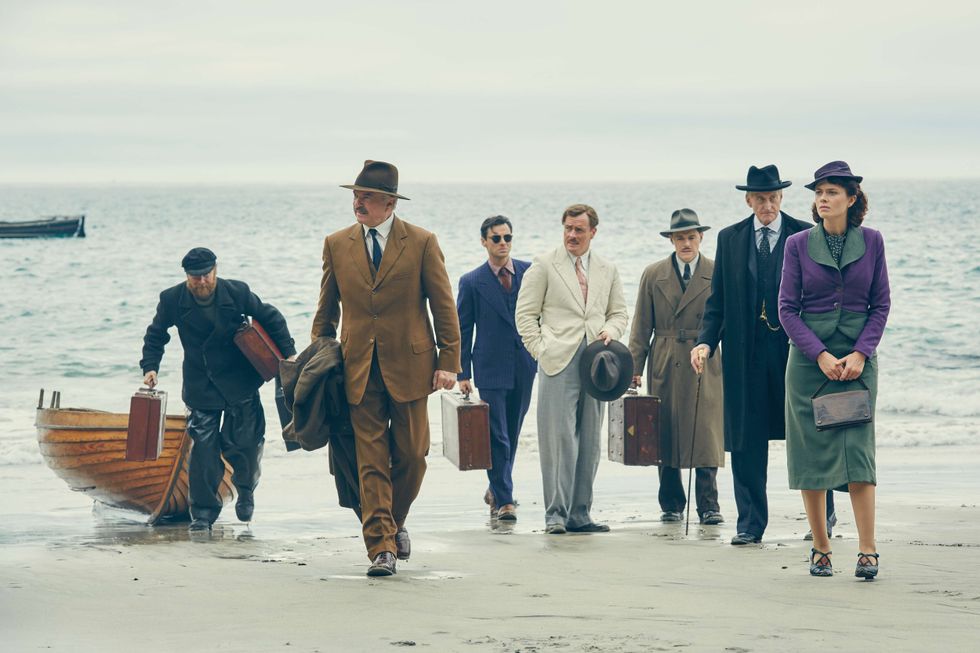 Still from And Then There Were None, 2015, BBC Agatha Christie Limited
In The Moving Finger, a lethal dose of strychnine is hidden inside a tea cake. Strychnine is exceptionally bitter, requiring sweet, baked goods to disguise the taste.
In The Hollow, the killer uses afternoon tea to administer deadly digitalis (derived from the foxglove plant).
Sethia is wondering whether there should be a Newby Teas ceremony to inaugurate the exhibition.
The British Library said the exhibition, “will go behind the books to explore how Christie’s life, travels and interests informed her work and the creation of her iconic characters. Through personal objects belonging to Christie, many of which have never been displayed before, visitors will gain unprecedented insight into her writing process and explore her impact on crime fiction. Accompanying the exhibition will be displays and a major events season celebrating Christie’s influence on literature at libraries across the UK.”
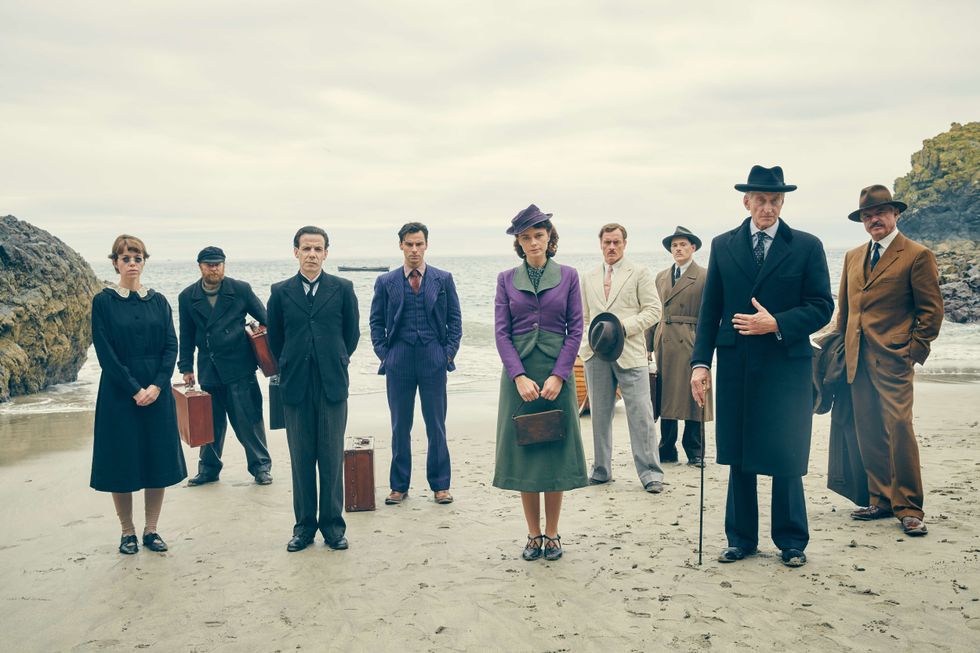 Still from And Then There Were None, 2015, BBCAgatha Christie Limited
Lucy Rowland, lead curator of the exhibition, which will run from 30 October 2026 – 20 June 2027, said: “The biggest exhibition held in the UK in almost 25 years to celebrate Christie’s writing, visitors will see over 100 items from different periods in her life, drawn from the British Library’s own collection, the Christie Archive Trust and other lenders, including material never displayed before. Her impact on crime fiction as a genre has been immense and this exhibition will take visitors back to Christie’s childhood and explore her journey to becoming an iconic writer, while celebrating how adaptions of her novels for stage and screen continue to enthral audiences today, over 50 years after her death.”
Great Western Railway is also a sponsor.
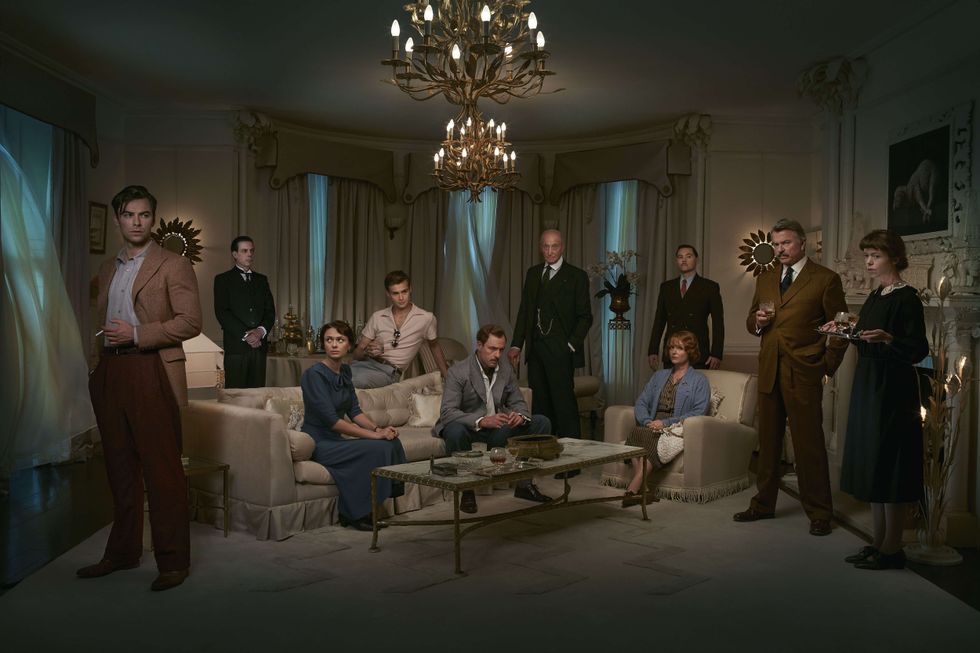 Still from And Then There Were None, 2015, BBCAgatha Christie Limited
Amanda Burns, sales and marketing director at Great Western Railway (GWR), said: “Agatha Christie and Great Western Railway share a story that stretches back over a century. Her love of train travel and the journeys she took between London and the South West helped inspire some of the most celebrated crime fiction ever written. This partnership is an opportunity to connect people with the places Christie loved: Torquay, Dartmouth and the Devon coastline, and inspire travel between the South West and London, just as she did.”
Giving details of what is in store for visitors, the British Library said: “The exhibition will take visitors on a journey through Christie’s upbringing, her interests and travels and how she adapted her novels for the stage, through five immersive sections filled with items from her personal life, including her typewriter, professional and personal correspondence with other writers, family photographs and notebooks and typescripts for novels. There will also be clues and ‘Easter eggs’ dotted throughout the exhibition for Christie fans to sleuth out. Christie’s impact on the wider crime fiction genre will be explored through interviews within the exhibition with leading writers, broadcasters and notable fans.”
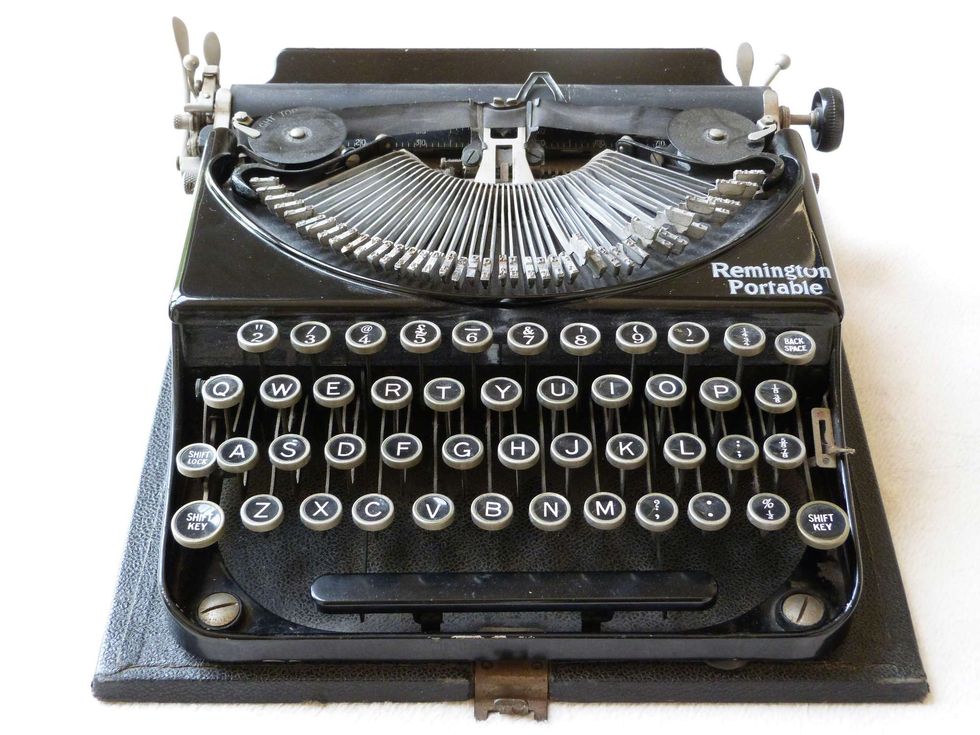 Agatha Christie’s Remington typewriter from 1937 The Christie Archive Trust
In the section, “The Country House,” “visitors will gain an insight into Christie’s childhood and adolescence through exploring the quintessential setting for many of her novels, the English country house. Visitors will see early examples of her writing and discover how her upbringing inspired the settings for her works, from her first published novel The Mysterious Affair at Styles (1920) with the iconic ‘drawing room reveal’, and her bestselling And Then There Were None (1939). On display will be photographs of Christie as a child, spending time with her family at their home, Ashfield and roller skating with friends. This section will also explore her beginnings as a young writer, from the typescript for her first short story, House of Beauty, to a notebook from Sir Arthur Conan Doyle illustrating Sherlock’s method for solving mysteries and feedback on her work from acclaimed writer Dorothy L. Sayers.”
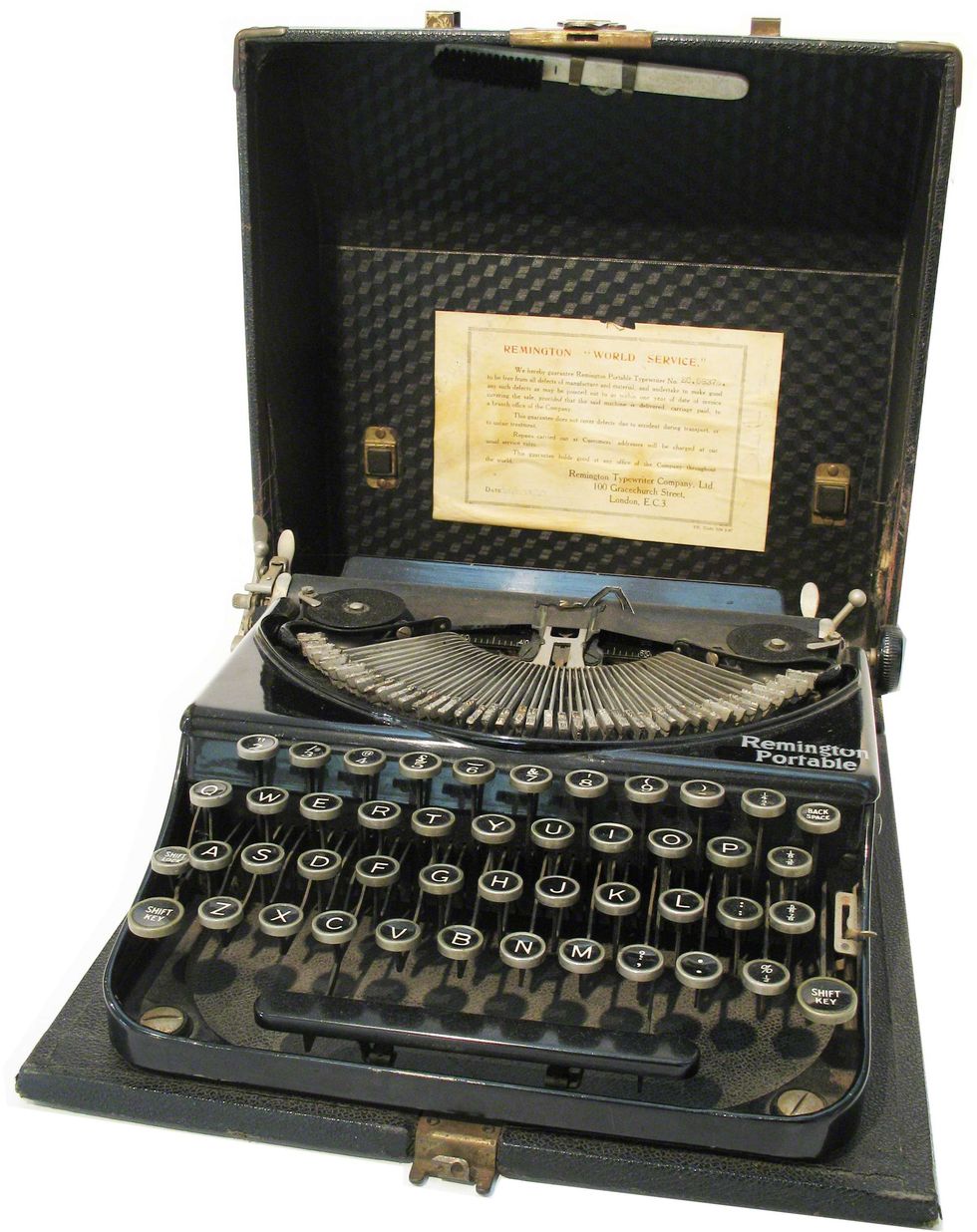 Agatha Christie’s Remington typewriter from 1937The Christie Archive Trust
This is followed by a section called “The dispensary”: “During the First World War Christie volunteered as a nurse and pharmacy dispenser, honing a knowledge of drugs and toxins which would later prove invaluable to a crime writer. Visitors will explore a dispensary filled with the poisons that crop up in Christie’s work, displayed with the study notes for her pharmaceutical exams taken in 1917 and her World War One service record. The year 1914 also marked when Christie married her first husband, Archie, and there will be letters from him, alongside her notebooks containing ideas for stories and handwritten research notes on poisons including those for her novel The Pale Horse which has been credited for saving lives in the real world.”
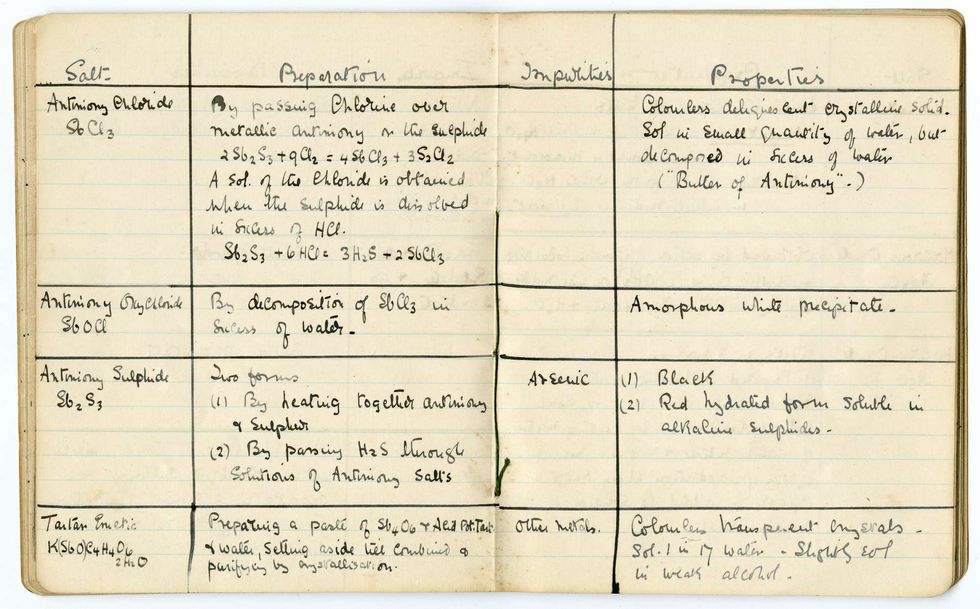 Agatha Christie’s study notes for her pharmaceutical exam taken in 1917The Christie Archive Trust
Next is “The Train”: “On leaving the dispensary, visitors will board an Orient Express-inspired train carriage that will evoke the glamour and intrigue of 1920s travel while also exploring Christie’s use of the ‘closed circle mystery’, perfect for stories set in enclosed compartments. Christie was a keen rail enthusiast and this section will explore how her experiences journeying abroad and sharp observations of fellow travellers inspired her writing and helped form the characters and settings for some of her most famous novels, including Murder on the Orient Express. The inter-war years were busy for Christie as she published over 30 novels, including the career-making The Murder of Roger Ackroyd, renegotiated a new publishing contract and spent 10 months travelling across the world with her first husband, Archie Christie. On display will be photographs capturing Christie surfing in Hawaii in 1922 alongside a replica of the surfboard she used, Christie’s hand-written notes for her Isle of Man treasure hunt and a letter written by Christie relaying her journey on the Orient Express in 1931.”
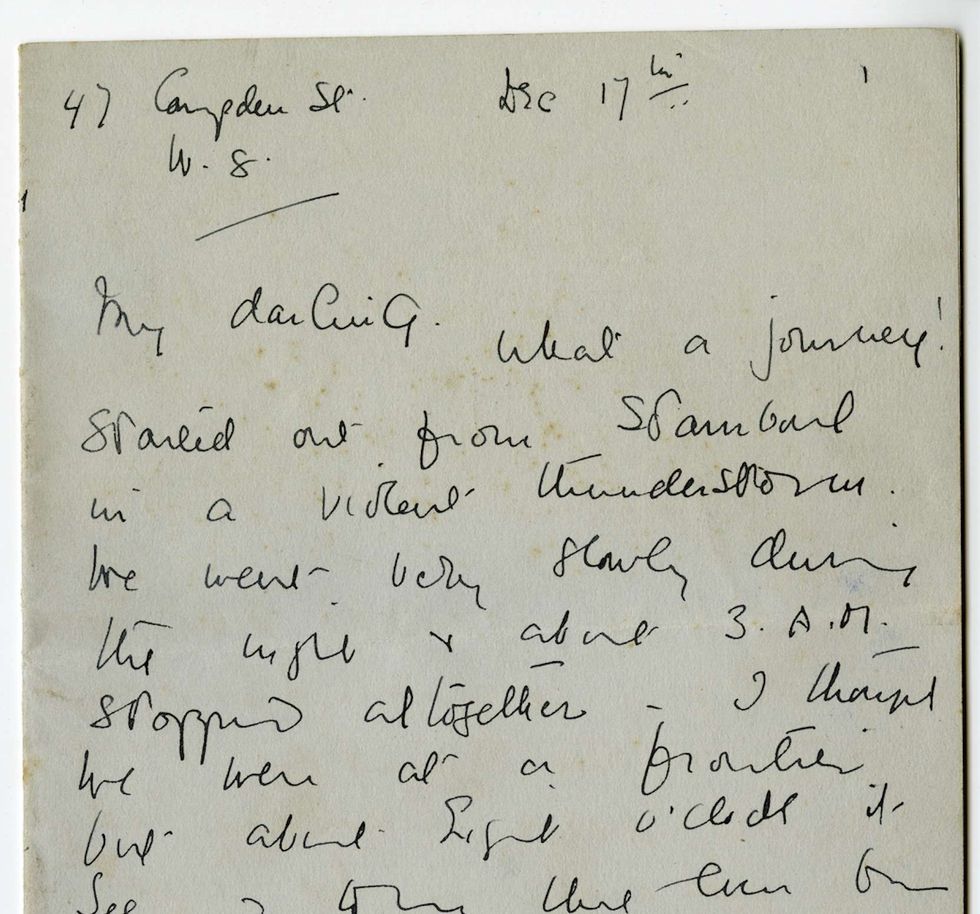 Letter from Agatha Christie to her second husband Max Mallowan, in December 1930. Agatha writes to Max describing her return home from their honeymoon, on the Orient Express. Documenting how the train had been halted by floods and her fellow travellers' reactions, this event would inspire her to write Murder on the Orient Express a few years later.The Christie Archive Trust
This is followed by “The dig”: “After disembarking from the train visitors will find themselves at the site of an archaeological dig in the 1930s, a time that marked Christie’s second marriage to archaeologist Max Mallowan and her most prolific writing period. While Christie and her novels are associated with the English countryside, her experiences taking photographs and supporting the work of archaeologists on digs in Iraq and Syria from the 1930s informed novels like Murder in Mesopotamia and They Came to Baghdad. On display will be Christie’s plot notes for both novels alongside the 1937 Remington typewriter she used to write And Then There Were None, along with the cine film footage taken by Christie documenting her life on the digs and her Leica camera used for photographing artefacts, including one of the earliest known portrait sculptures, discovered on an excavation led by Max.”
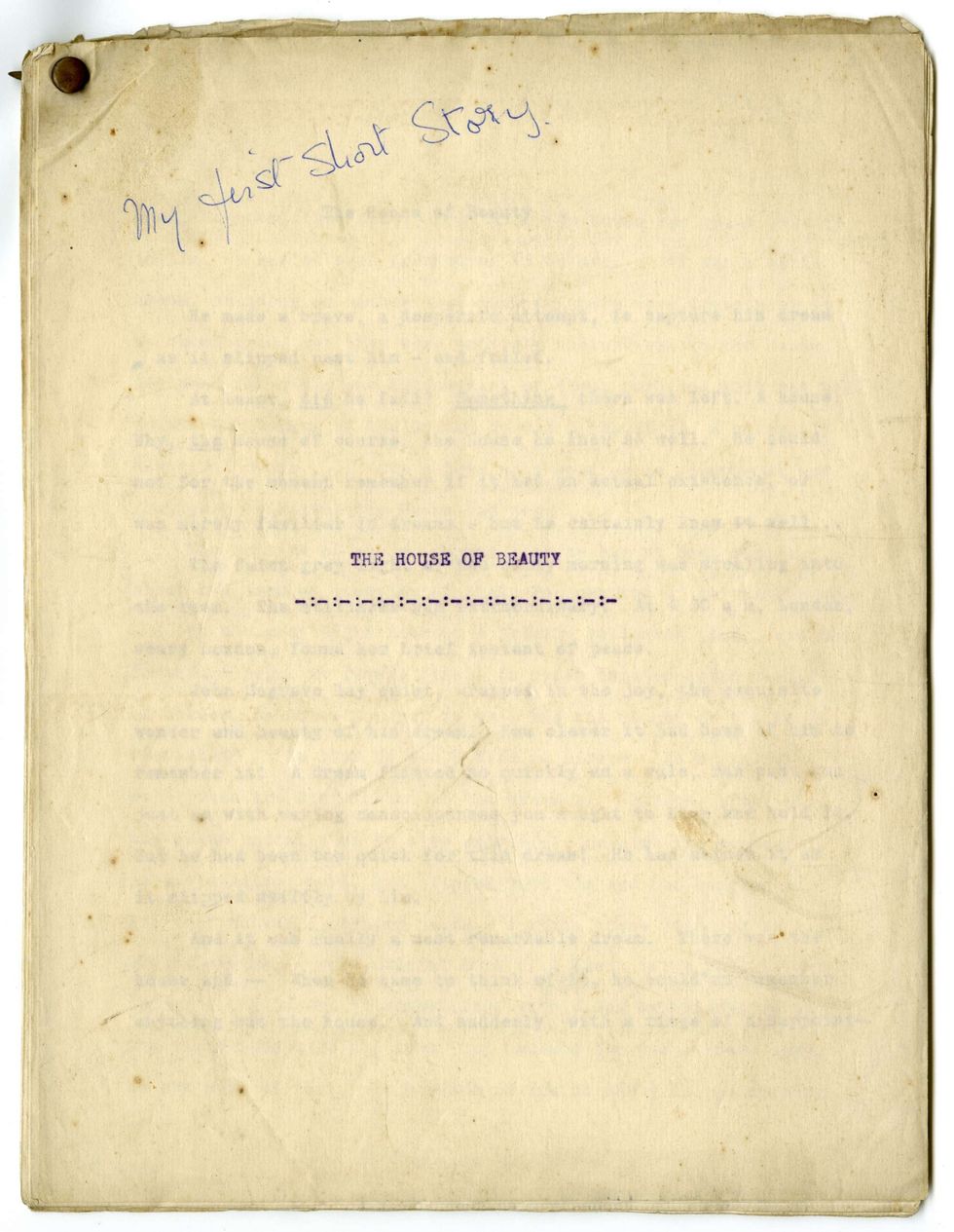 Cover of typescript ofHouse of Beauty, Agatha Christie’s first short story written when she was just a teenager.The Christie Archive Trust
The fifth and final section is “The Theatre”: “Visitors will then travel to the glittering West End of the 1950s for the final section, that will explore Christie’s work adapting her novels for stage productions that delighted post-war audiences looking for escapism and intrigue, making her the most successful female playwright of all time. Visitors will discover how she adapted her style and plots for the stage, from her notes for Witness for the Prosecution to rare footage of Christie at The Mousetrap celebrations, the typescript for Curtain: Poirot’s Last Case and the Dictaphone she used in later life to transcribe her first drafts for stories, such as Endless Night (1967). Screen adaptations also brought Christie’s iconic detectives to wider audiences and this section features posters and costumes from film and TV adaptions over the recent decades, including Ariadne Oliver (portrayed by Zoë Wanamaker)’s coat from Dead Man’s Folly (2013) offering visitors the chance to reflect on her impact across the crime genre from literature and theatre to film and TV.”
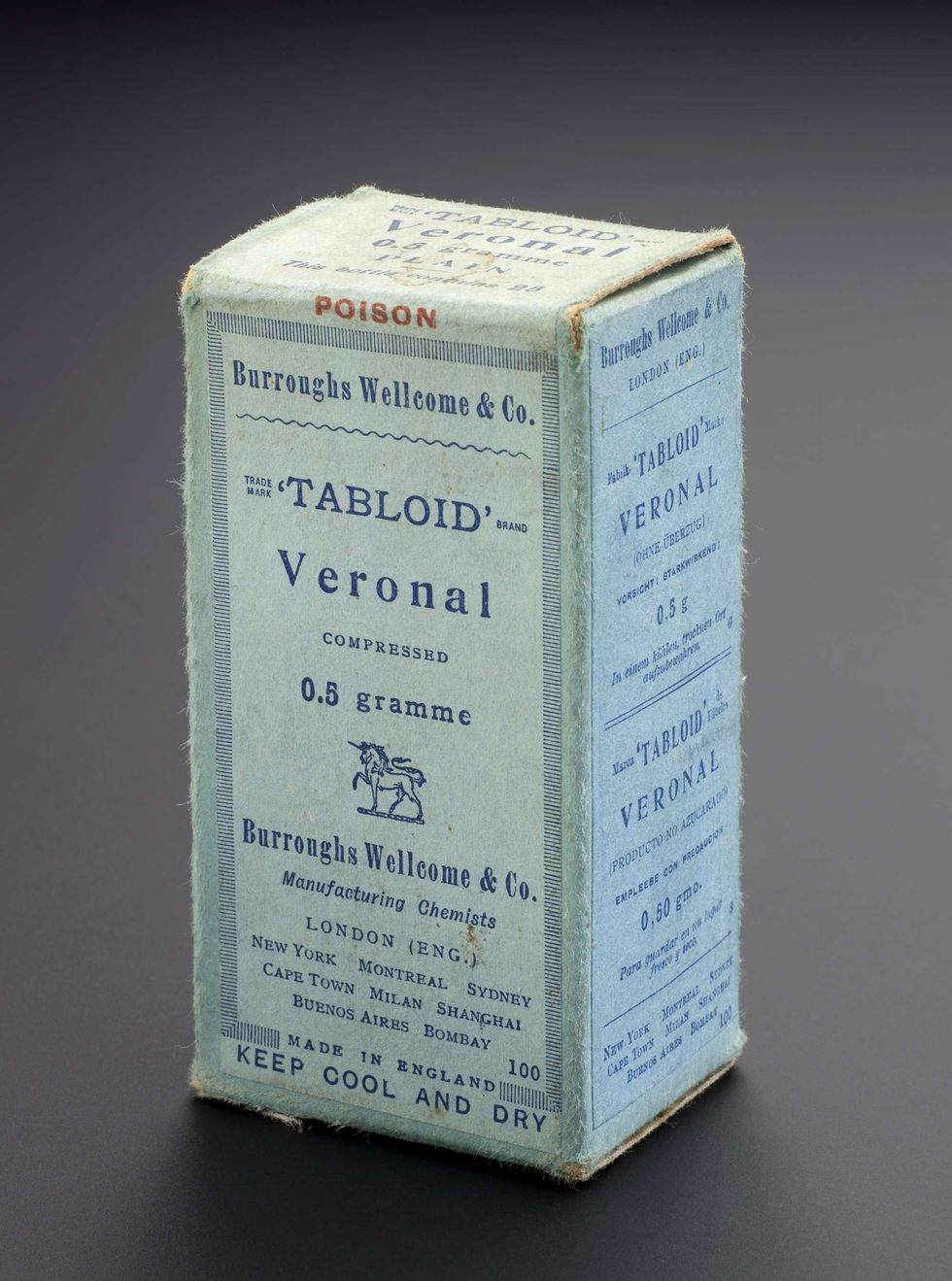 Box for Tabloid Veronal tablets,1910-1940 Science Museum Group
James Prichard, CEO and Chairman of Agatha Christie Limited and Agatha Christie’s great-grandson, said: “We are delighted to be partnering with the British Library for this major exhibition dedicated to my great grandmother’s extraordinary life and works. My father, Mathew, has carefully selected a wide range of items from the Christie Archive which offer remarkable insights into Agatha Christie from both a professional, and personal perspective, and that are sure to fascinate visitors. It feels fitting to do this to help mark the 50th anniversary of her death; this combines an opportunity for quiet reflection, but also an opportunity to celebrate the immense achievements of her life. Hers was truly one of the most remarkable lives of the 20th century.”
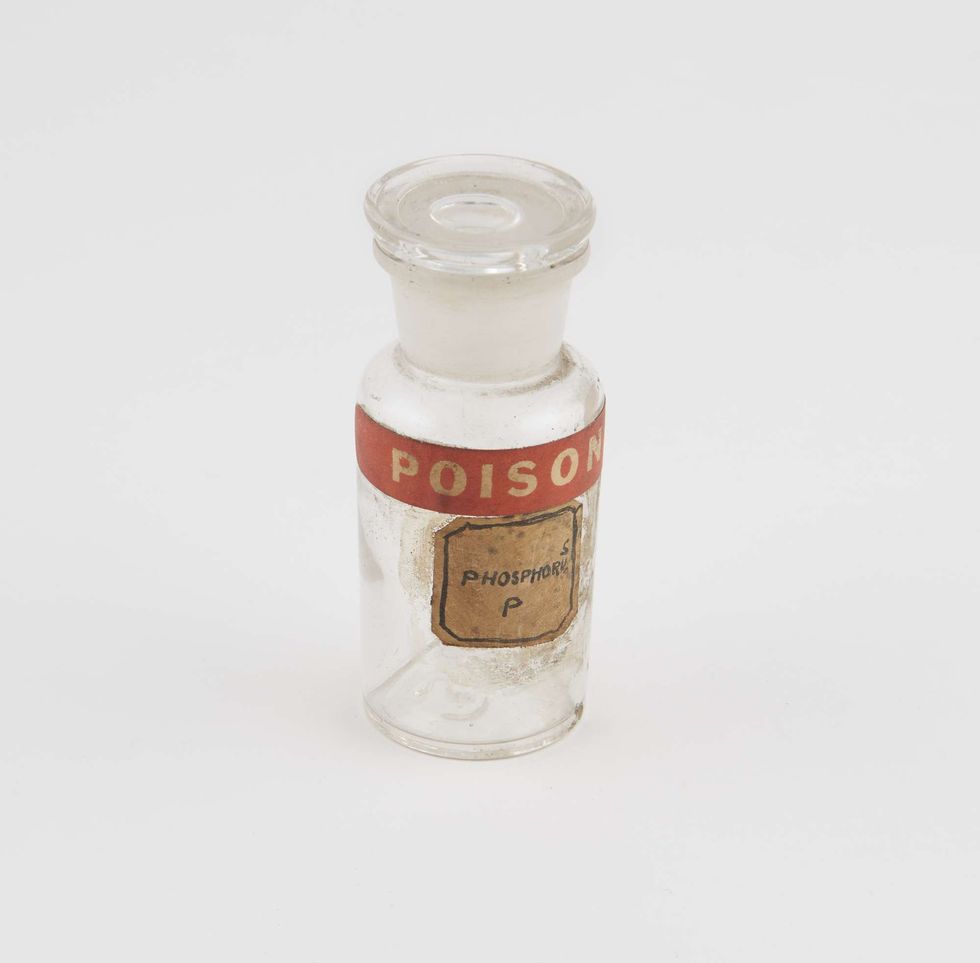 Chemical storage bottle and glass stopper, labelled ‘POISON phosphorus P’,1907-1912Science Museum Group
The Learning Programme accompanying the exhibition has been made possible by a grant from the Colwinston Charitable Trust 30th Anniversary Fund.
Accompanying the exhibition will be Living Knowledge Network displays and crime fiction events at public libraries around the UK.
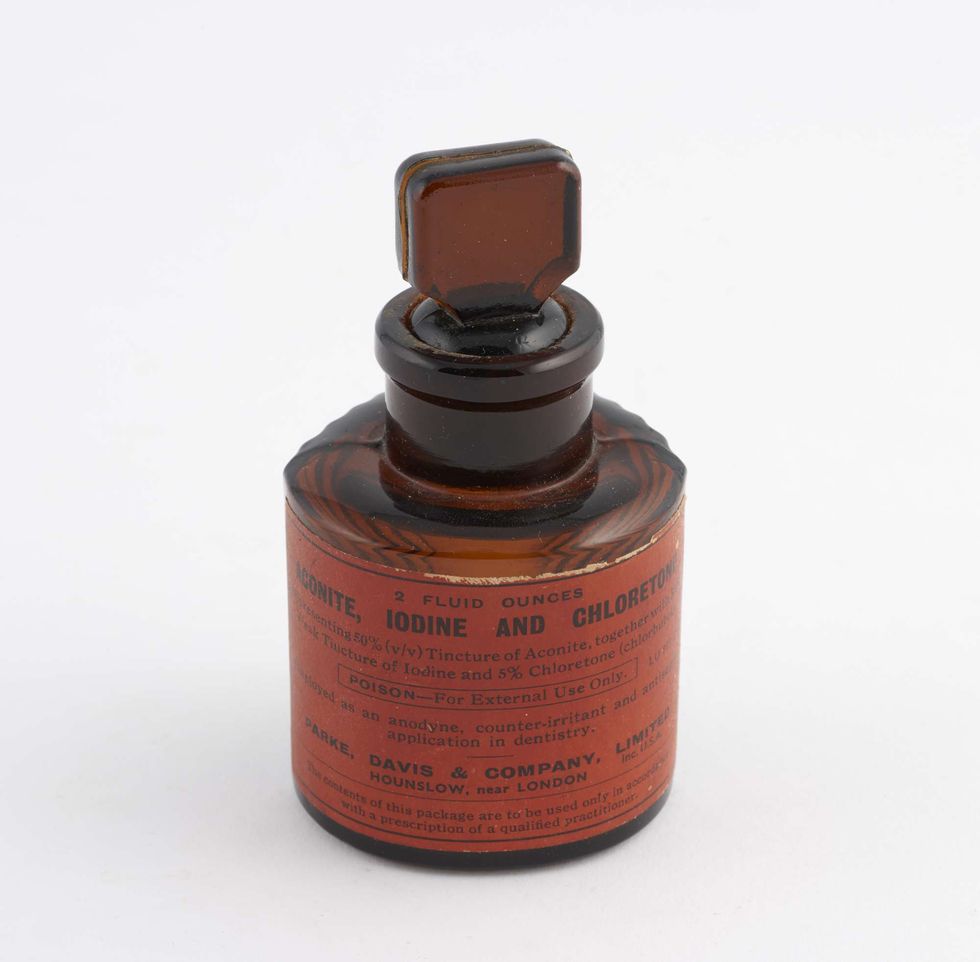 Empty poison bottle for aconite, iodine and chloretone solution,1925-1960Science Museum Group
Alongside this major exhibition the British Library will present the first comprehensive volume on the life, works and influence of Agatha Christie to be published in the last 50 years. Agatha Christie: A World of Mystery has been edited by celebrated crime fiction novelist Martin Edwards, alongside exhibition curator Lucy Rowland.
Notable contributors include Mark Aldridge, Kenneth Branagh, Simon Calder, Caroline Crampton, John Curran, Lucy Foley, GT Karber, Kate Mosse, Mathew Prichard, David Suchet and Zoë Wanamaker. A must for all Christie devotees, this volume includes many previously unpublished photographs and specially commissioned artworks from the Christie Archive Trust, as well as photographs, documents and illustrations from the collections of the National Trust, the British Library and a number of contributing private collections.
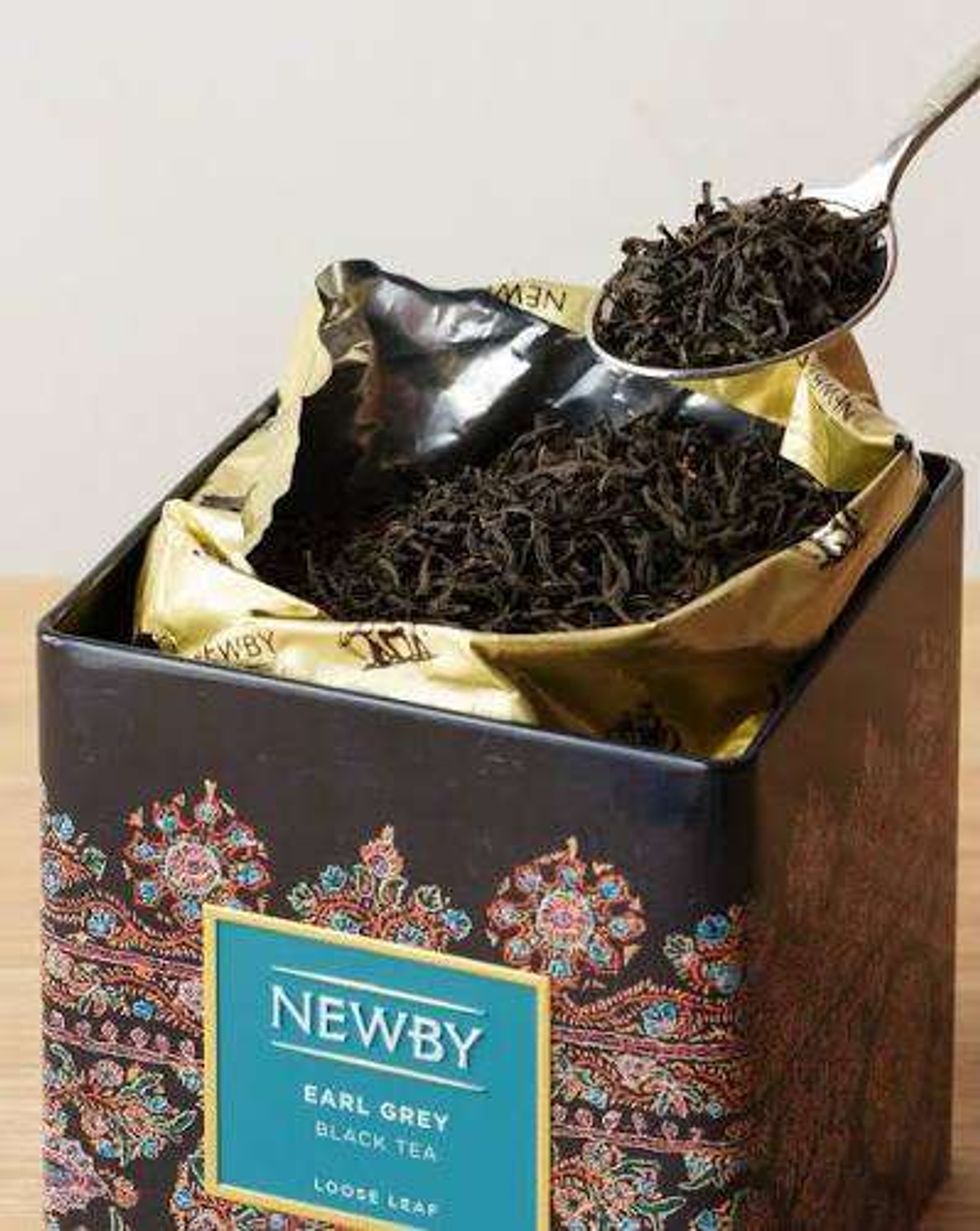 Newby Teas
The exhibition forms a major part of Agatha Christie Limited’s anniversary programme in 2026, with celebrations of Agatha Christie’s legacy and ongoing impact on the genre throughout this year.



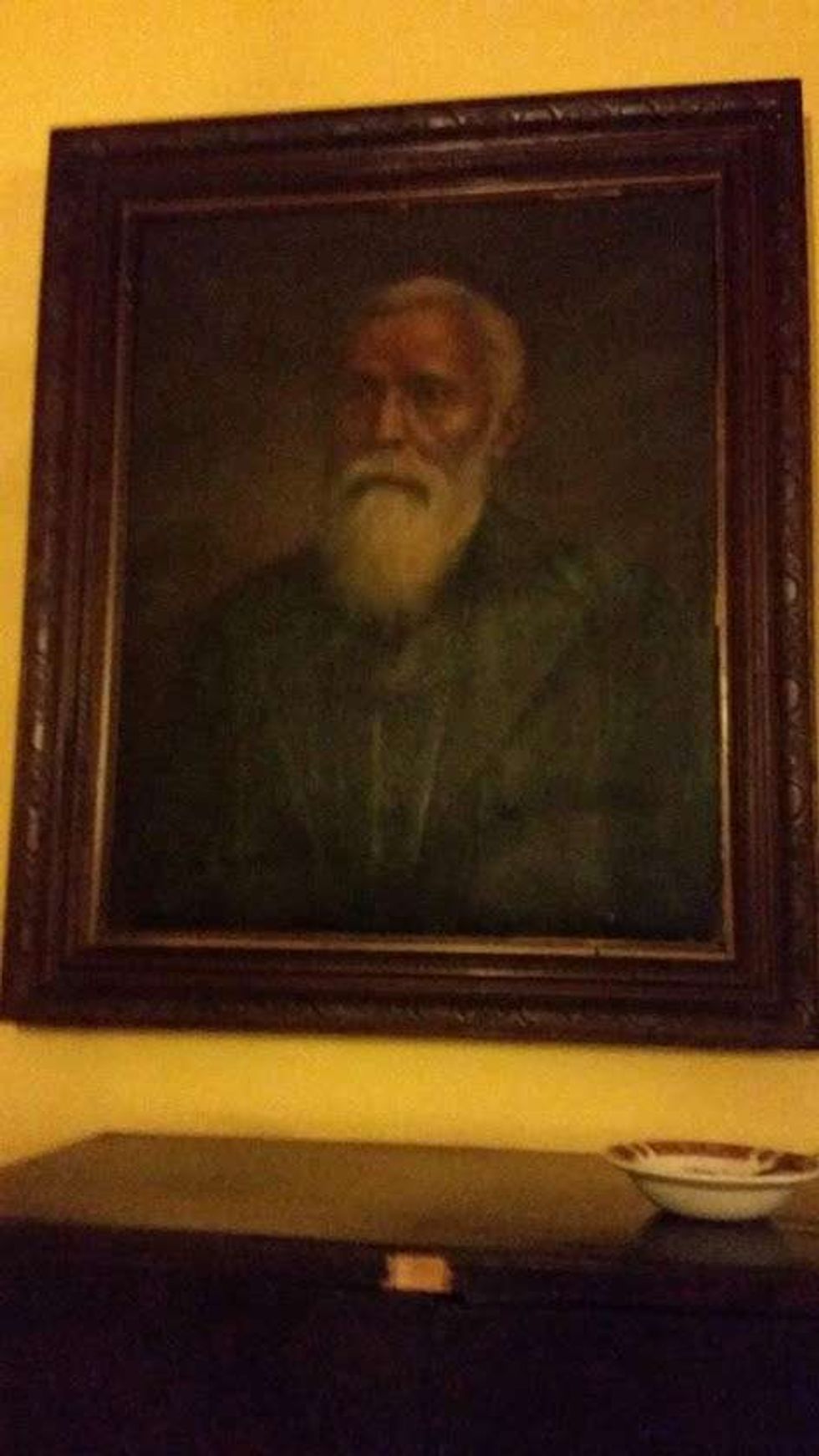 Dadabhai Naoroji portrait at India Club Amit Roy
 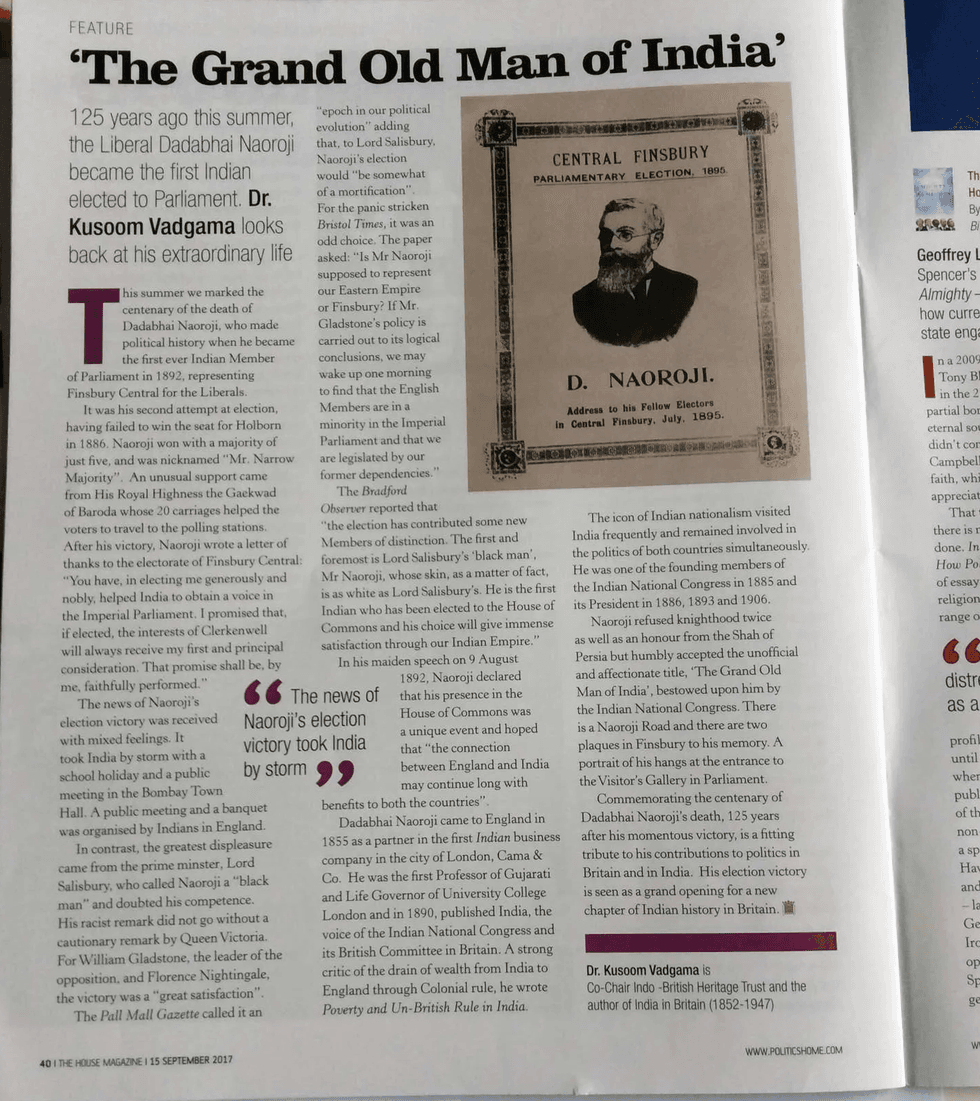 Kusoom Vadgama article on The Grand Old Man of India Amit Roy
 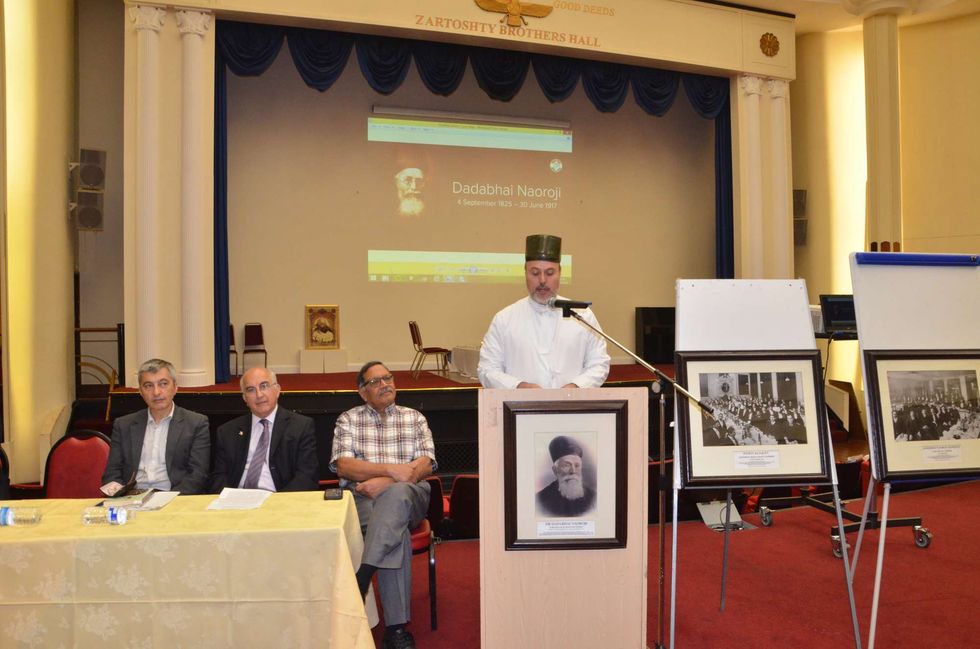 Malcolm Deboo speaking on the 100th anniversary of Naoroji’s death Raj D Bakrania
 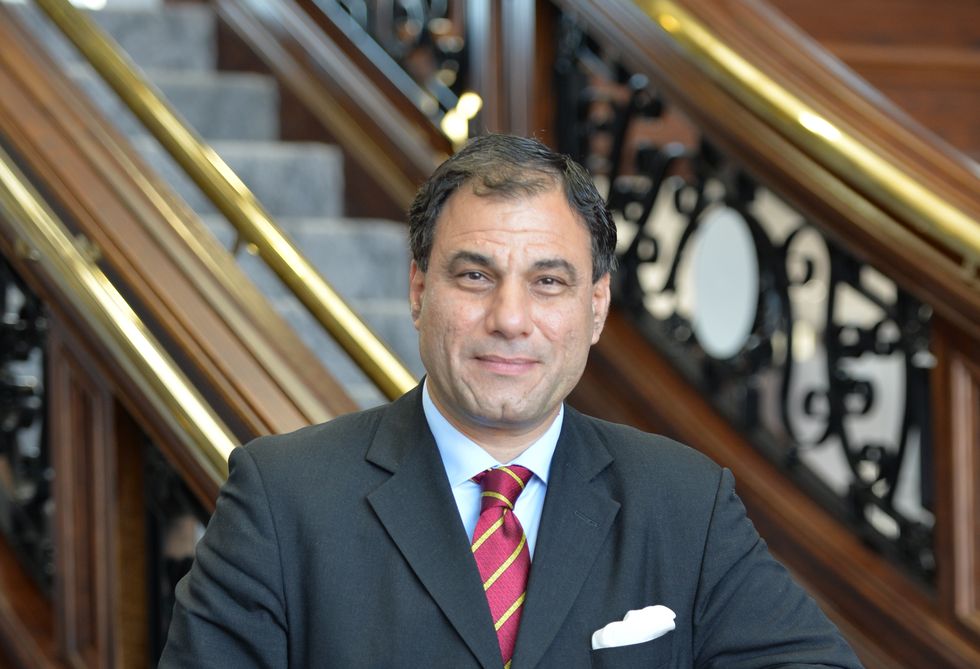 Lord Karan BilimoriaAmit Roy
 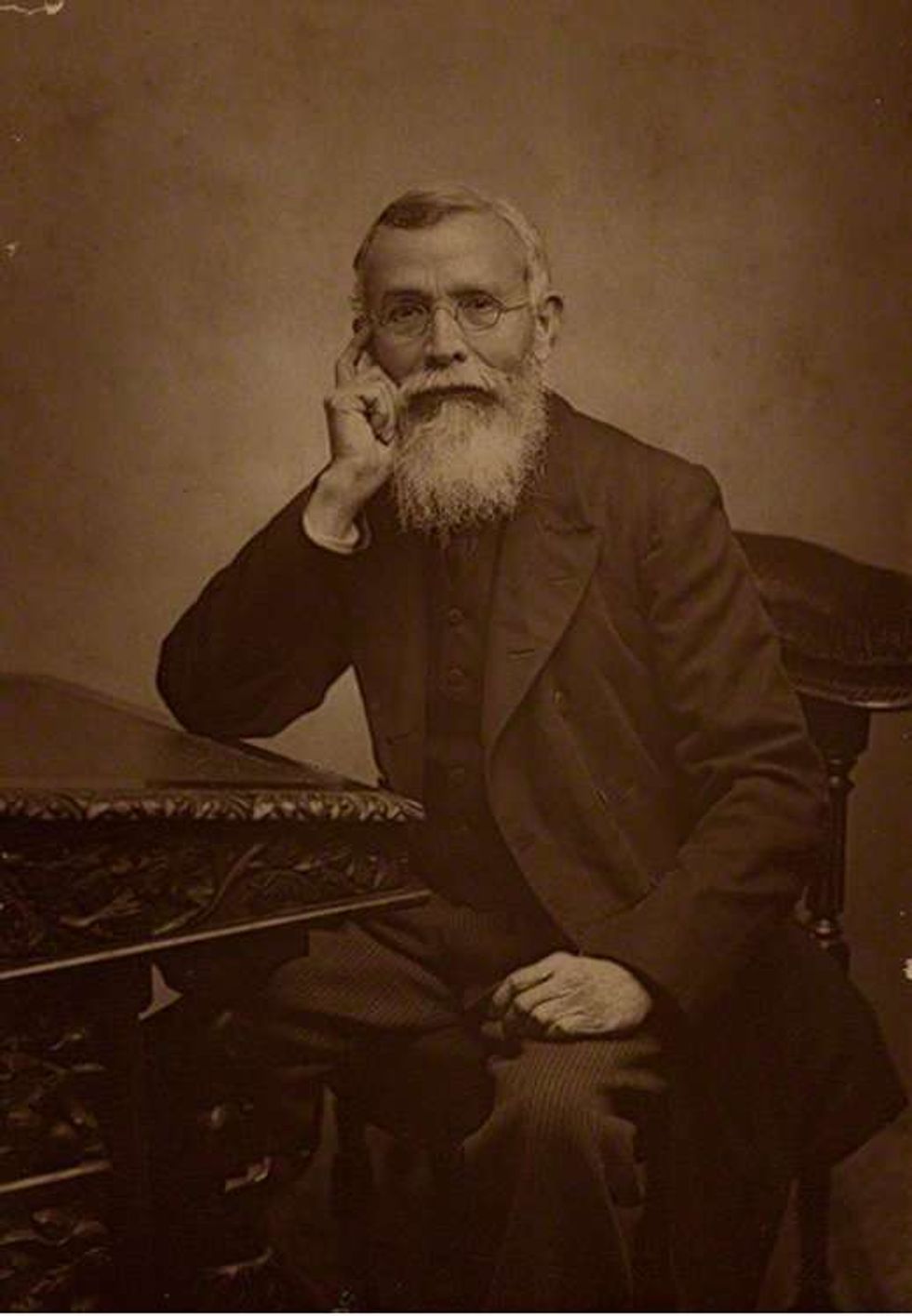 Portrait of Dadabhai Naoroji Raj D Bakrania
 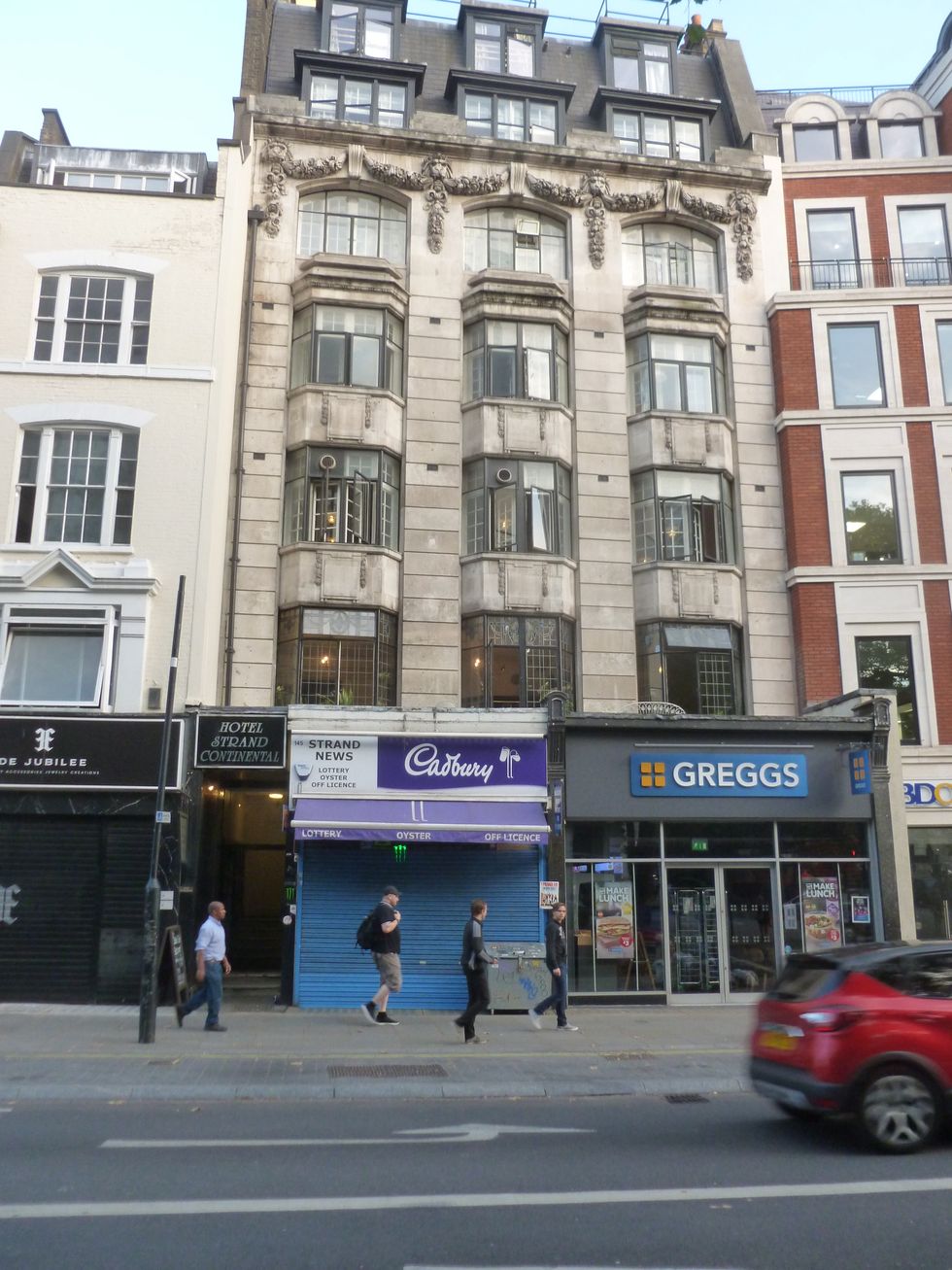 The India Club buildingAmit Roy
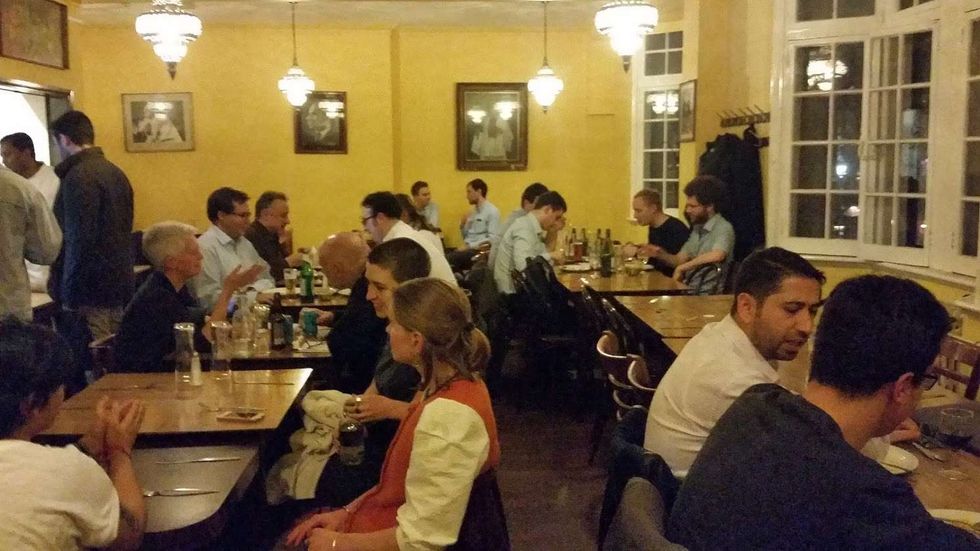 India Club restaurantAmit Roy
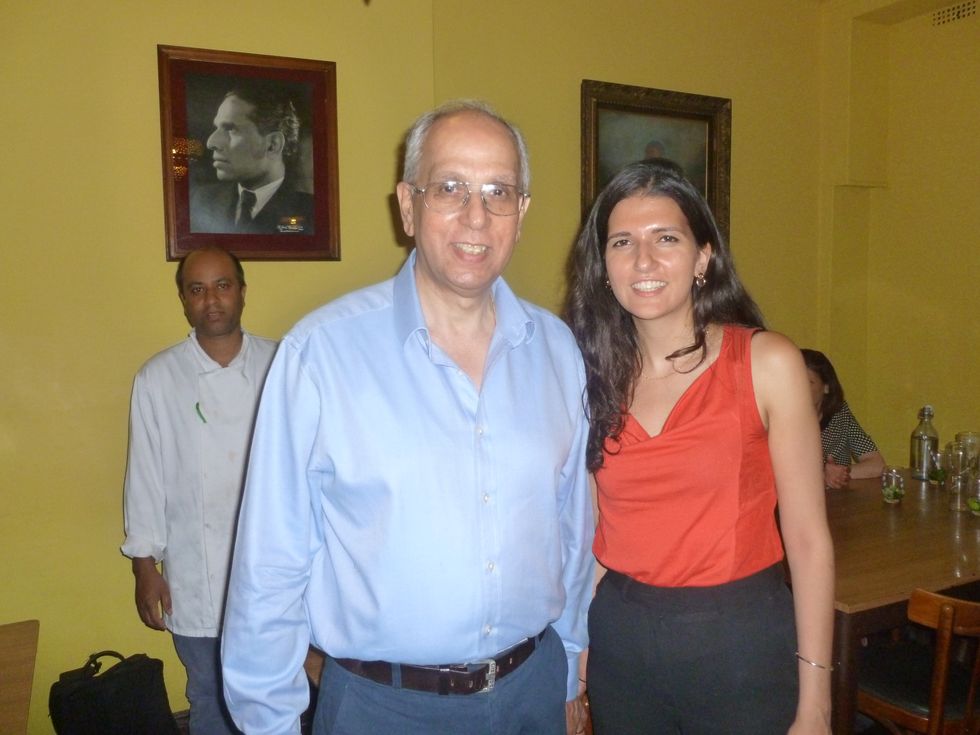 Yadgar Marker and his daughter Phiroza in front of a portrait of Krishna Menon at the India ClubAmit Roy
