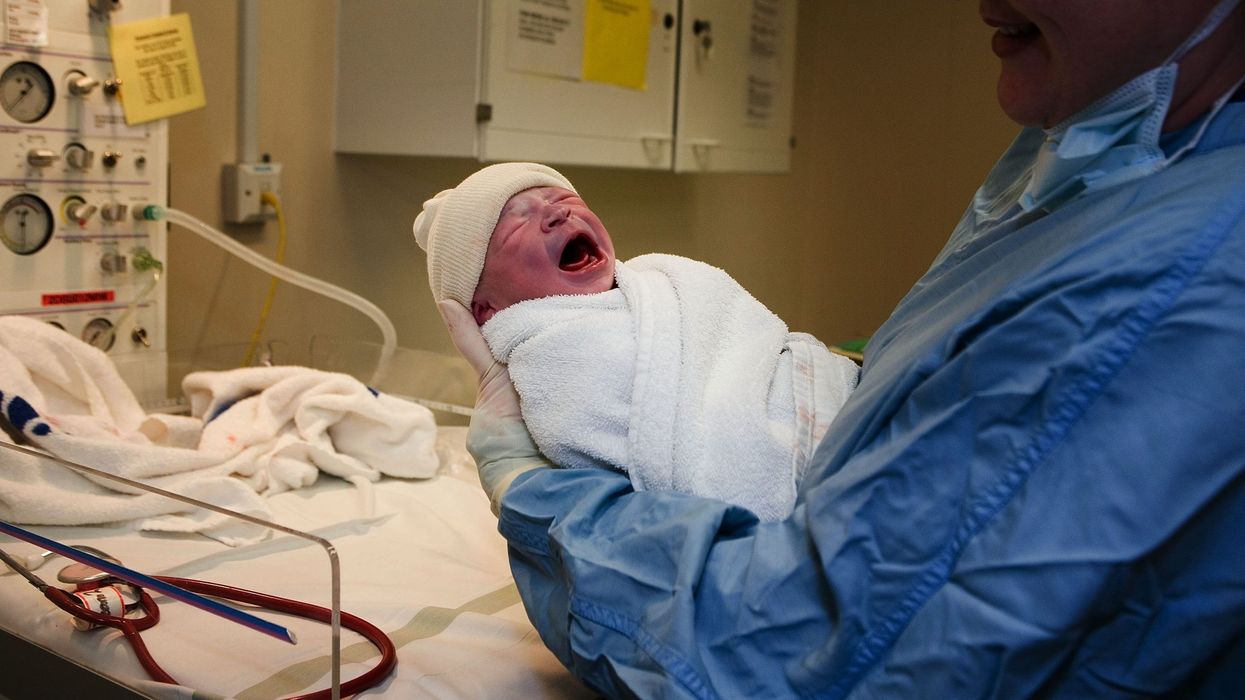

THE head of a review into maternity care in Nottingham said there is a “recurring theme” of midwives not listening to women who say they are in labour, writes Anna Whittaker.
Donna Ockenden is running the largest maternity review in NHS history at Nottingham University Hospitals Trust (NUH). As part of the scrutiny, covering the Queen’s Medical Centre and Nottingham City Hospital, Ockenden and her team regularly share findings with the trust and NHS England.
At the most recent meeting on June 21, Ockenden met trust chief executive Anthony May, chief nurse Michelle Rhodes and medical director Dr Keith Girling.
Ockenden then sent a letter on August 8 to May in which she raised several concerns.
She explained that she met families, including parents who experienced the death of their baby at the trust two years ago; two families of mothers who had died; and parents who are managing the 24-hour care needs of profoundly unwell children following birth at the units.
The letter, made public last Thursday (24), said: “During the recent holy month of Ramadan, despite the fact I had highlighted it to the trust before Ramadan as an issue that occurred last year, women told me they were still told to ‘break their fast’ for some blood tests and told there was no flexibility for early or later blood tests.
“Since the timing of Ramadan is known about in advance, this extra provision in blood testing could have been planned for in advance and I sincerely hope it will be next year.
“Women were repeatedly told they are not in labour, ‘it’s Braxton Hicks’. One woman was recently told this at 33 weeks of pregnancy, even though she had a history of previous pre-term labour and she should have been admitted for assessment.
“Other women are told they could not be in labour and to stay at home ‘if they can talk on the phone.’ Women not being believed they are in labour when they call the trust for assistance seems to be a recurring theme.”
Ockenden said in the letter that mothers told her interpretation and translations services are “very hit and miss”. This included mothers who require emergency caesarean sections, some of whom signed consent forms without understanding what they were signing. Others had to phone relatives to have a three-way conversation.
She added that parents were being told by the maternity team their notes had been ‘lost’ by the trust – despite these being held electronically by the review team.
Rhodes said the team was “grateful for the continued and regular feedback”.
“Our teams are committed to improving services. We are proud the work of the taskforce was recognised for making progress in a number of areas with black and minority ethnic groups, as well as the important work midwives are leading with the homeless and asylum seekers,” she said. (Local Democracy Reporting Service)






 Curator Emma Slocombe with ikat robes and arabachi coats in the Peter the Great Room in Blickling Hall Amit Roy
 View of the entrance to Blickling Hall on a rainy autumn dayAmit Roy
 Kente cloth from Ghana in the Long Gallery in Blickling Hall
 Decoration in the Great Hall at Blickling Hall Amit Roy
 Palampore fragment made in coastal south-east India in the Brown Room in Blickling Hall Amit Roy
 Bed valance dating from early 1700s in the Italian Print Room at Blickling Hall Amit Roy
 Indian inspired fabric draped on sofas in the South Drawing Room in Blickling Hall Amit Roy
 Indian inspired fabric draped on sofas in the South Drawing Room with Indian carpet in Blickling Hall Amit Roy
 Karun Thakar has picked out the geometric patterns in the bookcase and the Kente cloth in the Long Gallery in Blickling Hall Amit Roy
 Large tapestry depicting Peter the Great defeating the Swedish army at the Battle of Poltava in 1709 Amit Roy
 ikat robes and arabachi coats in the Peter the Great Room in Blickling Hall Amit Roy
 Baghs and kanthas made by women provide contrast to the men only portraits in the Great Hall at Blickling Hall Amit Roy
 Baghs and kanthas in the entrance Great Hall at Blickling Hall Amit Roy
 Baghs and Kanthas in the Great Hall in harmony with stained glass window at Blickling Hall Amit Roy
 Kimonos reflect Japanese influence in Upper Ante Room in Blickling Hall Amit Roy
 Kimono in Upper Ante Room in Blickling Hall
 A view of the Palace and fort at Agra shows romantic side of India Amit Roy
 Blickling Hall Amit Roy
 Table carpet, European 1670-1680 Amit Roy
 Unfinished 17th century Italian embroidery in the Print Room at Blickling Hall Amit Roy
 Picture of Kashmir shows a romantic view of India Amit Roy
 A panel of Ashburnham bed hangings made in Gujarat for sale in Europe in the Brown Room in Blickling Hall Amit Roy
 Colcha made in the 1600s by women in Bengal for the Portuguese market in the Long Gallery at Blickling Hall Amit Roy




